






The XP ICON X is a lightweight wireless multi-frequency metal detector developed and manufactured in France by XP Metal Detectors. It combines XP’s FMF simultaneous multi-frequency platform with six factory programs, six user-program slots, three selectable single frequencies, detailed audio controls and a waterproof architecture designed for land, beach and shallow-water detecting.
This guide is designed as a practical reference for setting up and using the ICON X in real field conditions. It explains the controls, programs, sensitivity, tones, discrimination, Notch, FMF frequency choices, ground balance, Reactivity, Pinpoint, wireless accessories, beach use, charging, troubleshooting and the main differences between ICON and ICON X.
The article is based primarily on the official XP ICON / ICON X user manual supplied with the device and is cross-checked against XP’s current product information. Where current XP web specifications differ from the supplied manual, the difference is identified rather than silently reconciled.
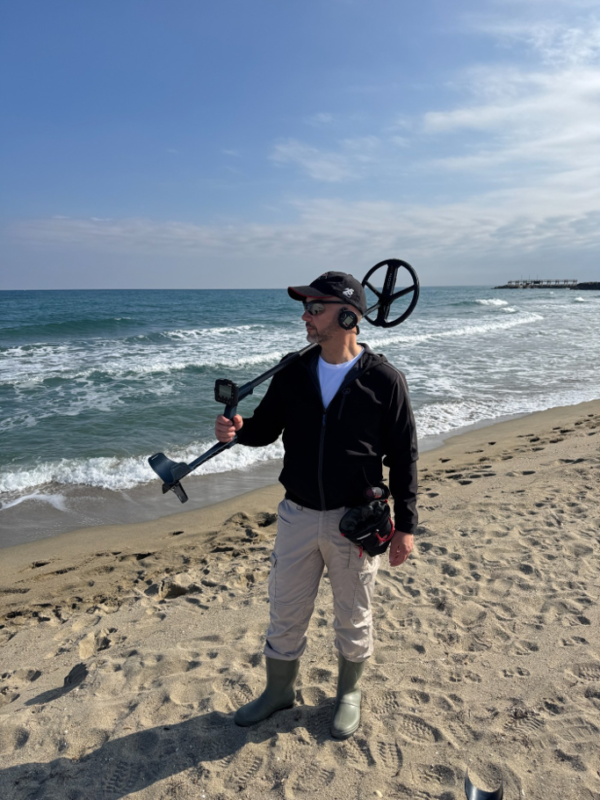
Table of Contents
XP ICON X at a Glance
| Feature | ICON X |
| Detection technology | FMF simultaneous multi-frequency; automatic/manual frequency shift |
| Single-frequency choices | 4, 14 and 28 kHz on ICON X |
| Factory programs | 6 |
| User programs | 6 – one custom slot linked to each factory program |
| Sensitivity | 25 levels |
| Reactivity | 7 levels: 0-6 |
| Tones | Pitch, 2, 3, 5 and Full Tones |
| Audio types | PWM and SQUARE; ICON X also offers enhanced audio-response options |
| Ground balance | Grab, Tracking, Standard and Pro modes |
| Notch | 28-segment Multi-Notch |
| Waterproofing | Up to 5 m with the required underwater setup; see the dedicated diving section |
| Battery life | About 11 h for the remote and coil under the manual’s stated conditions |
| Weight | Approx. 710 g without the remote on the stem; manual lists ~830 g total with batteries |
What Is the XP ICON X?
ICON X is the more adjustable model in the ICON range. It keeps the simplified user interface and wireless architecture of the standard ICON, but adds more factory programs, more Reactivity levels, finer discrimination resolution in the ferrous range, an extra 28 kHz single-frequency option and additional audio-response choices. The result is a detector that can be simple at startup but still gives experienced users room to tune the machine for contaminated ground, mineralized soil, parks and beaches.
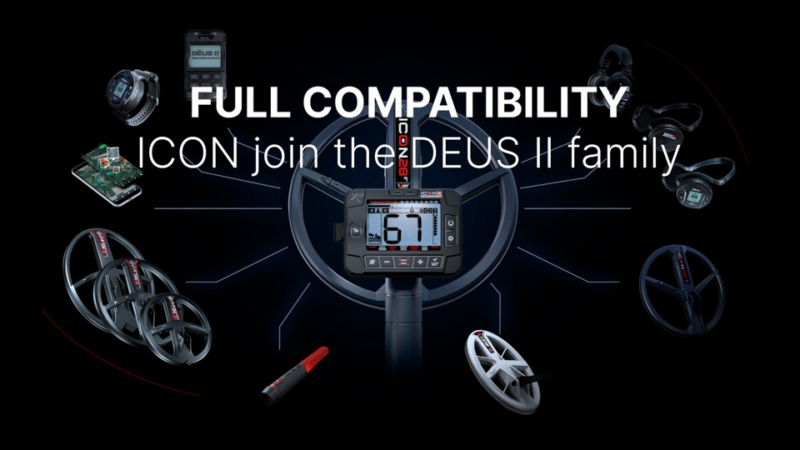
XP positions the ICON range as a gateway into its wider ecosystem. The ICON X can work with compatible FMF coils, the HF2 Search Coil, XP wireless headphones, the MI-6 pinpointer and the Go Terrain app, which makes the platform more expandable than a closed detector package.
XP ICON vs XP ICON X: Key Differences
| Specification | ICON | ICON X |
| Factory + user programs | 3 + 3 | 6 + 6 |
| Single frequencies | 4 and 14 kHz | 4, 14 and 28 kHz |
| Reactivity | 1-5 | 0-6 |
| Ferrous-area discrimination resolution | 1 point | 0.5 point |
| Audio response | 3 standard settings | 6 settings including enhanced response |
| Stem | S-Telescopic Lite | S-Telescopic Lite Carbon |
| Approx. weight without remote on stem | ~735 g | ~710 g |
If you are comparing ICON X with the standard XP ICON, the main differences are in the number of programs, single-frequency options, Reactivity range, discrimination resolution and audio flexibility rather than a completely different detection platform.
Components and Assembly
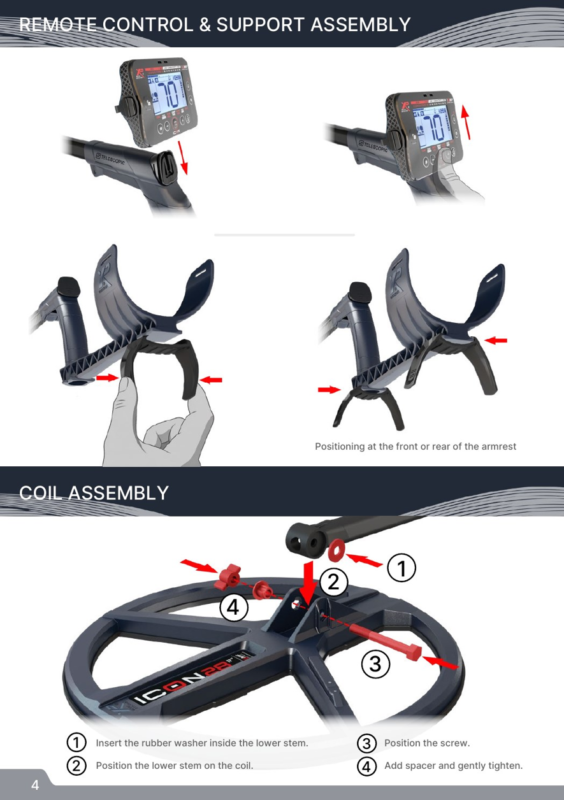
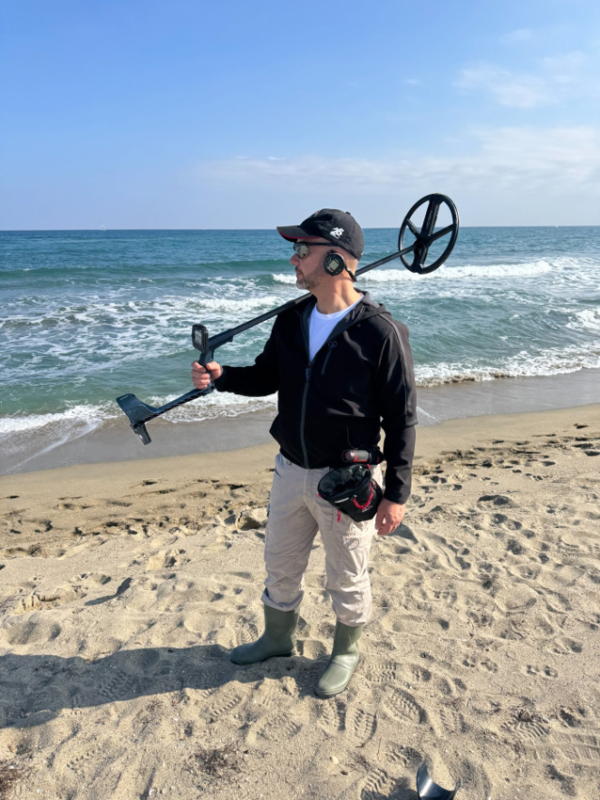
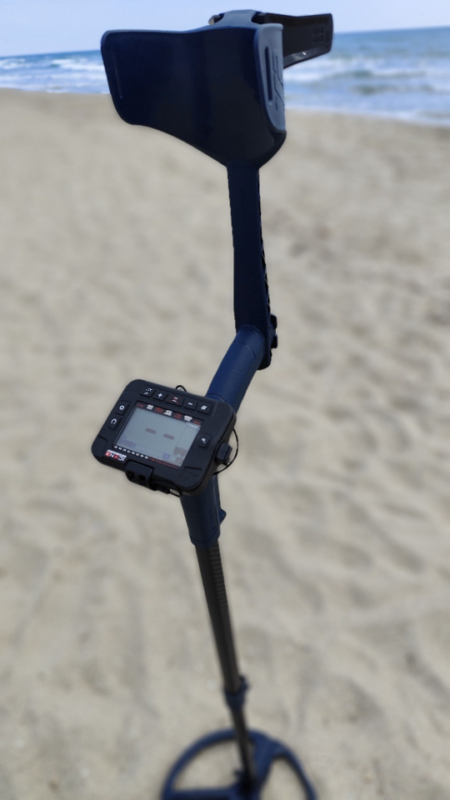
The ICON X follows XP’s modular wireless layout: search coil, telescopic stem, removable remote control and compatible audio output. The supplied coil is already paired with the remote, so normal first-time setup is mostly mechanical. The lower stem uses a rubber washer at the coil mount, followed by the screw and spacer, while the remote slides onto its support. The armrest support can be positioned to suit the user’s forearm length.
Remote Control and Screen: What Each Area Means
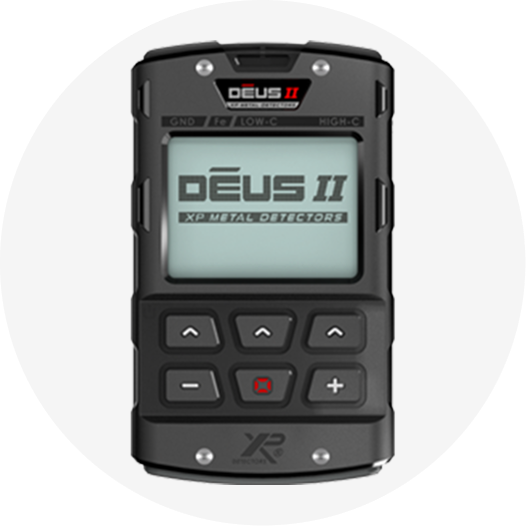
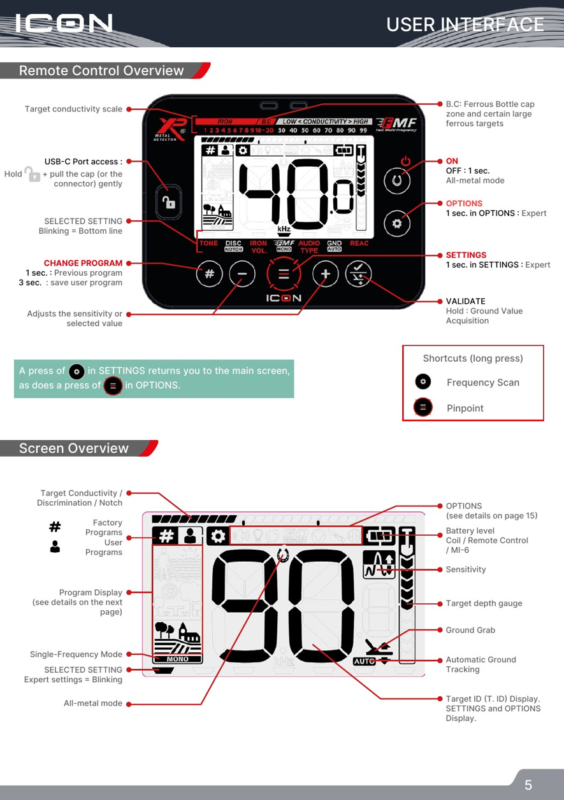
The remote control is designed around direct access to the most-used settings. The display shows the active program, target ID, conductivity/discrimination information, sensitivity, target-depth gauge, battery status, ground information and whether the detector is in single-frequency or all-metal mode. The settings button cycles through detection controls, while the options button opens system functions such as volume, backlight, updates, Go Terrain, headphone pairing, MI-6 pairing and coil management.
Long-press shortcuts reduce menu navigation in the field. The manual identifies long-press shortcuts for Frequency Scan and Pinpoint, while the validate key is also used for Ground Grab. Becoming familiar with these shortcuts is one of the fastest ways to make Xp ICON X feel simple rather than menu-heavy.
Quick Start: First Setup in the Field
Charge the remote, coil and headphones before the first session. Turn on the remote control, choose the factory program that best matches the site and adjust the speaker or headphone volume to a comfortable level. When the detector starts, it automatically performs a frequency scan, which helps it select a cleaner operating channel before you begin sweeping.
Before serious detecting, keep the coil parallel to the ground and as close to the surface as practical without striking it. On mineralized or variable ground, perform a Ground Grab before you begin. Practice with known objects in a clean test area so you can hear the relationship between target conductivity, audio tone and target ID before relying on the detector in a more complex site.
The Six Factory Programs on ICON X
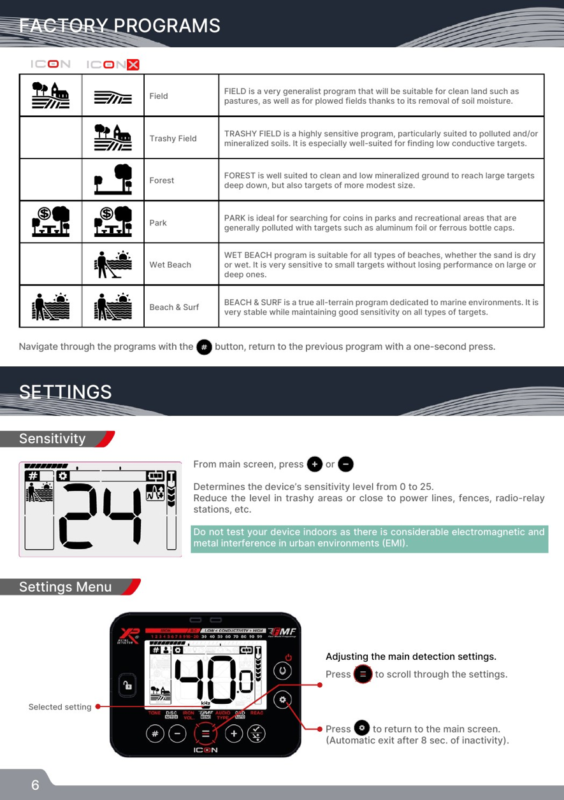
Xp ICON X has six factory programs. Each program changes several underlying parameters together, so choosing the correct starting program is usually more effective than changing individual settings immediately. The table below keeps XP’s intended use for each program but translates it into a practical starting point.
| Program | Best starting environment | Practical use |
| Field | Clean ground, pastures and ploughed fields | General-purpose starting program. |
| Trashy Field | Polluted and/or mineralized soil | Sensitive to low-conductive targets and useful where target separation matters. |
| Forest | Clean, low-mineralized ground | Suited to large/deep targets while retaining response to medium targets. |
| Park | Parks and recreational areas | Designed for sites with foil and ferrous bottle-cap contamination. |
| Wet Beach | Dry or wet beach sand | High sensitivity to small targets while retaining performance on larger/deeper targets. |
| Beach & Surf | Marine environment, surf and variable salinity | Stable all-terrain marine program with broad target sensitivity. |
Sensitivity
Sensitivity runs from 0 to 25. Higher sensitivity can improve response to weak targets, but it also increases susceptibility to electromagnetic interference, nearby metal and difficult ground. If the detector becomes unstable near power lines, electric fences or radio sources, reduce sensitivity rather than assuming maximum
sensitivity is always the deepest setting. XP also warns that indoor testing is a poor benchmark because buildings contain large amounts of metal and electrical interference.
Tones: 2, 3, 5, Pitch and Full Tones
The tone system determines how target conductivity is translated into sound. Multi-tone modes divide the conductivity scale into a small number of audio categories, while Full Tones maps more of the target-ID range to changing pitch. Pitch mode works differently: signal strength drives both volume and pitch, giving a dynamic response that many users find fast and expressive.
| Mode | How it behaves | When it helps |
| 2 / 3 / 5 Tones | Simple conductivity groups | Good for users who prefer clear audio categories. |
| Pitch | Signal strength changes pitch and volume | Useful for a dynamic, fast-feeling response. |
| Full Tones | Tone rises with target conductivity | Useful when you want more audio information from the ID scale. |
Discrimination and Target ID
Discrimination can be adjusted from -6 to 99 on inland programs, while beach programs use 0 to 99. Raising the discrimination threshold progressively rejects targets below the selected conductivity value. XP’s manual also explains that rejected ferrous targets do not display a target ID, so excessive discrimination can remove information that would otherwise help you interpret a mixed or questionable signal.
Use discrimination as a site-management tool rather than a “valuable target” filter. Conductivity overlaps between different objects, and depth, soil, target orientation and nearby metal can change the reading. For difficult targets, sweep from more than one direction and listen for repeatability instead of relying on a single ID number.
Notch and Bottle-Cap Rejection
Notch rejects selected conductivity windows rather than everything below a threshold. This is useful when one recurring unwanted target occupies a narrow ID range. The manual also identifies a ferrous bottle-cap behavior on the conductivity scale and explains that the Notch settings can be used to make this contamination easier to reject in multi-frequency mode.
Avoid building an overly aggressive Notch pattern at a new site. Start with the factory program, identify the trash that is genuinely repetitive, and only then reject the narrowest useful range. This helps reduce the risk of silencing wanted targets that share similar conductivity.
Iron Volume
Iron Volume controls the low-pitched audio assigned to signals below the discrimination setting. A value of 0 silences those low tones, while the upper end of the scale makes them more prominent. Keeping some iron audio can be useful in contaminated ground because it gives context about the amount of ferrous material around a non-ferrous target.
FMF Multi-Frequency and Single Frequencies
All factory programs use XP’s FMF simultaneous multi-frequency technology. ICON X also lets you work in single-frequency mode on inland programs when a difficult electromagnetic environment compromises multi-frequency operation or when you deliberately want to emphasize a specific response range. ICON X offers 4, 14 and 28 kHz single-frequency choices, with 28 kHz being the additional option not available on the standard ICON.
| Frequency mode | Practical interpretation |
| FMF | General use across mixed targets and changing ground; default basis of factory programs. |
| 4 kHz | Lower-frequency option; can suit higher-conductive or larger targets in some conditions. |
| 14 kHz | Balanced general-purpose single frequency. |
| 28 kHz | Higher single-frequency option on ICON X; useful when greater response to smaller/lower-conductive targets is desired. |
Audio Type: PWM, SQUARE and Enhanced Response
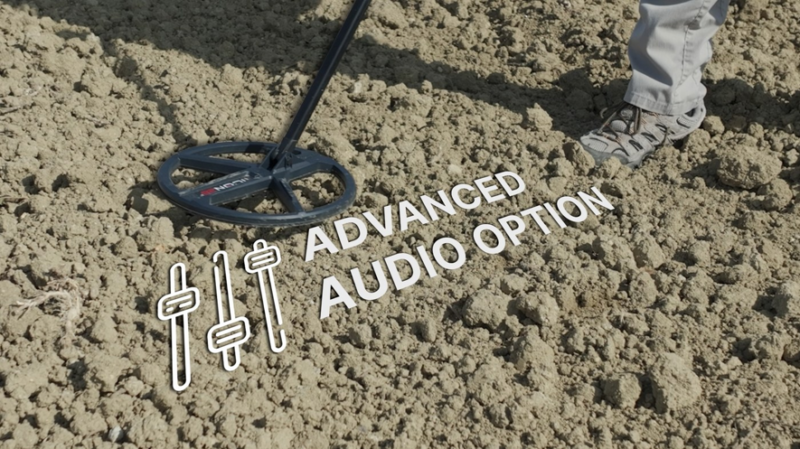
PWM is XP’s traditional dynamic audio style, with harmonic content that changes with signal amplitude and therefore helps convey distance from the target. SQUARE has a softer, more fixed harmonic character, while volume still varies with target distance. ICON X expands the audio-type choices with enhanced audio-response settings and Stereo Audio Morphing, which can add a second sound to surface targets to help recognize proximity.
Ground Balance: Standard, Pro, Grab and Tracking
Ground mineralization can reduce depth and create false responses. XP recommends beginning with the default ground behavior and performing a Ground Grab to calibrate the detector to the site. In Standard ground mode, the detector rejects the ground zone above the selected value while using multi-frequency analysis to recover targets that might otherwise be masked.
Pro ground mode is an expert setting because it intentionally allows more of the ground response to remain audible. On inland programs this can expose deep responses that are masked by mineralization, while on beach programs it can make a wider ground zone audible. That extra information comes with more noise and requires experience to interpret.
Tracking continuously estimates the average ground value and can work well when mineralization is relatively uniform and changes slowly. XP specifically warns that Tracking is less suitable where old human activity has created rapidly changing ground effects; in those conditions, the manual recommends preferring Grab.
Reactivity: Target Separation vs Maximum Raw Depth
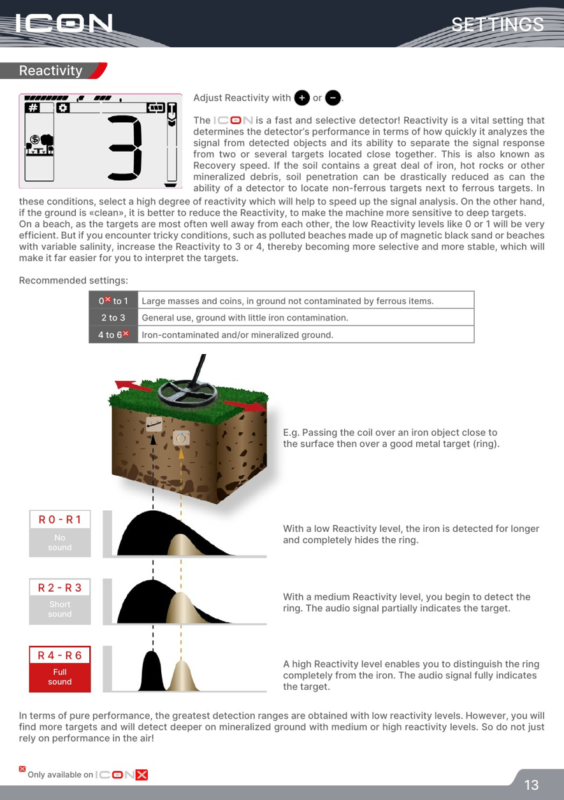
Reactivity is one of the most important Xp ICON X controls. It determines how quickly the detector analyzes one signal and becomes ready for the next. Low Reactivity lengthens the response and can maximize detection range in clean ground, while higher Reactivity shortens the response and improves separation when non-ferrous targets sit close to iron, hot rocks or other mineralized debris.
| Reactivity | Manual guidance |
| 0-1 | Clean ground; large targets and coins; maximum raw range when target spacing is generous. |
| 2-3 | General use; light iron contamination; balanced starting point. |
| 4-6 | Iron-contaminated and/or mineralized ground; stronger target separation and stability. |
Pinpoint Mode
Pinpoint is a non-motion mode: the coil can remain still above a target while the audio and visual response increase as you approach the target center. The manual recommends calibrating the threshold with the coil just off the ground and to the side of the target, then moving across the area to find the strongest and highest-pitched response at the center of the coil. Re-tuning near the target narrows the detection field for more precise recovery.
Saving a User Program
Xp ICON X lets you modify a factory program and save a custom version. The manual states that one user program can be created for each factory program, giving six custom slots on ICON X. This is useful for keeping a preferred park setup, a quiet beach setup or a high-Reactivity contaminated-ground setup without changing the factory program itself.
Wireless Headphones and the MI-6 Pinpointer
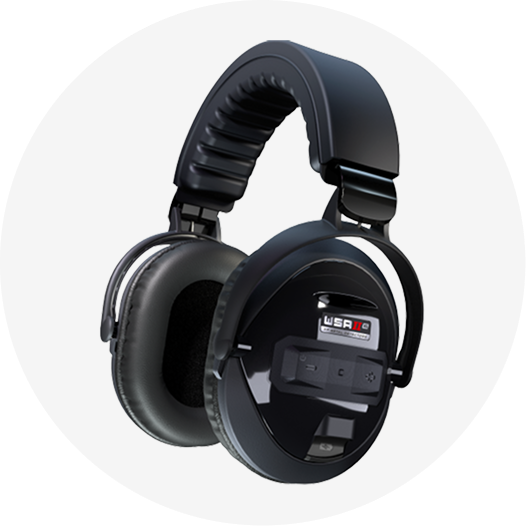
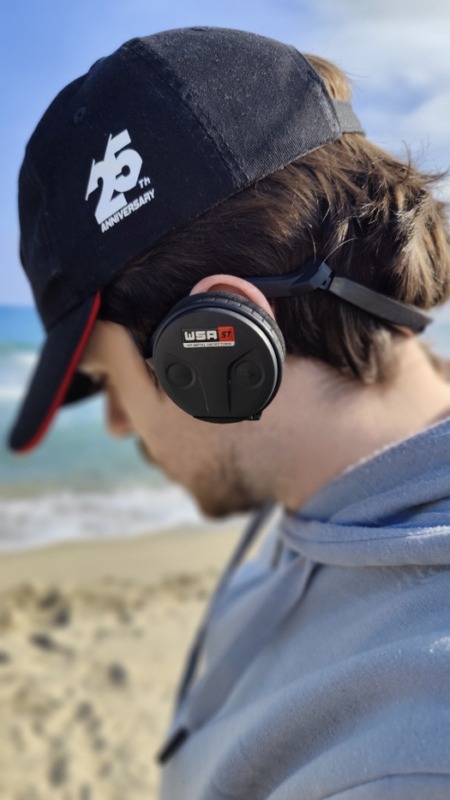
Compatible XP wireless headphones can be paired from the Options menu and then switch on and off with the detector. XP recommends moderate listening levels; the manual specifically advises level 5 or below for hearing protection.
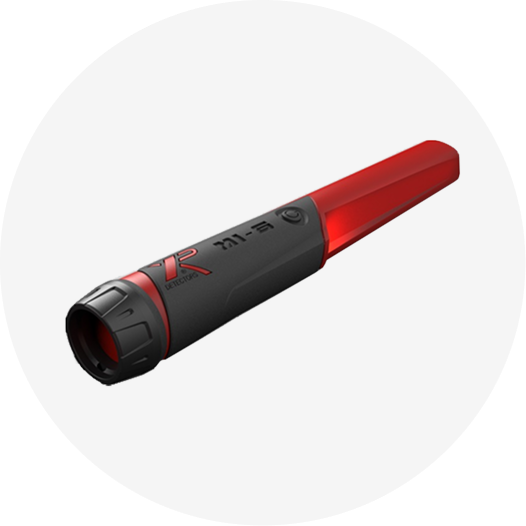
The XP MI-6 pinpointer can also pair with Xp ICON X. When connected, its audio and target-strength information are sent through the detector system. The manual also includes a lost-accessory search function that can make a paired MI-6 ring and flash remotely within the stated range even when it is switched off.
Pairing and Selecting Search Coils
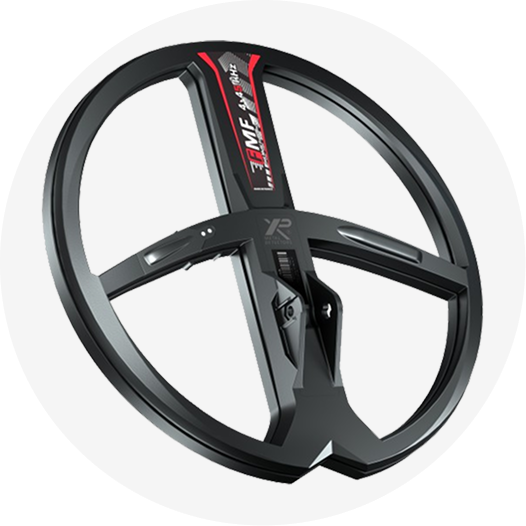
The original coil is already paired. To add another compatible coil, select a free coil slot and enter pairing mode. XP recommends automatic pairing: once serial-number entry mode is active, place the new coil on charge and it sends its serial number to the remote. Manual serial-number entry is also available. After pairing, coils can be selected from the remote without repeating the first-time process.
For users who want a smaller high-frequency option, Detectors Shop also carries the HF2 Search Coil, and XP’s official documentation lists HF2 among the FMF ecosystem coils compatible with the ICON range.
Go Terrain and Software Updates
The Go Terrain app can receive target data from the detector, map a route with the phone’s GPS and record detected targets along a search path. The remote also supports software updates through USB-C and an internet-connected computer, allowing XP to deliver firmware improvements and new functions over time.
For firmware instructions and the latest updater, use the official XP updates page.
Beach, Salt Water and Underwater Use
Xp ICON X includes two dedicated marine programs: Wet Beach and Beach & Surf. Wet Beach is designed for dry or wet sand and is especially sensitive to small targets, while Beach & Surf is intended as a stable all-terrain marine program for conditions that can include changing salinity. On beaches, low Reactivity can work well when targets are widely spaced, but the manual recommends increasing Reactivity when black sand, trash or variable salinity makes the detector difficult to interpret.
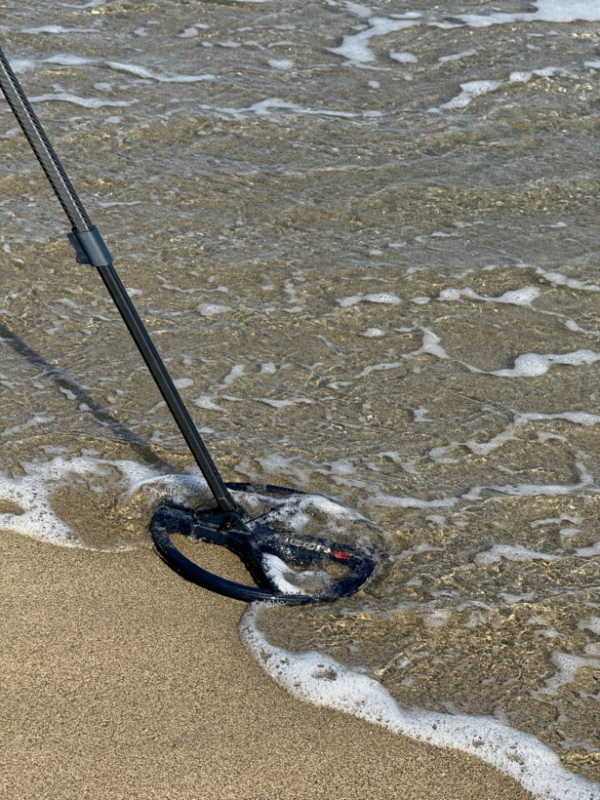
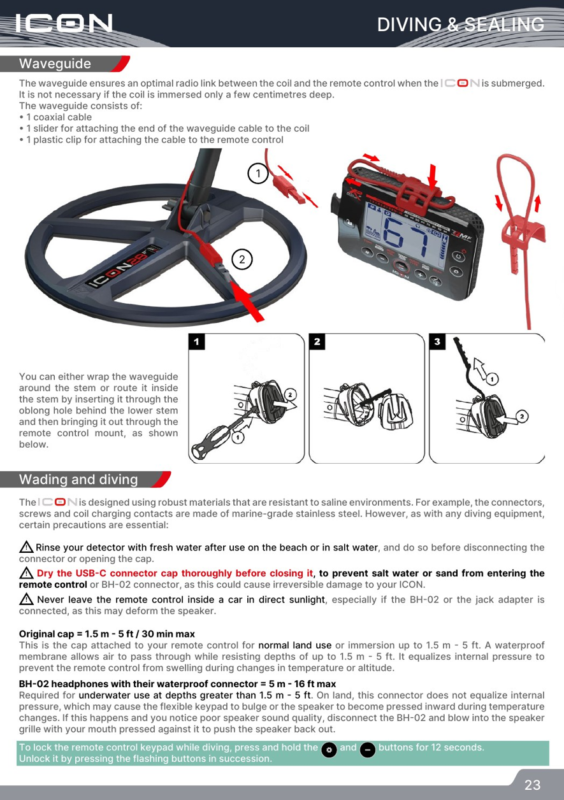
Waterproofing needs one important distinction. With the original remote-control cap, the manual specifies immersion up to 1.5 m for a maximum of 30 minutes. For deeper underwater use up to 5 m, the manual requires the BH-02 waterproof connector/headphones and a waveguide so the coil and remote maintain an effective radio link underwater. After salt-water use, rinse the detector with fresh water before disconnecting the connector or opening the cap, and dry the USB-C cap completely before closing it.
Battery Life, Charging and Storage
The supplied manual lists about 11 hours for the remote control and about 11 hours for the ICON28 coil in multi-frequency mode. The coil can reach longer runtimes in some single-frequency conditions. The manual lists approximately four hours for charging the remote, headphones and coil; XP’s current product page lists approximately three hours. Because these two official references differ, publish a conservative “approximately 3-4 hours” statement or verify the latest firmware/hardware specification immediately before publication.
For long-term battery health, XP recommends not storing LiPo batteries completely empty or fully charged for long periods. The manual suggests storing them around 40-80% charge and checking them periodically during extended storage. Use a certified 5 V USB power supply that meets XP’s stated requirements.
Troubleshooting Common ICON X Problems
| Problem | Likely cause | What to try |
| Unstable / false signals | Sensitivity too high, EMI, storm activity, nearby detector, incorrect ground setting, heavy iron contamination | Lower sensitivity; run Frequency Scan; try single frequency; move away from interference; perform Ground Grab; increase Reactivity in heavy contamination. |
| Coil does not switch on | Wrong coil selected, pairing problem, discharged battery | Select the correct coil, re-pair it, recharge and check the charging source. |
| Headphones power on but no target audio | Wrong coil/headphone pairing or firmware mismatch | Re-select the correct coil/headphones; re-pair; update the remote and headphones to compatible versions. |
| Very noisy beach | Black sand, variable salinity, excessive sensitivity | Use a beach program, perform ground setup, reduce sensitivity and increase Reactivity when needed. |
XP ICON X Technical Specifications
| Specification | Official-manual value / note |
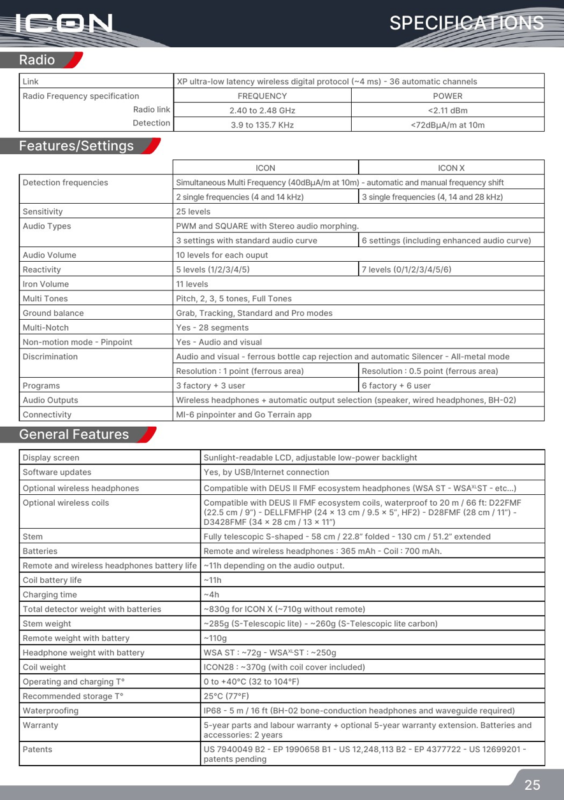
| Wireless protocol | XP ultra-low-latency digital protocol (~4 ms), 36 automatic channels |
| FMF / radio detection range | Detection specification in the manual: 3.9 to 135.7 kHz radio-frequency range; ICON X mono choices 4, 14, 28 kHz |
| Display | Sunlight-readable LCD with adjustable low-power backlight |
| Sensitivity | 25 levels |
| Reactivity | 7 levels (0-6) |
| Iron volume | 11 levels |
| Notch | 28 segments |
| Programs | 6 factory + 6 user |
| Compatible coils | D22FMF, HF2 (DELLFMFHP), D28FMF, D3428FMF listed in the manual |
| Stem | S-shaped telescopic; about 58 cm folded / 130 cm extended |
| Remote battery | 365 mAh |
| Coil battery | 700 mAh |
| Battery life | ~11 h remote; ~11 h coil in multi-frequency |
| Remote weight | ~110 g |
| ICON28 coil weight | ~370 g with cover |
| Operating / charging temperature | 0 to +40 C |
| Recommended storage temperature | 25 C |
| Waterproofing | IP68; up to 5 m with BH-02/waveguide underwater configuration |
| Warranty in supplied manual | 5-year parts and labour with registration/terms; batteries and connectors 2 years; optional extension described by XP |
Who Is the XP ICON X For?
Xp ICON X is well suited to users who want a light wireless detector that can be switched on and used with factory programs, but that also offers enough control to grow into more technical detecting. Its six programs cover clean fields, contaminated sites, parks and marine environments, while the wider Reactivity range and 28 kHz mono option give the X model more flexibility than the standard ICON.
It should not be presented as a ground scanner, long-range locator or a machine with a guaranteed fixed detection depth. XP does not publish one universal maximum target depth for ICON X because depth changes with target size, conductivity, coil, soil mineralization, salinity, EMI, settings and sweep technique.

Frequently Asked Questions
What is the difference between XP ICON and ICON X?
ICON X has 6 factory + 6 user programs, 4/14/28 kHz mono options, Reactivity 0-6, finer ferrous-area discrimination and more audio-response settings. The standard ICON has fewer programs and settings while using the same broader FMF platform.
What is the best XP ICON X program for the beach?
Wet Beach is the starting choice for dry or wet sand, while Beach & Surf is designed for marine environments and surf conditions. Final settings should be adjusted for black sand, salinity, trash and local EMI.
Is XP ICON X waterproof?
Yes, but the underwater setup matters. The supplied manual specifies the original remote cap for up to 1.5 m / 30 minutes and requires the BH-02 waterproof connector/headphones plus the waveguide for deeper use up to 5 m.
Which single frequencies does ICON X have?
ICON X offers 4, 14 and 28 kHz single-frequency choices in addition to FMF multi-frequency operation.
How long does the XP ICON X battery last?
The supplied manual lists about 11 hours for the remote and about 11 hours for the coil in multi-frequency operation. Runtime varies with audio output, frequency mode and battery condition.
Does ICON X work with the MI-6 pinpointer?
Yes. The MI-6 can pair with the detector so its audio and target-strength information are integrated with the XP wireless system.
Can ICON X use DEUS II FMF coils?
XP lists ICON / ICON X as compatible with key DEUS II FMF ecosystem coils, including D22FMF, D28FMF, D3428FMF and HF2 in the supplied manual.
What Reactivity setting should I use?
Use low values in clean ground when targets are well separated, 2-3 for general detecting, and higher values in iron-contaminated or mineralized ground when target separation is more important.
How deep can XP ICON X detect?
XP does not publish one fixed maximum target depth. Actual depth depends on target size and conductivity, soil, mineralization, salinity, coil, settings, EMI and sweep technique.
How do I reduce false signals on ICON X?
Lower sensitivity, run Frequency Scan, move away from EMI, perform Ground Grab, try a suitable single frequency and increase Reactivity if the ground is heavily contaminated.
Conclusion
The XP ICON X combines a simple startup experience with a surprisingly complete set of field controls. The best way to learn it is to start with the correct factory program, perform ground setup when needed, keep sensitivity stable rather than maximized, and then learn Reactivity, tones and discrimination one setting at a time.
For long-term SEO value, keep this guide updated when XP releases firmware changes or revises the product specification. Add a visible “Last updated” date after meaningful updates and refresh the screenshots only when the interface or operating procedure changes.
Official Sources and Further Reading
XP ICON / ICON X official product page
Metal detectors Exploring the World of Metal Detectors: Types, Applications, and Advancements
Metal detectors have come a long way since their inception in the early 20th century. Initially developed for military purposes, these devices have evolved into versatile tools used in a wide range of applications. From treasure hunting and archaeology to security screening and industrial processes, metal detectors play a pivotal role in modern society. In this comprehensive article, we’ll delve into the world of metal detectors, exploring their various types, applications, and recent advancements.
The Evolution of Metal Detector
The concept of a metal detector traces back to the early 20th century when scientists and engineers were working on improving existing technology. The idea was to develop a device capable of detecting hidden metal objects. The very first practical metal detector was invented by Alexander Graham Bell in 1881. Bell created this device to find a bullet lodged in the body of President James Garfield, who had been shot by an assassin. This early iteration was rudimentary compared to today’s metal detectors, but it marked the beginning of an exciting journey.
Types of Metal detector
Metal detectors come in various types, each designed for specific purposes. These types include:
- Beat Frequency Oscillation (BFO) Detectors: BFO detectors are one of the simplest and most affordable types. They work by comparing the phase and frequency of the oscillator’s signal when there’s a metal object nearby. These detectors are often used for beginners, but they lack the precision of more advanced models.
- Very Low-Frequency (VLF) Detectors: VLF detectors are more advanced and widely used by hobbyists. They work on the principle of two coils: one sends out electromagnetic waves, and the other receives them. When metal disrupts the waves, the detector signals a presence.
- Pulse Induction (PI) Detectors: Pulse induction detectors are known for their depth detection capabilities. They use short bursts of electricity to generate magnetic fields, and when a metal object is in proximity, the reflected pulse is detected. PI detectors are ideal for deep-seated targets and are commonly used in professional treasure hunting.
- Multi-Frequency Detectors: These detectors, often the most advanced, combine the capabilities of VLF and PI detectors. They can operate at various frequencies simultaneously, enhancing the range of detected metals and their discrimination abilities.
Applications of Metal Detector
Metal detectors have a broad range of applications, serving both personal and professional needs. Here are some of the most notable applications:
- Treasure Hunting: Perhaps one of the most popular hobbies involving metal detectors is treasure hunting. Enthusiasts use them to discover coins, relics, and other valuable items buried underground.
- Archaeology: In the world of archaeology, metal detectors are invaluable tools. They help archaeologists locate and unearth historical artifacts, adding to our understanding of past civilizations.
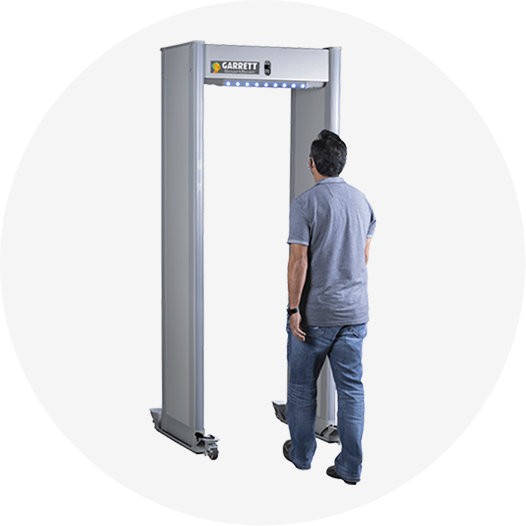
- Security Screening: Airports, government buildings, and public venues use metal detectors to enhance security. These detectors are designed to identify concealed weapons and ensure public safety.
- Industrial Use: Metal detectors are employed in various industries, including food processing and manufacturing, to detect metal contamination in products. This ensures product quality and safety.
- Construction and Utilities: In construction and utility work, metal detectors are used to locate buried pipes, cables, and other infrastructure to prevent accidents during excavation.
Recent Advancements and Technological Breakthroughs
Advancements in technology have significantly enhanced the capabilities of metal detectors in recent years. Some notable developments include:
- Improved Target Discrimination: Modern metal detectors can distinguish between different types of metals and filter out unwanted signals, reducing false alarms.
- Enhanced Sensitivity: New materials and design improvements have increased the sensitivity of detectors, allowing them to detect smaller and deeper targets.
- Wireless Connectivity: Many metal detectors now feature Bluetooth and Wi-Fi connectivity, allowing users to connect their devices to smartphones or tablets for more accessible data sharing and control.
- GPS Integration: GPS integration enables users to track and record their findings, making it easier to create maps of metal-detected areas.
- User-Friendly Interfaces: Manufacturers have made efforts to create more user-friendly interfaces, making metal detectors accessible to a broader audience.
Metal detectors have come a long way from their humble beginnings as rudimentary devices. Today, they serve a multitude of purposes and have evolved with technological advancements. Whether you’re an archaeologist, a treasure hunter, a security professional, or working in an industrial setting, metal detectors have proven their worth in a wide range of applications. With ongoing research and development, we can expect even more exciting innovations in the world of metal detection in the future, further expanding their capabilities and utility.
Certainly, let’s delve further into the world of metal detectors, discussing their historical significance, specific applications, and recent technological trends.
Historical Significance of Metal Detector:
Metal detectors have played crucial roles in various historical events and discoveries:
- Military Applications: One of the earliest uses of metal detector was during World War II, where they were employed to locate landmines and unexploded ordnance. These devices helped save countless lives by identifying hidden dangers.
- Archaeological Milestones: In 1974, British archaeologist Richard Leakey utilized a metal detector in the discovery of the Turkana Boy, a 1.5-million-year-old fossilized hominid skeleton. This highlighted the invaluable role metal detectors play in the world of paleontology and archaeology.
- Treasure Discoveries: Numerous significant treasure troves and artifacts have been uncovered by amateur treasure hunters using metal detector. These finds range from ancient coins and jewelry to historical relics and even lost family heirlooms.
Specific Applications of Metal Detector:
- Gold Prospecting: Many metal detectors are tailored to the unique properties of gold. Gold prospectors use detectors specifically designed to detect small gold flakes and nuggets, making them valuable tools for those seeking their fortunes in gold-rich areas.
- Beachcombing: Beachgoers often use metal detector to scan sandy shores for lost jewelry and coins. The corrosion-resistant properties of gold and silver make these detectors particularly effective for beachcombing.
- Underwater Metal Detection: Specialized underwater metal detectors are designed for scuba divers and treasure hunters seeking submerged treasures in shipwrecks and underwater archaeological sites.
- Relic Hunting: History enthusiasts use metal detector to locate relics from past wars and battles, such as Civil War-era artifacts in the United States or medieval relics in Europe.
- Cultural Heritage Protection: Metal detectorsare employed by heritage preservationists and archaeologists to protect historical sites from illegal looting and unauthorized metal detecting.
Recent Technological Trends:
- Digital Target ID: Many modern metal detector provide a digital target ID display, which helps users quickly identify the type of metal detected. This feature significantly enhances the efficiency of treasure hunting and archaeological work.
- Wireless Headphones: Wireless headphone compatibility has become a standard feature in many metal detector. This allows users to hear audio alerts without the hassle of cords, making the experience more comfortable.
- Smartphone Apps: Some detectors now offer smartphone app integration, enabling users to control and monitor their metal detector remotely. These apps also assist in GPS tracking and sharing findings on social media.
- Geo-Tagging: Geo-tagging features integrated into metal detectors allow users to mark the exact location of significant finds. This is especially valuable for archaeological purposes and to record historical data.
- Improved Battery Life: Recent advancements in battery technology have led to longer-lasting power sources for metal detectors, allowing users to stay in the field for extended periods without frequent recharging.
- Multi-Language Support: Many metal detectors offer multi-language support, making them accessible to a global audience of hobbyists, researchers, and professionals.
Conclusion
The world of metal detectors is a diverse and dynamic one, with devices that cater to a wide range of applications and users. From military uses and archaeological excavations to recreational treasure hunting, these tools have contributed significantly to our understanding of history and have uncovered countless valuable artifacts. With ongoing innovations, we can expect metal detectors to continue evolving, becoming more user-friendly and versatile, and facilitating new discoveries in the years to come.
The best metal detectors for detecting treasure When you’re on a tight budget, an elusive search is the best metal detector for detecting treasure. To find the best metal detectors for detecting treasure, you can easily spend hours comparing reviews and specifications. However, they don’t just call it the best metal detectors for detecting treasure. You can recover the Android phone that you dropped in the trash can, find a lost gold cache, or locate buried treasure with the best metal detector for detecting treasure.
The best metal detectors for detecting treasure
1- EQUINOX 900
The best metal detectors Minelab Equinox 900 is a ground and underwater metal detector for detecting treasure with multiple frequencies and uses. It also works perfectly for metal detecting gold nuggets because it has a special mode and two high operating frequencies. It lets you use multiple operation frequencies at once and choose just one (Multi – IQ).
Features
- The shaft
- The search coil
- Headset
- Battery
- Waterproofness
- Control unit
- Search modes
2-Titan Ger 1000
Gold, diamonds, gems, buried treasures, ancient monuments and cemeteries, archaeological caves, and all kinds of burials can now be found underground.
The TITAN GER -1000 has five search systems and a complete search station for finding underground treasure.
The technical features of this device are a dream come true for all prospectors and explorers worldwide, and the GER DETECT company put all of the highest technology into it to make it the first on the market.
The TITAN GER – 1000 was developed by our specialists to address all of the major issues prospectors have with existing devices.
The new technology in this device now works with five different search systems for the first time. It can search up to 45 meters below the surface and 2500 meters in front of it.
Features:
For the first time, the TITAN GER-1000 has five integrated scanning systems. It can reach 45 meters below the surface and 2500 meters in front of the prospector.
Specialized in the search for gold, precious metals, underground voids, and caves, and then locating them with high accuracy, this best gold metal Detectors for detecting treasure device is a full scanning station that includes five search systems.
3- CTX 3030
It’s a lot more sophisticated than most hobbyists are used to. This best gold metal detector for detecting treasure outperforms all others in terms of performance and effectiveness due to its onboard processing units.
We are going to take a look at what sets the Minelab CTX 3030 apart from other best metal detectors for detecting treasure in this review. Our objective is to give you the information you need to determine whether this best gold detector for detecting treasure Device is right for you.
In terms of technology, Minelab is one of the leading manufacturers of the best metal detectors for detecting treasure. Minelab, which is based in South Australia, has come a long way since its inception in 1985. The company continues to produce some of the finest hobbyist, military, and law enforcement equipment and has won numerous awards.
The metal detector known as the CTX 3030 is the result of decades of research and development. There is a lot that the metal detector can find. It has a lot of features and unique technology that you won’t find on any other metal detector.
Features:
- The Regularity
- The Coil
- GPS Tracking System
- Wireless Audio
- 5 Preset Hunting Modes
- Waterproof
- Fantastic Discrimination
- Value For Money
4- EASY WAY SMART
The smallest best gold metal detectors for detecting treasure device with radar sensing and 3D imaging capabilities
Features:
specializing in gold, treasure, and ancient antiquities detection in voids, caves, and tombs.
The only technology of its kind combines two systems into a single device, and the device can be completely hidden.
The best gold metal detector for detecting treasure Device has a front range of 2000 meters square and an underground depth of 18 meters.
One of the best German innovations is the Easy Way Smart Dual System Device, which has received the European C certification in accordance with international standards.
5- Deep seeker
The first of its kind, the Deep Seeker is built with five integrated search systems to find natural treasures in the ground like gold, antiquities, and precious metals.
Features :
The first best gold metal detector for detecting treasure of its kind, Deep seeker is designed with five integrated search systems to detect natural treasures in the ground, such as gold treasures, antiquities, and precious metals. It can set targets up to 40 meters underground and a 3000 meters surface search range. The first of its kind, Deep Seeker is a device.
Two control systems can be operated by Deep Seeker users: keyboard system and touch system.
A single device with five search engines.
It is available in six languages: English, German, French, Italian, Spanish, and Arabic).
In the search area, users can select the type of soil they want: natural, clay, rock, sand, mixed, metal, or metal) for more precise results.
It operates at a depth of 40 meters and has a front range of up to 3000 square meters.
the capacity to penetrate ground layers to extremely deep levels that many other tools cannot reach.
It works even in the most challenging climates and on any terrain.
Not all rocks and soils have an effect on the device.
It features a digital compass to assist users in determining north and south.
The sound, brightness, and device information settings are all found in the settings menu.
With all of its accessories, the device weighs 5 KG.
Two-year guarantee from the purchase date.
6- Gold Hunter Smart
The Gold Hunter Smart This best gold metal detector for detecting treasure Device has a number of features for searching the ground for diamonds, precious metals, gold, and other buried treasures.
Features:
The Gold Hunter Smart This best gold metal detector for detecting treasure Device has a number of features for searching the ground for diamonds, precious metals, gold, and other buried treasures.
-Superb speed in accurately locating and capturing targets.
– The system for quickly and precisely determining the target’s depth.
-The method for choosing a continent to search on.
-A screen that is compatible with the touch system, which has numerous benefits and features:
-A digital thermometer that displays the current temperature on the screen of the device.
-A digital timepiece.
-The possibility of turning the best gold metal detector for detecting treasure device’s sound off and on again.
-The Super Antenna enables the best gold metal detector for detecting treasure devices to cover extensive research areas.
-A radar search dish for better signal reception and enhancement.
FAQ
How deep can The gold be detected by The best gold metal detector for detecting treasure?
Over time, the best gold metal detector for detecting treasure has become more sophisticated, making it possible to locate gold and a wide variety of other metals. The best gold metal detectors for detecting treasure in the world can detect gold as deep as 40 to 60 meters.
How big should The best gold metal detector for detecting treasure metal detectors be?
In general, a low-cost gold metal detector for detecting treasure can detect objects up to about 6 inches, a good mid-range detector can detect objects up to 10-12 inches, and a high-end hobby detector can detect objects up to about 16 inches. Having said that, the depth you want your best gold metal detector for detecting treasure to detect should be. After all, the majority of discoveries are made within the first eight inches of the water’s depth.
.
Is a Diamond detected by the best metal detectors for detecting treasure?
This brings us to a crucial point: Non-metal objects like pearls, gemstones, and diamonds cannot be detected by the best metal detectors for detecting treasure. Prospectors use indicator minerals, which can be found with the best metal detectors for detecting treasure.
You’re looking for metals, precious stones. underground water, or even treasure detectors. Because of its performance and quality, Ger Detect devices for gold and metal detectors must be a brand you’ve heard of. As a result, we provide a brief synopsis of the Ger Detect devices for gold and metal detectors products that are currently available and the characteristics of each one.
The best Ger Detect Devices for gold and metal detectors:
- 1- Ger Detect Devices for gold and metal detectors: Deep seeker
- 2- Ger Detect Devices for gold and metal detectors: Diamond hunter
- 3- Ger Detect Devices for gold and metal detectors: EASY WAY SMART
- 4- Ger Detect Devices for gold and metal detectors: Titan Ger 1000
- 5- Ger Detect Devices for gold and metal detectors: Gold Hunter Smart
GER DETECT Devices for gold and metal detectors : Deep seeker
underground gold detector by Deep Seeker; a single Ger Detects device for gold and metal detectors with five search systems for finding underground treasures like precious metals and ancient monuments.
The first-of-its-kind Ger Detects devices for gold and metal detectors in the world that uses five new systems to find treasures hidden underground, like precious metals, ancient monuments, caves, and cavities in the ground.
The Deep Seeker is made to work in the most challenging climates and on any kind of terrain.
DEEP SEEKER is the best Ger Detects device for gold and metal detectors long-range treasure. It uses automatic calibration technology to skip all kinds of rocks, including sedimentary, metamorphic fossils, and magmatic rocks.
There are two kinds of magmatic rocks:
Basalt and granite: They are the worst kinds of rocks, making it hard for many devices on the market to work. This is because these rocks changed as a result of their chemical interaction with the ground, turning them into a rock texture that resembles metal parts.
Deep seeker is a single Ger Detects devices for gold and metal detectors that supports five distinct search engines:
- 1: Search for ionic fields
- 2: System for searching magnetic metals
- 3: method for detecting cavities
- 4: A system for 3D imaging
- 5: Long-range weaponry
GER DETECT Devices for gold and metal detectors : Diamond hunter
DIAMOND HUNTER is a long-range diamond detector that searches underground for diamonds and gemstones for the first time in technology.
The diamond hunter diamonds-searching machine has a super antenna that uses spiral systems to search over vast distances and across vast areas.
Two transmission circuits—a transmitter and a receiver—operate in accordance with the principle of ground induction in this super antenna.
Operation of the antenna: installs a super antenna in its own location on the device. When the Ger Detect devices for gold and metal detectors device is running, the transmitter circuit sends a signal to the receiver circuit, and the antenna generates an eddy current (spiral current) that multiplies the waves by more than 1000 times, allowing the Ger Detect devices for gold and metal detectors device to cover a larger area in a shorter amount of time.
GER DETECT Devices for gold and metal detectors : Easy way smart
This tool has been completely upgraded by GER Detect devices for gold and metal detectors to help prospectors find their target in less time and over a greater distance.
The only technology in the world that combines two systems into a single device is world-exclusive.
with confidence and ease, specializing in prospecting for gold, precious metals, burial grounds, caves, and voids in the ground.
The smallest device with radar sensing and 3D imaging capabilities that can be completely hidden.
Systems Radar with a long range:
The world’s first device with a single handgrip radar sensor system was created by GER Detect devices for gold and metal detectors
With a radar structure that is characterized by the analysis of radar waves that measure the characteristics of a target, a grip is extremely effective.
In other words, it is a target signal transmitter and receiver as well as a high-precision dual-frequency radar.
a radar system that consistently has the ability to detect and measure small ground targets and incorporates unique and sophisticated algorithms to locate the target.
The long-range system’s front range can cover as much as 2000 square meters, or 500 meters in each direction; It can also penetrate the ground to a depth of 18 meters.
System for 3D Imaging:
The prospector can use this system to avoid making mistakes when using the long-range system and to confirm the target’s existence.
The 3D imaging system can be used to scan for the target that has been identified by the radar system.
There are a few characteristics of the EASY WAY SMART Ger Detects devices for gold and metal detectors device:
An Android app that works in multiple languages and supports this system is: English, German, French, Italian, Spanish, Arabic, Portuguese, and Russian).
soil is used for automatic calibration.
Feature for automatic ground scanning.
Underground, it reaches a depth of 18 meters.
GER DETECT Devices for gold and metal detectors : Titan Ger 1000
Titan ger 1000, cutting-edge technology for finding underground treasures and gold
Features:
The TITAN GER-1000 is the first Ger Detect Devices for gold and metal detectors with five integrated scanning systems. It can reach 45 meters below the surface and 2500 meters in front of the prospector.
Specialized in the search for gold, precious metals, underground voids, and caves, and then locating them with high accuracy, this device is a full scanning station that includes five search systems.
a single device with five search engines.
Easy to use and of a small size.
The touch-screen device displays the search results.
the 45-meter device depth.
under the Underground, the possibility of determining the target depth.
front range of up to 2,500 meters, with the possibility of determining the required front range starting at 500 meters, 1000 meters, 1500 meters, 2000 meters, or 2500 meters, and an underground depth of 45 meters.
The four languages that the device supports are Arabic, German, English, and French.
warranty and a certificate of origin valid for two years from the purchase date.
The ger detect for gold and metal detectors device alone weighs nine kilograms, making it a first-class product in the German industry.
The ger detect for gold and metal detectors device worked in any situation and on any terrain.
The ger detect for gold and metal detectors device is unaffected by rocks and soils of any kind.
One of the best German innovations is the Titan Ger – 1000 Device, which has European c certification in accordance with international standards.
GER DETECT Devices for gold and metal detectors : Gold Hunter Smart
The Gold Hunter Smart device has a number of features for searching the ground for diamonds, precious metals, gold, and other buried treasures.
Features:
-Superb speed in accurately locating and capturing targets.
– The system for quickly and precisely determining the target’s depth.
-The method for choosing a continent to search on.
-A screen that is compatible with the touch system, which has numerous benefits and features:
-A digital thermometer that displays the current temperature on the screen of the device.
-A digital timepiece.
-The possibility of turning the device’s sound off and on again.
-Super Antenna, which enables the device to cover extensive research areas.
-A radar search dish for better signal reception and enhancement.
FAQ|
How to detect gold and coins under the ground?
The quickest, most user-friendly, most up-to-date, and most accurate method for finding gold and coins in the ground. The Gold Seeker device distinguishes between precious and non-precious metals using two systems. penetrates as deep as 3.5 meters into the ground.
What are Ger detect devices for gold and metal detectors?
The leading manufacturer of the most recent products for water, metal, diamond, gemstone, and gold detection is GER DETECT devices for gold and metal detectors COMPANY. a single apparatus that houses all five search systems and is geared toward the detection of ancient treasures, ancient artifacts, voids, caves, and tombs as well as underground gold.
What is the range of Titan GER 1000?
The Ger Detects Devices for gold and metal detectors device has a front range of 2500 meters square and a depth of 45 meters below the surface. The TITAN GER 1000 device is one of the best German devices. In addition to the international ISO 9001 certificate, it has the European CE certification in accordance with international standards.
Where can I buy a gold and metal detector ? Finding the right model for your intended use, skill level, expectations, and budget is difficult in the vast gold and metal detector market. Our top picks are listed here, so you can choose from high-end gold and metal detectors or an affordable entry-level model that works well.
You should be able to get started on your search with these suggestions. Check out our in-depth information on Gold and Metal Detectors from Detectors shop if you’re unsure about any terminology or the value of any features listed in these gold and metal detector reviews. This will help you make a better buying decision.
How to Select the Best Gold and Metal Detector?
Understanding the product prior to purchasing the best gold and metal detector is always essential. These findings may include additional factors related to performance. As a result, before making a decision, we recommend that you compare the value of the product to its price.
By conducting in-depth research and making comparisons, only you can avoid wasting your valuable time. We’ve already done the research and made comparisons to save you time. You can get the performance you want in the quickest time possible with the best gold and metal detector without sacrificing anything.
Trust Brand:
Check the manufacturer’s reputation in the current market before purchasing the best gold and metal detector. For a successful gold and metal detector, it is essential to locate information that is both reliable and easy to use. You can learn more about a product by comparing different brands and reading customer reviews. During and after the sale, you can also learn about the company’s services.
Items tend to be more expensive, such as the gold and Metal Detector. However, in order to provide the highest level of performance and customer service, that product might necessitate a greater financial investment. As a result, some businesses may not even have a concept when they enter the market. They have the potential to compete in the market and win.
Practical Features:
This is the next aspect to consider when looking for the best gold and metal detector. Always try to locate a product with the features you require. Focus on the most essential or essential aspects of each product, as we suggest.
Pros and Cons
It is nearly impossible to obtain a product that is excellent in every way. As a result, the product you choose might have both positive and negative aspects.Therefore, concentrate on the most significant benefits and demonstrate how they meet your requirements for the best gold and metal detector. Instead, the product’s flaws may show how useful they are in real-time applications.
Performance and Durability:
There are a number of ways to choose the best gold and metal detector based on performance and durability, regardless of user reviews. Try to determine the source of the product’s materials. The best products are made from the best materials available at the moment.
Top 5 gold and metal detectors from Detectors Shop company?
Anfibio Multi
to find gold jewelry, such as bracelets and rings, as well as old coins, tiny metal items, and other things
Features :
- Simple to use
- Quick reaction
- Dimension range
CTX 3030:
Up to a depth of 3 meters, the tool successfully finds gold-colored artifacts and gold ore.
Features:
- Target Trace,
- GPS, PC Mapping, and wireless audio freedom are just a few examples. It is the pinnacle of the Minelab Treasure range.
- Metal detectors for coins and artifacts. A straightforward, turn-on-and-go metal detector with a variety of additional coil configurations and waterproof down to 3 meters, it is guaranteed to turn up numerous priceless historical artifacts.
Deep Hunter Pro
to locate tiny objects like single coins, gold, jewelry, and other microscopic objects at depths that other detectors are unable to reach.
Features:
- Exceptional Technology
- The motion mode and non-motion mode are both available on the Deephunter metal detector.
Deep Seeker
a complete professional instrument with five systems for detecting treasure, gold, precious metals, cavities, and caves underground.
Features:
- Five search systems in one device
EASY WAY SMART DETECTOR
The smallest device with two systems for detecting treasures, cavities, underground gold, and precious metals
Features:
- The following is a multilingual Android application that supports this strategy: German, English, French, Italian, Spanish, Arabic, Portuguese, and Russian are all included.
- Automatic calibration based on soil.
- An automatic ground scanning feature.
- It plunges 18 meters under the earth.
- watch our chanel in You tube for more information
How can you buy a gold and metal detector device from the Detectors Shop company ?
We accept credit cards and PayPal payments and offer electronic shopping as a convenience. The company’s management is delighted to welcome all of our cherished clients. We hope you enjoy your time on our website and plan to visit our showrooms soon to see the most up-to-date and accurate research and exploration technology as well as real-world examples of our professionalism. Services The company you manage must have offered the best and lowest price, which would not have been available when we changed because we are accredited agents of global factories and manage a group of integrated training programs and price deals.

Final Words
Our evaluation of the Best gold and Metal Detector is now complete. We anticipate that our research will assist you in purchasing the appropriate product. In order to ensure that you receive products of the highest quality, we have provided a thorough explanation of the applications, features, and benefits.
We have previously demonstrated why our recommended products are superior, so please consider purchasing.
The Best Devices for Gold & Metal Detectors Searching for hidden treasures and valuable metals? Look no further. Finding the right gold metal detector is your first step towards hitting the jackpot. With numerous options on the market, it’s crucial to select a device tailored for detecting precious metals, particularly gold. Whether you’re after nuggets, jewelry, or fine grains, the device’s capabilities matter.
In this guide, we’ll introduce you to some of the finest gold metal detectors available. Our buying guide and comparison chart will delve into the features of these products. Let’s dive in:
Top 5 Gold Metal Detectors 2022
1. Garrett AT Gold: The Ultimate Choice The best gold detector
Garrett, a reputable manufacturer, presents the AT Gold metal detector. While aimed at gold prospectors, this unit can detect various metals. Its user-friendly control box and exceptional performance make it stand out. The adjustable frequency, reaching up to 18 kHz, enables the detection of even the tiniest gold pieces. Its versatility, lightweight design, and waterproof build make it a go-to choice for treasure hunting.
Pros:
- Waterproof control box.
- Adjustable cuff.
- Iron filter.
- Variable high-frequency settings.
- Targeting system.
Cons:
- Not suitable for saltwater use.
- Lacks coil cover and casing.
1. The Best Gold Metal Detector: The Garrett AT Gold
The name Garrett refers to a relatively well-known manufacturer of high-quality gear.
The model of this gold metal detector is also the same. Even though it is marketed to people who are looking for gold, this unit can find any kind of metal.
The best gold detector has a well-designed control box that is easy to use.
This detector offers a lot in terms of performance. It has a frequency setting that can be changed. To assist you in finding even the tiniest pieces of gold, you can set the detector all the way up to 18 kHz. This isn’t all.
Overall, the Garrett AT the best Gold metal detector is our pick. It is a versatile piece of equipment that is well-equipped to assist you in finding precious metals. You can take the best gold metal detector almost anywhere due to its lightweight design and waterproof construction.
Pros:
- box with a waterproof control
- adjustable cuff
- Filter for iron
- different high-frequency settings
- Targeting system
Cons:
1. Unsuitable for usage in situations with saltwater
2- Is missing a coil cover and a casing.
2. Minelab CTX 3030: The best gold detector
It’s easy to see why the Minelab CTX 3030 is one of the most popular gold metal detectors on the market. From gold prospecting to relic hunting, this adaptable detector can be used for a variety of tasks. It is ideal for both novices and seasoned treasure hunters due to its numerous features, which include a menu that is available in multiple languages, an automatic ground balance, and a robust waterproof design. Most importantly, it is extremely user-friendly.
connect Us for Get The best gold detector
The CTX 3030 is not only easy to use but also very adaptable. It works well in both highly mineralized soils and salty environments like beaches, detecting everything from gold to iron.
Additionally, the CTX 3030 offers five pre-set search modes from which you can select if you are searching for a particular kind of target. Its wireless module WM 10 makes it possible to use either the headphones that come with the device or your own set.
The CTX 3030 is one of the most expensive gold metal detectors on the market, which is its only drawback. The Minelab CTX 3030, on the other hand, is definitely something to think about if you really want to go treasure hunting.
In general, people looking for a new best gold metal detector will find that the CTX 3030 is an excellent option.
Pros:
1- Watertight up to ten feet (3 meters)
2- Module for wireless audio
3. Simple to use
Cons:
- Costly price tag
3. The best gold detector – fisher gold Bug pro
Fisher’s Gold Bug Pro is designed specifically to assist you in finding gold. It has a setting for extremely high frequencies.
The best gold metal detector has a much higher operating frequency of 19 kHz than the average unit. As a result, it is an excellent tool for locating even the tiniest gold nuggets.
In addition, Fisher has included a number of performance features to simplify your best gold metal detecting adventures.
For instance, the V-Break tone discrimination system makes it simple to ignore undesirable metals.
The best gold detector
Across the board, the Fisher Gold Bug Pro performs admirably. It is undeniable that this best gold metal detector will assist you in finding gold in places that standard options cannot, despite our wish that it had frequency settings that could be adjusted.
Pros:
- Operation at ultrahigh frequencies
- It weighs less than 3 pounds.
- V-Break filter
- easy controls
- automatic ground balance
Cons:
- Unable to change the frequency
4. The best gold detector- Minelab Gold Monster 1000
Take a look at this Minelab high-tech gold metal detector. The best gold detector
The best gold metal detector is well-built and easy to use thanks to its straightforward design. To ensure a snug fit, you can adjust several components. We are willing to put our money on the fact that this best gold metal detector is more than capable of finding gold based on the frequency setting and sensitivity adjustments.
45 kHz is the highest frequency at which you can search for metal. That is nearly three times higher than the previous best gold metal detector that we suggested. The best gold metal detector can quickly detect smaller nuggets on the high frequency setting.

Having said that, the best gold metal detector is excellent for novices. It’s almost foolproof. The system automatically adjusts sensitivity and reduces noise.
Pros:
- automatic process
- At least 45 kHz
- Mineralization filter, stage 3
- Includes two distinct search coils.
- Compact design
Cons :
- Some people could find the control screen perplexing
- It might not have enough ability to deal with little gold pieces
5. Fisher’s Gold Bug Metal Detector is the most Affordable option.
The best gold detector This Fisher metal detector gives a modern take on an old pastime with its sleek design.
It’s surprising how light the product is. Additionally, the primary control box is small. The unit, in general, lets you pick up and go with no extras.
The best gold metal detector is also much more affordable than some of the more expensive alternatives because of its relatively low price.
The best gold detector
Pros:
- Minerals are ignored in discriminate mode.
- A targeting system
- An operating frequency of 19 kHz
- Simple controls and an LCD digital display
- voltage control oscillator with two tones
Cons:
- Unable to change the frequency
- The mineralization filter is not the strongest one available.
FAQ|
Why Can’t All Detectors Find Gold?
The best gold metal detector must have the appropriate controls to deal with ground conditions that can be noisy, obscuring the detector’s ability to “see” gold nuggets in the ground because gold typically occurs in difficult ground-mineralization.
For maore information Visit Our chanel in YouTube
How do best The best gold detector?
The working principle of gold detectors appears to be complicated at first glance, but the following principle canThe best gold detector simplify it: The signal of the electromagnetic field that is reflected from hitting a piece of metal, such as a gold nugget or coin, is processed by the metal detector as it sends an electromagnetic field toward the ground.
How to Select the Best Gold and Metal Detector? Understanding the product prior to purchasing the best gold and metal detector is always essential. These findings may include additional factors related to performance. As a result, before making a decision, we recommend that you compare the value of the product to its price.
By conducting in-depth research and making comparisons, only you can avoid wasting your valuable time. We’ve already done the research and made comparisons to save you time. You can get the performance you want in the quickest time possible with the best gold and metal detector without sacrificing anything.
Trust Brand:
Check the manufacturer’s reputation in the current market before purchasing the best gold and metal detector. For a successful gold and metal detector, it is essential to locate information that is both reliable and easy to use. You can learn more about a product by comparing different brands and reading customer reviews. During and after the sale, you can also learn about the company’s services.
Items tend to be more expensive, such as the gold and Metal Detector. However, in order to provide the highest level of performance and customer service, that product might necessitate a greater financial investment. As a result, some businesses may not even have a concept when they enter the market. They have the potential to compete in the market and win.
Practical Features:
This is the next aspect to consider when looking for the best gold and metal detector. Always try to locate a product with the features you require. Focus on the most essential or essential aspects of each product, as we suggest.
Pros and Cons
It is nearly impossible to obtain a product that is excellent in every way. As a result, the product you choose might have both positive and negative aspects.Therefore, concentrate on the most significant benefits and demonstrate how they meet your requirements for the best gold and metal detector. Instead, the product’s flaws may show how useful they are in real-time applications.
Performance and Durability:
There are a number of ways to choose the best gold and metal detector based on performance and durability, regardless of user reviews. Try to determine the source of the product’s materials. The best products are made from the best materials available at the moment.
Top 5 gold and metal detectors from Detectors Shop company?
- CTX 3030
- Deep Hunter Pro
- Deep Seeker
- EASY WAY SMART DETECTOR
Anfibio Multi
to find gold jewelry, such as bracelets and rings, as well as old coins, tiny metal items, and other things
Features :
- Simple to use
- Quick reaction
- Dimension range
CTX 3030:
Up to a depth of 3 meters, the tool successfully finds gold-colored artifacts and gold ore.
Features:
- Target Trace,
- GPS, PC Mapping, and wireless audio freedom are just a few examples. It is the pinnacle of the Minelab Treasure range.
- Metal detectors for coins and artifacts. A straightforward, turn-on-and-go metal detector with a variety of additional coil configurations and waterproof down to 3 meters, it is guaranteed to turn up numerous priceless historical artifacts.
Deep Hunter Pro
to locate tiny objects like single coins, gold, jewelry, and other microscopic objects at depths that other detectors are unable to reach.
Features:
- Exceptional Technology
- The motion mode and non-motion mode are both available on the Deephunter metal detector.
Deep Seeker
a complete professional instrument with five systems for detecting treasure, gold, precious metals, cavities, and caves underground.
Features:
- Five search systems in one device
EASY WAY SMART DETECTOR
The smallest device with two systems for detecting treasures, cavities, underground gold, and precious metals
Features:
- The following is a multilingual Android application that supports this strategy: German, English, French, Italian, Spanish, Arabic, Portuguese, and Russian are all included.
- Automatic calibration based on soil.
- An automatic ground scanning feature.
- It plunges 18 meters under the earth.
best Gold and metal detector
“Is Metal Detecting Worth It?” – Exploring the Rewards of a Unique Hobby Embarking on a new hobby often involves a simple pursuit of enjoyment without delving into the potential return on investment, especially in monetary terms. Hobbies are typically pursued for pleasure rather than professional gain. However, metal detecting emerges as a notable exception within the realm of hobbies due to its intriguing potential for financial reward. While the returns can sometimes be modest, the allure of discovering valuable items adds a unique dimension to this pastime. Metal Detecting Worth It
With that in mind, is metal detecting worth it? YES!
Yes – Metal Detecting Is Worth It And Here’s Why…
There are so many positives when it comes to trying to decide whether or not metal detecting is worth investing in as a hobby, because first and foremost, YOU TRULY CAN FIND TREASURE!! With that statement, it goes without saying (but I’ll say it anyways), metal detecting is worth it!
Loads of coins and treasure found in Toronto, Canada. Metal Detecting Worth It
Not many other hobbies exist where you have a chance at finding something worth thousands of dollars while simply just walking around, enjoying a day outside. If the possibility of finding things worth thousands of dollars doesn’t sound good, here are several other reasons to help convince you why metal detecting is a worthwhile hobby.
Does Metal Detecting Take Time Away From Your Other Hobbies?
I would be lying to you if I told you that your other hobbies won’t be affected should you decided to pick up metal detecting as a new hobby. I was an avid golfer, playing 3-4 times per week and even enjoyed competing in a few amateur tournaments, but then I decided to get a metal detector because I wanted to go on an “adventure” and with adventure meant finding treasure.
In order to find treasure, I either needed a map with an “X” on it or I needed a metal detector to locate that treasure buried in the ground. Well, since I had no maps with an “X” on it, I opted for the latter and the rest is history. Metal Detecting Worth It
Playing golf began to take a backseat when it came time to choose what I was going to do with my free time as the treasure bug had hit me hard.
The more I dug, the more I fell in love with the hobby which meant less time for activities like golf. It didn’t matter if I was digging zinc pennies, pull tabs, tin foil, or silver coins, I just loved the “thrill of the hunt” feeling. Metal Detecting Worth It
Preparing to go out detecting after reading up on an a recent article that will give you places to go metal detecting, another blog post I wrote, could help kickstart the treasure hunting motor inside you and may create excitement as you begin to think about the treasure you could unearth all around you.
Can You Make A Living Metal Detecting
If you’ve ever thought about trying to be able to make a living from metal detecting, you’re not alone. Being able to build a career around doing what you love is something many people strive for. In order to make a living from metal detecting, it will take being creative and doing more than just swinging your coil over a few coins or rings if you hope to earn enough money to live sustainably. Metal Detecting Worth It
summary
Everyone has their own reasons when it comes to starting a hobby. Metal detecting is no different. Regardless your reasons whether it be metal detecting for profit, for exercise, to explore the outdoors, or to just make some new friends, metal detecting is most certainly a hobby that is worth it.
Why do you metal detect? Has it replaced any of your hobbies and if so, what ones? Leave a beep below and let me know.
For more details and inquiries related to the prices of gold detectors, please contact us through our platforms on social media, or contact us directly through our website, click here