











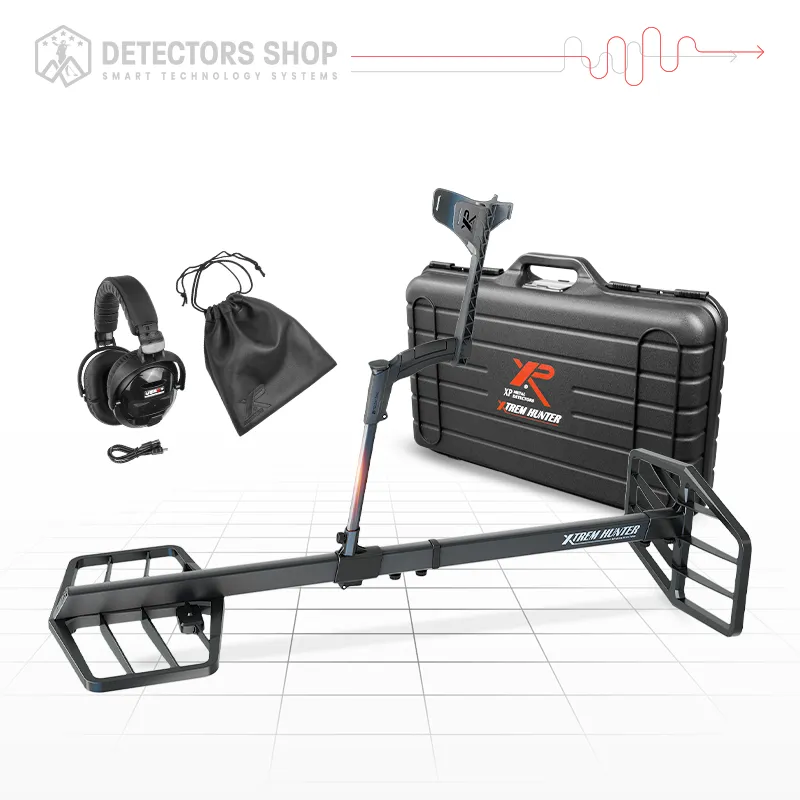
This XP XTREM HUNTER review examines a specialized deep-seeking metal detector designed to locate large metallic objects at depths beyond the practical range of most conventional search coils. Manufactured in France by XP Metal Detectors, the system combines a two-box coil configuration, simultaneous Fast Multi Frequency technology, iron amplitude rejection, and full integration with the wireless DEUS II platform.
According to XP’s official specifications, the XTREM HUNTER can detect appropriately sized metallic targets at depths reaching up to 5 meters under favorable conditions. Its coil geometry is intentionally less responsive to many small objects near the surface, allowing the operator to concentrate on larger and deeper metal masses such as substantial relics, buried containers, metal pipes, tanks, and grouped metallic objects. The complete assembly weighs approximately 2.9 kg with the remote control and is designed to be operated by one person.
Table of Contents
However, the advertised maximum depth should be understood correctly. The XTREM HUNTER is not designed to detect an isolated coin, small piece of jewelry, or tiny gold nugget at five meters. Actual performance depends on target size, metal composition, orientation, soil mineralization, electromagnetic interference, search settings, and the operator’s technique.
This review explains how the XP XTREM HUNTER works, its main settings, compatible components, field workflow, target capabilities, advantages, limitations, and the type of user who will benefit most from this professional deep-searching system.
What Is the XP XTREM HUNTER review?
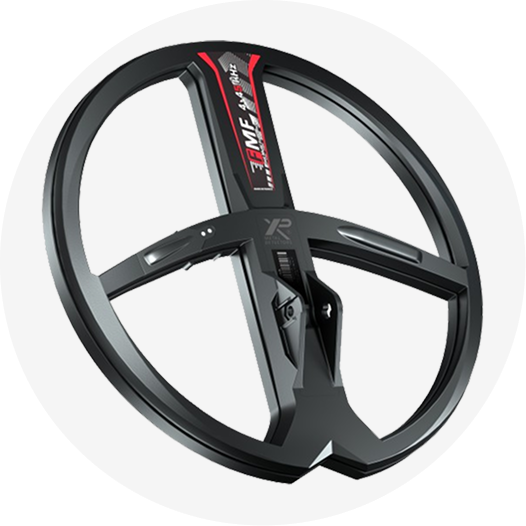
The XP XTREM HUNTER is a professional two-box deep-seeking metal detector built around the wireless DEUS II ecosystem. A front transmitting coil and a rear receiving coil are mounted on a lightweight frame, creating an electromagnetic field designed to respond primarily to larger underground metallic objects.
Unlike a standard metal detector, the operator does not continuously sweep the XTREM HUNTER from side to side close to the ground. Instead, the detector is carried horizontally while the operator walks slowly across the search area. Maintaining a stable height and direction is important for achieving a consistent threshold and recognizing genuine target responses.
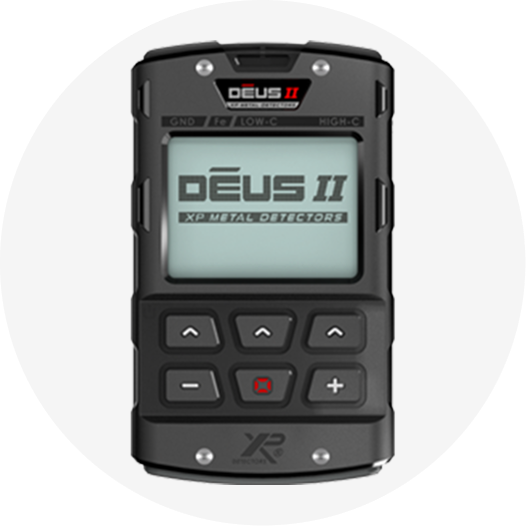
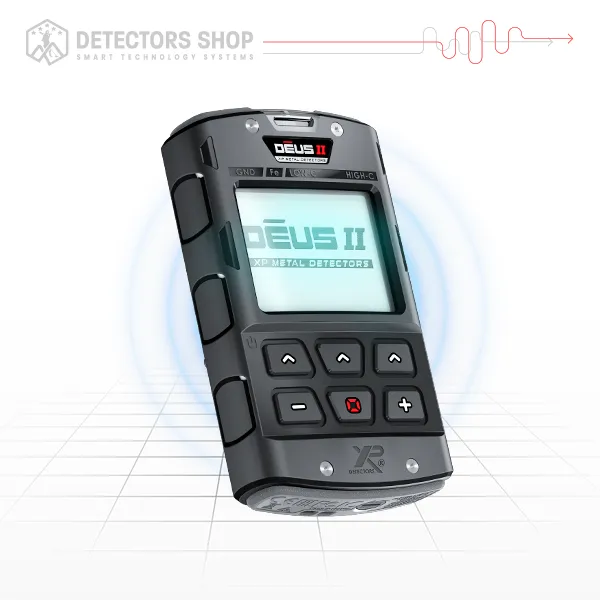
Within the XP ecosystem, the XTREM HUNTER functions as a specialized deep-searching accessory for the DEUS II Remote Control. After pairing it as a new search coil, the remote automatically displays a dedicated XTREM HUNTER interface with controls optimized for wide and deep targets. The user can later switch back to a conventional DEUS II coil to inspect or pinpoint a target detected at a moderate depth.
XP Metal Detectors is a French company based near Toulouse, and the manufacturer states that its products are designed and produced in France.
XP XTREM HUNTER at a Glance
| Specification | XP XTREM HUNTER |
|---|---|
| Manufacturer | XP Metal Detectors |
| Country of manufacture | France |
| Detector type | Two-box deep-seeking metal detector |
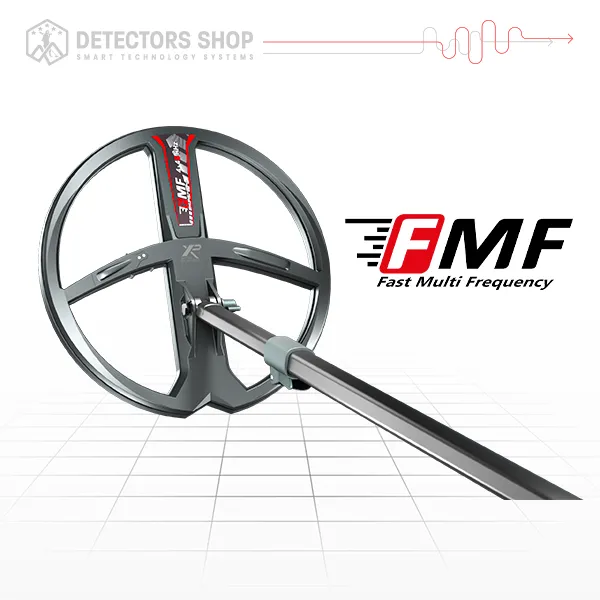
| Detection technology | Simultaneous Fast Multi Frequency – FMF |
| Primary target type | Large and deep metallic objects |
| Manufacturer-rated depth | Up to 5 m under suitable conditions |
| Operating method | Non-motion with adjustable Auto Tune |
| Control platform | DEUS II Remote Control |
| Factory programs | 1 factory program |
| Custom programs | 2 user programs |
| Sensitivity | 0–99 |
| Iron discrimination | Disc IAR from OFF to 5 |
| Threshold | 0–20 |
| Reactivity | Levels 1–3 |
| Auto Tune | OFF or levels 1–3 |
| Frequency Shift | 14 bands, automatic or manual |
| Audio Response | Levels 1–4 |
| Ground Balance | Manual or Ground Grab |
| Audio types | Square and Pulse |
| Display | Dynamic four-second signal graph |
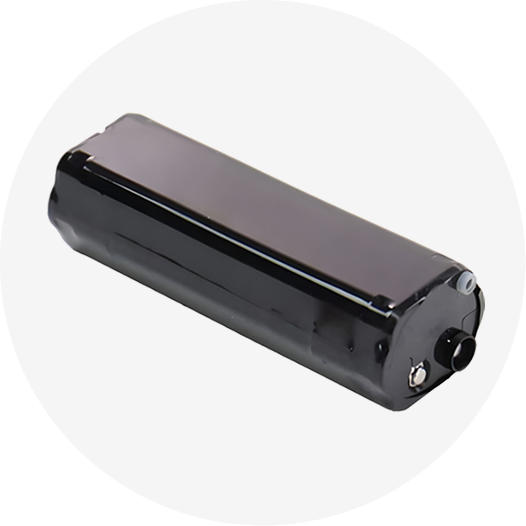
| Battery | Rechargeable Li-ion 18650 |
| Battery life | More than 10 hours |
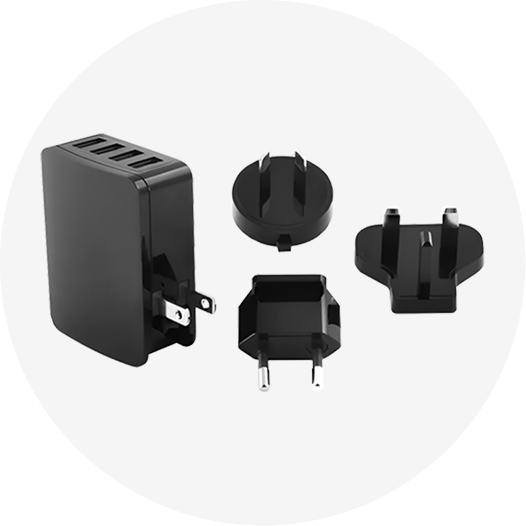
| Charging time | Approximately 4 hours |
| Assembled length | 1.20 m |
| Detector weight with remote | Approximately 2.9 kg |
| Weight inside XP case | Approximately 5.8 kg |
| Carrying case | Rain-resistant and shock-resistant case included |
| Detector warranty | 5 years for parts and labor |
| Battery and connector warranty | 2 years |
These figures are taken from the official XP XTREM HUNTER manual. Package contents may differ according to whether the customer purchases the complete detector set or an accessory package intended for an existing DEUS II owner.
How the Two-Box FMF System Works
Conventional metal detectors are designed to find a broad range of targets, from small coins near the surface to larger metallic objects at greater depths. This versatility can become a disadvantage when the operator is specifically searching for a large, deeply buried object.
Small nails, bottle caps, pieces of wire, and other shallow metal can produce responses that distract the operator or partially mask a larger target underneath. Changes in ground mineralization and unavoidable movement of the coil can also create instability.
The XTREM HUNTER uses widely separated transmitting and receiving coils. The shape and distribution of its electromagnetic field make the detector naturally less sensitive to many small surface objects. This allows it to search through the upper layers of the ground while focusing more strongly on larger metal masses.
XP’s simultaneous FMF platform also helps reduce the instability traditionally associated with older single-frequency two-box detectors. The system is designed to limit ground effects and reduce false signals caused by variations in coil height and movement during walking.
The XTREM HUNTER should not be confused with ground-penetrating radar or a three-dimensional underground scanner. Its screen displays a dynamic representation of the metal-detection signal; it does not produce a photographic image of the buried object or display its exact shape.
XP XTREM HUNTER Detection Depth
XP advertises a maximum detection depth of up to 5 meters, approximately 16.4 feet. That figure applies to sufficiently large metallic targets under appropriate soil and environmental conditions.
Detection depth is not a fixed number. It changes according to:
- Target dimensions and total metallic mass.
- Ferrous or non-ferrous composition.
- Target orientation underground.
- Soil mineralization and moisture.
- Nearby electromagnetic interference.
- Ground Balance, Sensitivity, Reactivity, and Audio Response.
- Search height and walking stability.
- Operator experience.
A large tank, substantial metal pipe, buried container, or concentrated group of metallic objects can produce a detectable response at a much greater depth than an individual coin. Therefore, the five-meter figure should never be interpreted as the expected depth for every target.
Targets the XTREM HUNTER Is Designed to Locate
The detector is suitable for searching for:
- Large buried metallic relics.
- Metal containers and boxes.
- Substantial groups or caches of metallic objects.
- Underground tanks and reservoirs.
- Metal pipes and industrial conduits.
- Large ferrous and non-ferrous objects.
- Significant structural or industrial metal components.
Targets It Is Not Designed For
The XTREM HUNTER is not the correct detector for:
- Individual coins at extreme depths.
- Small jewelry and thin chains.
- Tiny natural gold nuggets.
- Fine gold prospecting.
- Very small surface targets.
- Underground caves or empty spaces without metal.
- Exact identification of a specific metal type.
XP specifically explains that the system is intended for large deep targets and not isolated coins. A grouped mass of coins may generate a response, but an individual coin is outside the detector’s primary purpose.
Iron Discrimination and Small-Target Rejection
One of the XTREM HUNTER’s important features is Disc IAR, or Iron Amplitude Rejection. The adjustment ranges from OFF to level 5.
With Disc IAR switched off, the detector does not attempt to reject ferrous responses. Increasing the setting allows it to classify some ferrous targets according to their signal amplitude and distance from the coils.
The XTREM HUNTER naturally ignores many very small ferrous objects such as nails and bottle caps. Moderately sized iron objects, including items similar in size to tools, horseshoes, or anchors, may be identified with a lower audio tone and a gray or hatched indication on the screen.
Iron rejection is not absolute. A large, unusually shaped, or deeply buried iron target may still produce a response that resembles a non-ferrous object. Excessive IAR in an area containing heavy iron contamination can also mask a larger desirable target. For this reason, promising signals should be checked from more than
DEUS II Compatibility
The XTREM HUNTER requires a compatible DEUS II Remote Control. The remote should be updated to software version 2.0 or later before the XTREM HUNTER is paired.
The pairing process is similar to adding another XP search coil:
- Open the pairing menu on the DEUS II Remote Control.
- Select the coil option.
- Enter the serial numbers supplied with the XTREM HUNTER coils.
- Select the XTREM HUNTER from the available coil list.
- The dedicated deep-search interface will appear automatically.
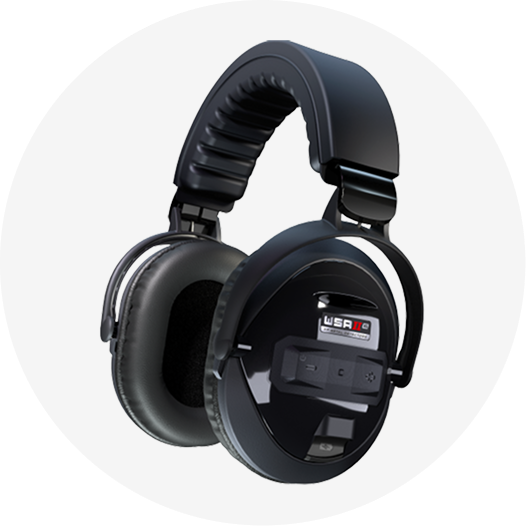
The DEUS I and ORX control platforms are not compatible with the XTREM HUNTER. The WS6, WSA II, and WSA II XL may be used as compatible wireless headphones when correctly updated, but the WS6 module does not replace the DEUS II Remote Control as the main XTREM HUNTER controller.
One practical advantage of the DEUS II ecosystem is the ability to switch quickly between the XTREM HUNTER and a standard DEUS II coil. The operator can locate a broad deep response with the two-box system, mark the area, and then use a conventional coil to inspect the location more precisely when the target is within its practical depth range.
Main XP XTREM HUNTER Settings
| Setting | Function |
|---|---|
| Sensitivity | Controls the overall signal sensitivity. Higher settings may improve weak-target response but can increase instability. |
| Disc IAR | Rejects some ferrous targets according to their signal amplitude and distance from the coils. |
| Threshold | Adjusts the continuous background hum. An excessive threshold can hide faint deep signals. |
| Reactivity | Controls response speed. Lower settings generally favor maximum depth; higher settings improve target localization. |
| Auto Tune | Automatically tracks and adjusts the threshold as ground and environmental conditions change. |
| Frequency Shift | Selects one of 14 channels manually or automatically to reduce EMI. |
| Audio Response | Amplifies weak signals. Higher levels can make deep targets easier to hear but may also amplify ground noise. |
| Ground Balance | Adjusts the detector to the mineralization of the soil using manual adjustment or Ground Grab. |
| Audio Type | Square provides a stable conventional response, while Pulse offers greater sound dynamics for weak deep targets. |
XP recommends performing a Frequency Scan at the beginning of every detecting session. Common Sensitivity settings are normally within the 70–90 range, but difficult or electrically noisy locations may require a lower level.
How to Use the XP XTREM HUNTER
1. Update and Pair the DEUS II Remote
Confirm that the DEUS II Remote Control is running compatible software, then pair the front and rear XTREM HUNTER coils through the coil menu.
2. Assemble and Balance the Detector
Install the front transmitting coil, rear receiving coil, central frame, telescopic stem, handle, support, and carrying strap. Adjust the handle according to the operator’s height so the frame remains comfortable and approximately horizontal.
3. Remove Metallic Objects From the Operator
Phones, keys, belt buckles, steel-reinforced shoes, watches, tools, pinpointers, and backpacks with metal frames can interfere with the detector.
Place these objects well away from the search path. Even a phone carried in a pocket can move relative to the coils and produce misleading variations in the threshold.
4. Choose an Appropriate Test Area
Avoid testing the XTREM HUNTER indoors. Buildings contain electrical wiring, reinforcing steel, pipes, appliances, and other sources of metal and electromagnetic interference.
Whenever possible, search away from:
- Power lines.
- Radio transmitters.
- Houses and industrial buildings.
- Electric fences.
- Large vehicles.
- Underground electrical infrastructure.
5. Perform an Automatic Frequency Scan
Run the automatic Frequency Scan to select the quietest of the 14 available channels. Repeat the scan when moving to a new area or when interference increases.
6. Begin With Stable Settings
A reasonable starting configuration for many sites is:
- Sensitivity: approximately 70–85.
- Reactivity: 1.
- Auto Tune: low or moderate.
- Audio Response: 1 or 2.
- Ground Balance: factory value of approximately 87.
- Disc IAR: OFF or low during initial target confirmation.
These are starting points rather than universal settings. Stability is more valuable than using every setting at its maximum.
7. Maintain a Consistent Search Height
Carry the detector horizontally between approximately knee and hip height. Walk slowly and keep the frame at a consistent distance from the ground.
Raising the detector reduces its response to small shallow objects and can improve stability in contaminated ground. Lowering it too close to the surface may increase responses from unwanted metal and ground variations.
8. Retune the Threshold Regularly
Use the Retune control when the background threshold drifts. When Auto Tune is active, continue moving because holding the detector over a target for too long may cause the system to tune out part of the response.
9. Confirm the Target From Different Directions
A repeatable response is more valuable than a single isolated signal. Mark the apparent center, move away, approach from the opposite direction, and then cross the target at approximately 90 degrees.
Reduce Auto Tune or switch it off temporarily when attempting to identify the precise center of the response.
10. Use a Standard Coil for Final Pinpointing
When the suspected object is within the range of a standard DEUS II coil, switch to that coil and scan the marked location. This can help narrow the excavation area and determine whether shallower metallic material is present.
The official manual provides a similar structured setup and search workflow, including software updating, removing personal metal, Frequency Scan, consistent search height, target confirmation, and switching to a conventional coil when appropriate.
How to Read the XTREM HUNTER Signal Graph
The DEUS II Remote Control displays the most recent four seconds of detector response. The graphical interface gives the operator two main forms of information:
Signal strength can help estimate the relative depth or intensity of the target response.
Signal duration can help indicate whether the target is narrow or extends across a larger area.
A shallow target often produces a double-lobe signal with a negative section between the two peaks. As the same target becomes deeper, the second peak becomes weaker. A substantially deeper target may appear as a single faint but repeatable response.
The graph should be used to compare repeated passes over the same location. It does not display an exact image of the target and should not be treated as a guaranteed depth measurement or metal-identification screen.
Suggested Settings for Different Search Conditions
| Search condition | Suggested approach |
|---|---|
| Clean, low-mineralized ground | Perform Frequency Scan, use Reactivity 1, increase Sensitivity gradually, and use headphones. XP also suggests testing a Ground Balance value near 70 for deep non-ferrous targets in clean ground. |
| Strong electromagnetic interference | Repeat Frequency Scan, reduce Sensitivity to approximately 60–70, lower Audio Response to 1, and move farther from electrical sources. |
| Mineralized or unstable ground | Begin near the default Ground Balance value of 87, use Ground Grab when appropriate, reduce Sensitivity, and maintain a stable frame height. |
| Heavy surface contamination | Raise the frame farther from the ground, reduce Sensitivity to approximately 60–75, lower Audio Response, and avoid excessive iron rejection. |
| Maximum-depth search | Use a low Reactivity setting, walk slowly, use headphones, and increase Sensitivity and Audio Response only while the detector remains stable. |
| Final target localization | Temporarily switch Auto Tune off, increase Reactivity, cross the target from different directions, or use a standard DEUS II coil. |
These recommendations are based on the manufacturer’s operating guidance. The final settings should always be adapted to the actual soil, interference, and target-response stability.
Watch the XP XTREM HUNTER in Action
A practical field video is valuable because the XTREM HUNTER operates differently from a standard metal detector. The video placed in this section should demonstrate:
- Correct assembly and balance.
- Pairing with the DEUS II Remote Control.
- Frequency Scan and initial settings.
- Correct walking height.
- Response to a large buried target.
- Signal graph interpretation.
- Target confirmation from two directions.
- Switching to a standard DEUS II coil.
Watch the XP XTREM HUNTER review field demonstration to see how the two-box FMF system is assembled, balanced, configured, and used to confirm large metallic targets at depth.
What Is Included With the XP XTREM HUNTER?
The standard XTREM HUNTER assembly includes:
- Front coil with wireless transmitter and rechargeable battery.
- Rear receiving coil with connecting cable.
- Two-section XTREM HUNTER frame.
- S-Telescopic stem.
- Adjustable handle and support.
- Carrying strap.
- USB-C charging cable.
- Assembly screws and hardware.
- Rain-resistant and shock-resistant XP carrying case.
- User manual.
The DEUS II Remote Control and wireless headphones may be included or excluded depending on the selected package. Existing DEUS II owners should confirm whether they are purchasing the complete system or the XTREM HUNTER accessory package.
XP XTREM HUNTER Advantages
Strong Focus on Large Deep Targets
The two-box geometry reduces interference from many small surface objects and concentrates the search on substantial underground metal masses.
FMF Stability
Fast Multi Frequency technology improves ground handling and stability compared with the limitations traditionally associated with single-frequency two-box systems.
Practical Iron Rejection
Disc IAR allows the operator to identify or reduce some moderately sized ferrous responses instead of digging every signal.
Lightweight One-Person Design
At approximately 2.9 kg with the Remote Control, the XTREM HUNTER is relatively manageable for a professional two-box detector and does not require two operators.
Wireless DEUS II Integration
The system connects to the DEUS II Remote Control and compatible headphones without a complicated network of control cables.
Useful Signal Display
The four-second dynamic graph helps compare target strength, signal duration, and repeatability.
Long Battery Life
More than ten hours of operating time is sufficient for a full day of field searching under normal conditions.
Five-Year Manufacturer Warranty
XP provides a five-year parts-and-labor warranty for the detector, while batteries and connectors carry a two-year warranty.
XP XTREM HUNTER Limitations
Not Intended for Small Targets
This is not a coin, jewelry, or small-nugget detector. Users searching mainly for small targets will achieve better results with a standard DEUS II configuration.
Maximum Depth Depends on Target Size
The five-meter figure is not applicable to every metallic object. Large targets produce substantially stronger responses than small ones.
Requires the DEUS II Remote Control
The XTREM HUNTER is built around the DEUS II control platform and cannot be operated through DEUS I or ORX.
Sensitive to EMI
The large detecting structure can receive more electromagnetic interference than a small conventional coil, especially near electrical and industrial areas.
Iron Rejection Is Not Perfect
Deep or unusually shaped ferrous objects can still produce uncertain responses. Excavation decisions should not rely on one discrimination setting.
Requires Controlled Movement
Walking speed, search height, frame balance, threshold stability, and repeated confirmation all influence the quality of the result.
Weather-Ready but Not Submersible
The detector is designed to withstand rain and difficult weather, but the XTREM HUNTER assembly should not be submerged. The waterproof rating of the DEUS II Remote Control does not mean the complete two-box frame is suitable for underwater detecting.
Who Should Buy the XP XTREM HUNTER?
The XTREM HUNTER is most suitable for:
- Professional detectorists searching for large deep metal masses.
- Archaeological and historical survey teams.
- Construction and industrial professionals locating tanks or pipes.
- Experienced DEUS II owners who need deeper large-target capability.
- Search teams investigating substantial buried metallic objects.
- Operators who understand that two-box detectors serve a specialized purpose.
It is less suitable for beginners seeking one detector for coins, jewelry, beaches, parks, and natural gold prospecting. Those users will normally benefit more from a conventional DEUS II coil before adding the XTREM HUNTER as a specialized tool.
For more information about XP XTREM HUNTER Download USER Manual From Here
Frequently Asked Questions About the XP XTREM HUNTER
What is the maximum depth of the XP XTREM HUNTER?
XP specifies a maximum depth of up to 5 meters under suitable conditions. Actual depth depends primarily on the dimensions and mass of the target, along with the soil, target orientation, interference, settings, and operator technique.
Can the XTREM HUNTER detect gold?
The XTREM HUNTER detects metallic objects rather than identifying gold specifically. It may respond to a sufficiently large non-ferrous target or concentrated group of metal objects, but it cannot confirm that the detected metal is gold.
Can it find individual coins at five meters?
No. XP states that the XTREM HUNTER is intended for larger deep targets and is not designed to detect isolated coins at extreme depths. A substantial group or cache of coins creates a different target response from one individual coin.
Can the XTREM HUNTER detect caves or voids?
No. It is an electromagnetic metal detector, not a cavity detector, ground-penetrating radar, or underground void scanner. A void would require a different type of detection technology unless it contains a sufficiently large metallic object.
Does the XTREM HUNTER require a DEUS II?
Yes. The system requires a compatible DEUS II Remote Control. Existing DEUS II owners may purchase an accessory package, while new users should select a complete package that includes the required controller.
Is it compatible with DEUS I or ORX?
No. The XTREM HUNTER is designed for the DEUS II platform and is not compatible with DEUS I or ORX.
Can it discriminate iron?
Yes, it includes adjustable Disc IAR from OFF to level 5. It can reject or identify some moderate ferrous targets, but the function does not guarantee perfect separation of all deep iron.
Is the XTREM HUNTER waterproof?
It is designed for rain and challenging weather conditions, but the complete XTREM HUNTER assembly should not be submerged. The DEUS II Remote Control has its own waterproof rating, which applies only to that component.
How long does the battery last?
The official specification lists more than ten hours of battery life, with an approximate charging time of four hours using an appropriate USB charger.
Is the XTREM HUNTER suitable for beginners?
A beginner can learn to use it, but professional instruction is strongly recommended. The detector requires correct balance, stable movement, site preparation, setting adjustment, signal interpretation, and confirmation from multiple directions.
XP XTREM HUNTER Review: Final Verdict
The XP XTREM HUNTER is a specialized deep-seeking metal detector for users who need to locate large buried metallic objects rather than small everyday targets. Its main strengths are its FMF multi-frequency platform, reduced sensitivity to small surface clutter, adjustable iron rejection, DEUS II wireless integration, manageable 2.9 kg weight, and manufacturer-rated depth reaching up to 5 meters on suitable targets.
Its limitations are equally important. The XTREM HUNTER is not intended for isolated coins, small jewelry, tiny gold nuggets, caves, or exact metal identification. It also requires careful control of search height, walking speed, electromagnetic interference, and detector settings.
For archaeologists, industrial users, construction professionals, experienced detectorists, and DEUS II owners who understand the role of a two-box detector, the XTREM HUNTER provides a modern and highly configurable solution for investigating large metallic targets at depth.
Contact Detectors Shop to purchase the original XP XTREM HUNTER with an official warranty, professional training, technical support, and secure worldwide delivery.
Recommended XP Products
Explore compatible XP detectors, search coils, headphones, and accessories.
-
XP ICON X
ر.س 2,191 -
XP ICON
ر.س 2,060 -
DEUS II HF2 GOLD
ر.س 6,743 -
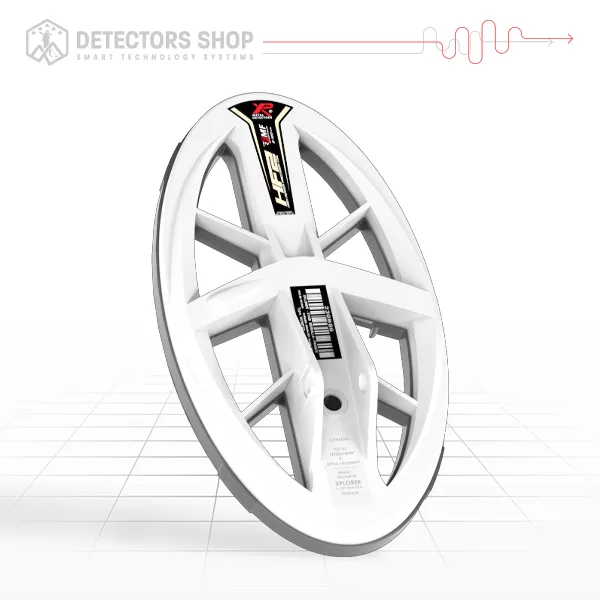
HF2 Search Coil
ر.س 1,498 -
GOLD PAN PREMIUM
ر.س 618 -
XP GOLD BATEA
ر.س 543 -
XP GOLD PAN
ر.س 450 -
XP DEUS II Control
ر.س 3,559 -
XP 11 FMF Coil
ر.س 2,060
