











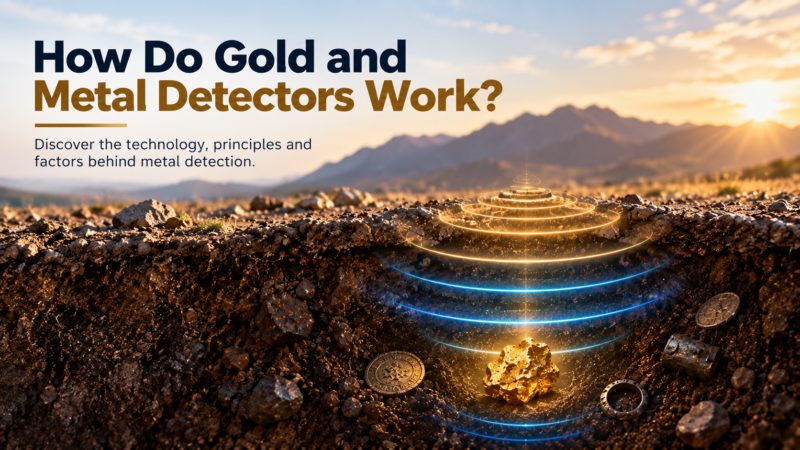
Gold and metal detectors work by sending signals into the ground and analyzing the response that comes back from buried objects. In most conventional detectors, this process is based on electromagnetic fields generated through a search coil. When the signal reaches a metallic object, the metal reacts and creates a secondary response that the detector can measure. The device then processes this response and converts it into useful information such as sound, Target ID numbers, or visual indicators. Different detector technologies process these signals in different ways, which is why some detectors are better for small gold nuggets while others are designed for deeper or larger targets. Understanding these differences is the first step to choosing the right detector for the search task.
Table of Contents
Choosing the Right Detector for Your Search
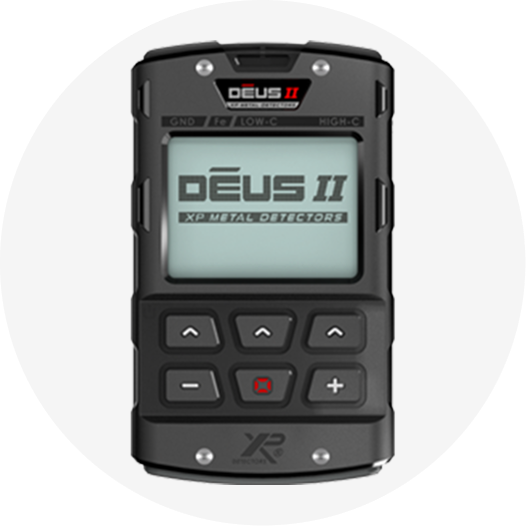
The best metal detector depends on what you are searching for and the environment in which you plan to work. Some detectors are designed for small gold nuggets, coins, and jewelry, while others are better suited for larger buried metals, deeper targets, underground cavities, or wide-area exploration. For example, XP DEUS II and XP DEUS II HF2 are excellent choices for conventional metal detecting and gold prospecting. For users looking for different detection approaches, systems such as Treasure Way, Deep Seeker, UIG Ground Scanner, Gold Hunter Smart, and Titan 500 Smart provide specialized solutions for different types of searches. Choosing the correct technology is often more important than simply choosing the most powerful detector.
Professional Gold and Metal Detectors at Detectors Shop
At Detectors Shop, we offer a wide range of professional metal detectors in Dubai and advanced detection systems designed for different search applications. designed for different search applications. Our selection includes advanced metal detectors from XP as well as specialized GER Detect systems for gold, metals, ground scanning, and deeper underground exploration. Devices such as XP DEUS II HF2, Treasure Way, UIG Ground Scanner, Deep Seeker, Gold Hunter Smart, and Titan 500 Smart represent different detection technologies rather than a single solution for every search. This allows users to choose a detector based on their target, terrain, required depth, and level of experience. Our goal is to help customers select the technology that best matches their actual search requirements.
Different Technologies, Different Detectors
There is no single detector that is ideal for every type of target. XP DEUS II and DEUS II HF2 are suited to traditional coil-based metal detecting, while other systems in our range are designed for specialized applications. UIG Ground Scanner can be introduced when discussing ground scanning and subsurface visualization, while Gold Hunter Smart and Titan 500 Smart fit naturally into the section about long-range search systems. Deep Seeker and Treasure Way can also be presented in the sections that explain deeper and specialized detection methods. By connecting each detector to the technology it actually uses, the article remains educational while also helping readers discover the most suitable products available at Detectors Shop.
VLF Technology
VLF, or Very Low Frequency, is one of the most widely used technologies in modern metal detectors. A VLF detector uses a search coil to transmit a continuous electromagnetic signal into the ground and then measures the response from buried metallic objects. This technology is especially effective for identifying coins, jewelry, small metal targets, and natural gold when the detector is properly tuned for the soil conditions. VLF systems are also known for their ability to provide target discrimination and Target ID information, which helps users distinguish between ferrous and non-ferrous metals before digging. Detectors such as XP DEUS II and XP DEUS II HF2 are strong examples of advanced VLF-based detecting systems designed for high sensitivity, fast target response, and versatile field use.
Multi-Frequency and FMF Technology
Multi-frequency detectors can operate on more than one frequency, allowing them to respond effectively to a wider range of targets and ground conditions. Instead of relying on a single frequency, these systems analyze target responses across multiple frequencies to improve stability, sensitivity, and identification. This is especially useful when searching for different types of metals in changing soil conditions or when moving between beaches, fields, and mineralized ground. XP DEUS II uses advanced FMF technology to provide fast target response, strong discrimination, and excellent versatility across many search environments. XP DEUS II HF2 extends this capability toward higher-frequency applications, making it particularly suitable for small targets and natural gold prospecting.
Pulse Induction (PI) Technology
Pulse Induction, or PI, works by sending powerful electrical pulses through the search coil and measuring how long the resulting signal takes to decay. This method is highly effective in difficult ground conditions because it is generally less affected by mineralized soil and saltwater than many conventional detectors. PI technology is often used when searching for deeper metallic targets, larger buried objects, and gold in challenging terrain. It is also valued for its strong penetration and stable performance in environments where ground noise can reduce the effectiveness of other technologies. For users who need more depth and reliable performance in mineralized areas, PI-based systems can be a strong choice.
Ground Balance
Ground balance helps a metal detector separate real target signals from interference caused by minerals naturally present in the soil. Highly mineralized ground can produce false signals or reduce detection performance, especially when searching for small gold targets. By adjusting the detector to the ground conditions, the system can ignore much of this unwanted mineral response and focus more clearly on buried metal. Some detectors use manual ground balance, while others provide automatic or tracking modes that continuously adapt as the soil changes. Proper ground balancing improves stability, target identification, and overall detection depth, making it one of the most important settings for serious metal detecting and gold prospecting.
Metal Discrimination
Metal discrimination is the detector’s ability to analyze a target signal and estimate what type of metal may be buried underground. By studying factors such as conductivity and signal response, the detector can help separate ferrous metals like iron from non-ferrous targets such as gold, silver, copper, and aluminum. This does not guarantee perfect identification, because target size, depth, shape, soil conditions, and nearby metals can all influence the reading. However, good discrimination can save time by helping users avoid many unwanted targets. Advanced detectors such as XP DEUS II provide detailed Target ID information, tone options, and discrimination settings that give the user greater control during the search.
Target Identification
Target identification gives the user more information about a detected object before excavation. Modern detectors analyze the returned signal and may display a numerical Target ID, conductivity range, tone, or visual indicator that represents the probable type of metal. Higher or lower values can help distinguish between targets such as iron, coins, jewelry, and other non-ferrous metals. However, Target ID should always be treated as an estimate rather than a guarantee, because depth, soil conditions, target orientation, and nearby objects can change the reading. Experienced users usually combine the Target ID with audio response and signal stability to make a more accurate decision before digging.
3D Ground Scanning
3D ground scanning systems are designed to analyze underground structures and create a visual representation of what may be beneath the surface. Instead of only giving an audio signal, these systems collect data from multiple scan points and process it into images or maps that can help reveal metallic objects, cavities, tunnels, and other subsurface anomalies. Their performance depends heavily on correct scanning technique, soil conditions, calibration, and software interpretation. Devices such as UIG Ground Scanner are designed for users who need more detailed underground analysis rather than simple target detection. This type of technology is especially useful when the goal is to understand the shape, position, and approximate depth of a target area before excavation.
Long-Range Detection Systems
Long-range detection systems are designed to help users search large areas and identify possible target directions before moving to a more focused search. These systems are commonly used for gold, metals, and underground targets where covering a wide area quickly is important. Unlike conventional coil-based detectors, long-range systems use different sensing and directional methods depending on the device design and manufacturer. Models such as Gold Hunter Smart, Titan 500 Smart, and Deep Seeker are built for users who need broader search coverage and multiple search modes. These devices are often used as part of a larger search process, where the suspected target location is then checked more precisely with another detection or scanning system.
What Affects Detection Depth?
Detection depth depends on several factors, and no detector can achieve the same depth in every location or with every target. Larger metallic objects are generally easier to detect at greater depths than very small targets, while soil mineralization can reduce signal strength and stability. Search coil size, operating frequency, target orientation, moisture, electromagnetic interference, and detector settings also influence performance. A device that performs very well in clean soil may behave differently in highly mineralized or salty ground. This is why manufacturers usually provide maximum or estimated depth figures under specific conditions rather than a guaranteed depth for every search.
Which Technology Is Best for Gold?
The best technology for gold detection depends on the type of gold, target size, depth, and ground conditions. High-frequency VLF and multi-frequency detectors are usually better for small natural gold nuggets and shallow targets, while Pulse Induction systems are often preferred for highly mineralized soil and deeper searching. 3D ground scanners are more suitable when the goal is to analyze larger underground anomalies, cavities, or buried structures rather than simply detect a small metal target. Long-range systems are designed for broader area exploration and directional searching. For this reason, choosing the right gold detector starts with defining exactly what you want to find and where you plan to search.
Best Gold and Metal Detectors by Technology
Different detector technologies are designed for different search purposes, so the best device depends on what the user wants to find. XP DEUS II is a versatile choice for coins, jewelry, and general metal detecting, while XP DEUS II HF2 is especially suitable for small targets and natural gold prospecting. Treasure Way is a strong option for users looking for deeper search capability, while UIG Ground Scanner is designed for 3D ground analysis and underground scanning. For wider-area and directional searches, systems such as Gold Hunter Smart, Titan 500 Smart, and Deep Seeker provide specialized search modes for different target types. Matching the detector to the correct technology is the most important step toward achieving reliable results in the field.
How Do Gold and Metal Detectors Work ?
Many users ask how deep can a gold detector detect, but there is no single depth that applies to every device. Detection depth depends on target size, soil conditions, search coil size, operating frequency, and the technology used by the detector. A small gold nugget may only be detected at limited depth, while a larger buried metal object can produce a detectable signal much deeper underground. The performance of a gold detector technology also changes significantly between VLF, pulse induction, 3D scanning, and long-range systems. For this reason, depth specifications should always be considered together with the target type and search environment.
How Deep Can a Gold Detector Detect?
Many users ask how deep can a gold detector detect, but there is no single depth that applies to every device. Detection depth depends on target size, soil conditions, search coil size, operating frequency, and the technology used by the detector. A small gold nugget may only be detected at limited depth, while a larger buried metal object can produce a detectable signal much deeper underground. Different gold detector technology also affects performance, especially when comparing VLF, pulse induction, 3D scanning, and long-range systems. For this reason, depth specifications should always be considered together with the type of target and the conditions of the search area.
Gold Detector Frequency: Why Does It Matter?
Gold detector frequency plays an important role in how a detector responds to different target sizes and soil conditions. Higher frequencies are generally more sensitive to very small gold nuggets and tiny metallic targets, while lower frequencies can provide better response on larger objects and may penetrate the ground differently. A multi frequency metal detector can use more than one operating frequency to improve versatility across different targets and environments. Advanced systems using FMF technology are designed to analyze multiple frequencies and provide more stable target information in changing ground conditions. This is why frequency should always be matched to the type of gold or metal you want to detect.
Metal Detector Working Principle
The metal detector working principle is based on transmitting a signal into the ground and measuring how underground objects react to it. In conventional detectors, the search coil creates an electromagnetic field that interacts with conductive materials beneath the surface. When a metallic object enters this field, it produces a secondary signal that travels back toward the detector. The control unit analyzes this response and converts it into audio tones, Target ID values, or visual information. The strength and character of the response change according to the metal type, target size, depth, and surrounding soil. This basic process is the foundation of most modern coil-based metal detection systems.
How Do Gold and Metal Detectors Work ?
Many people ask how does a gold detector work and whether it can specifically recognize gold underground. A gold detector does not simply identify an object because it is gold; instead, it analyzes the electromagnetic response produced by the target. Gold has particular conductivity characteristics, but its response can overlap with other non-ferrous metals depending on size and shape. Advanced detectors use frequency, discrimination, Target ID, and audio information to help the operator evaluate the target. High-frequency detectors are particularly useful for detecting small natural gold nuggets. The final identification, however, normally requires recovering and inspecting the target.
VLF Metal Detector for Gold and Metals
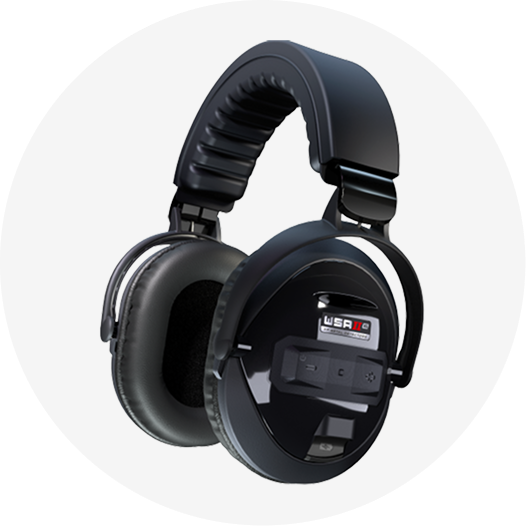
A VLF metal detector is widely used for gold prospecting, coin hunting, jewelry searching, and general metal detection. VLF systems provide excellent sensitivity to small targets and usually offer detailed discrimination and Target ID features. Higher-frequency VLF detectors can be particularly effective when searching for small natural gold in suitable ground conditions. Devices such as XP DEUS II HF2 combine advanced frequency options with fast response and lightweight wireless operation. VLF technology is also popular because users can adjust discrimination, ground balance, sensitivity, and audio settings according to the search environment. This makes it one of the most versatile technologies available today.
Pulse Induction Metal Detector
A pulse induction metal detector uses short, powerful electrical pulses rather than a continuous signal. After each pulse, the detector measures the electromagnetic response returning from the ground and any metallic objects beneath it. PI technology is especially useful in highly mineralized soil, saltwater environments, and areas where conventional detectors may experience strong ground interference. It is commonly chosen for deeper targets and larger buried metallic objects. However, target discrimination may differ from that found on advanced VLF systems. For difficult terrain and depth-oriented searches, Pulse Induction remains an important technology in professional metal detection.
Ground Balance Metal Detector Technology
A ground balance metal detector is designed to reduce the unwanted signals produced by naturally occurring minerals in the soil. Without proper ground balance, mineralized ground can create false signals, unstable Target ID readings, and reduced detection depth. Manual ground balance allows experienced users to precisely adjust the detector, while automatic systems can analyze the soil and select an appropriate setting. Some advanced detectors also provide tracking ground balance that continuously adjusts as soil conditions change. This feature becomes particularly important when prospecting for natural gold in highly mineralized environments. Correct ground balance can significantly improve detector stability and target response.
Metal Detector Discrimination
Metal detector discrimination helps users decide whether a detected target is likely to be desirable or unwanted before digging. The detector analyzes the electrical response of the object and may classify it according to conductivity or ferrous characteristics. Iron targets can often be identified and rejected, while non-ferrous metals such as gold, silver, copper, and aluminum generate different responses. Advanced systems allow users to customize discrimination levels and audio tones according to their search preferences. However, very deep or unusual targets can sometimes produce less accurate readings. Experienced detectorists therefore combine discrimination with Target ID, audio quality, and repeated scanning from different directions.
How Does a 3D Ground Scanner Work?
A 3D ground scanner collects measurements across a defined search area and converts the collected data into a visual representation of underground anomalies. Instead of relying only on an audio response, the user performs organized scan lines while the system records changes beneath the surface. Specialized software can then display differences that may indicate metallic objects, cavities, voids, tunnels, or other underground structures. Systems such as UIG Ground Scanner are designed for this type of detailed subsurface analysis. Accurate scanning requires correct technique, consistent movement, and careful interpretation of the resulting data. 3D scanning is therefore different from conventional metal detecting with a search coil.
Long Range Gold Detector Systems
A long range gold detector is intended to help searchers cover larger areas and identify possible directions toward selected targets. These systems operate differently from conventional VLF or Pulse Induction detectors and are generally used during the initial exploration stage of a search. Devices such as Gold Hunter Smart and Titan 500 Smart provide specialized search systems designed for different target categories and field conditions. Long-range searching can be particularly useful when the area to be explored is too large for immediate detailed scanning. Once a potential location is identified, users can perform additional confirmation using a conventional detector or ground scanning system. Combining technologies can provide a more structured search process.
Conventional Detection vs 3D Scanning vs Long-Range Search
Each detection technology serves a different purpose. Conventional VLF and multi-frequency detectors are ideal when the searcher needs direct target detection, discrimination, and accurate pinpointing. Pulse Induction systems are commonly used for difficult ground conditions and deeper metallic targets. A 3D ground scanner is better suited to mapping subsurface anomalies and examining larger underground structures. Long-range systems are designed to cover wider search areas and indicate possible target directions. Understanding these differences prevents users from expecting one device to perform every type of search. The best detector is the one whose technology matches the actual target and environment.
How Do Gold and Metal Detectors Work in Mineralized Soil?
The question how do metal detectors work in mineralized soil is especially important for gold prospectors. Minerals such as iron oxides can generate their own electromagnetic response and interfere with the signal coming from a real target. Modern detectors compensate for this using ground balance, signal filtering, frequency adjustment, and specialized search programs. Pulse Induction technology can also perform well in heavily mineralized environments because it handles ground response differently from conventional VLF systems. Proper detector setup is essential because excessive sensitivity may actually make the detector less stable. Experienced users adjust the detector according to the ground rather than always using maximum power.
Can Gold Detectors Distinguish Gold from Other Metals?
Gold detectors can provide information that helps users estimate whether a target may be gold, but no conventional detector can guarantee the composition of an underground object before recovery. Gold, aluminum, copper, and other non-ferrous metals can sometimes produce similar conductivity readings. Target ID, discrimination, frequency, signal stability, and audio characteristics help narrow the possibilities. Advanced detectors provide considerably more information than a simple audio signal, allowing experienced users to make better decisions before digging. Small natural gold can also produce a different response from large jewelry or buried gold objects. For this reason, understanding the detector’s signals is just as important as selecting the detector itself.
Which Gold Detector Should You Choose?
Choosing the right gold detector begins with defining the target and search environment. For natural gold, small nuggets, coins, and jewelry, devices such as XP DEUS II and XP DEUS II HF2 provide advanced conventional detection capabilities. Users interested in underground scanning can consider UIG Ground Scanner, while other specialized search requirements may be better suited to Treasure Way or Deep Seeker. For wider-area exploration, Gold Hunter Smart and Titan 500 Smart provide additional search approaches. There is no single detector that is best for every situation. Matching the technology to the target, soil, depth, and search area is the most important consideration.
Gold and Metal Detectors at Detectors Shop
Detectors Shop provides professional gold and metal detection systems for different search applications and environments. Our range includes advanced XP metal detectors as well as specialized GER Detect systems for gold searching, ground scanning, deep detection, and wider-area exploration. Models such as XP DEUS II, XP DEUS II HF2, Gold Hunter Smart, Titan 500 Smart, Deep Seeker, Treasure Way, and UIG Ground Scanner cover several different detection technologies. This gives customers the ability to select a system based on their actual search requirements rather than relying on a single technology. Professional guidance can also help users understand which detector is most appropriate for their target and field conditions.
For buyers comparing different budgets and technologies, our complete guide to gold detector machine price in UAE explains price ranges, detector categories, and what affects the final cost.
Frequently Asked Questions
How does a gold detector work?
A gold detector sends a signal into the ground and analyzes the response generated by metallic objects. Depending on the technology, it may use VLF, multiple frequencies, Pulse Induction, ground scanning, or another detection method. The resulting signal is then converted into audio, Target ID, or visual information that helps the user evaluate the target.
How do metal detectors work?
Metal detectors generally create an electromagnetic field around the search coil. When a metallic object enters that field, it generates a secondary electromagnetic response. The detector measures this response and processes it to provide information about the possible target.
What frequency is best for detecting gold?
Higher frequencies are generally more sensitive to small natural gold nuggets, while lower frequencies tend to respond well to larger targets. Multi-frequency and FMF systems offer greater versatility because they can work with several frequencies depending on the detector and search program.
Can a metal detector detect only gold?
No conventional metal detector can detect only gold while completely ignoring every other metal. Gold detectors use Target ID, discrimination, conductivity, frequency, and audio information to help users distinguish probable gold targets from other metals.
How deep can a gold detector detect?
There is no fixed answer to how deep can a gold detector detect. Depth depends on the size of the target, detector technology, search coil, ground mineralization, frequency, orientation, settings, and environmental conditions. Larger objects can generally be detected deeper than very small gold nuggets.
What is the difference between VLF and Pulse Induction?
VLF detectors are known for sensitivity, discrimination, and detailed target identification, while Pulse Induction detectors are often preferred for mineralized ground, saltwater, and deeper targets. The best option depends on the intended search.
Conclusion
Understanding how gold and metal detectors work makes it easier to choose the correct device and use it effectively. VLF, multi-frequency, FMF, Pulse Induction, 3D scanning, and long-range technologies each solve different detection challenges. Factors such as target size, depth, soil mineralization, operating frequency, and search technique can all affect performance. Rather than choosing a detector only according to its advertised depth, users should first identify what they want to find and where they plan to search. With the right technology and proper setup, modern gold and metal detectors can provide powerful tools for professional exploration and prospecting.
