








Introduction
Minelab gold detectors are among the most recognized prospecting machines in the world, particularly for users searching for natural gold, nuggets, and difficult targets in highly mineralized ground. Minelab currently offers several detectors for gold prospecting, ranging from specialized machines such as the GPX 6000, GPZ 7000, SDC 2300, and GOLD MONSTER series to versatile multi-purpose models such as the MANTICORE and EQUINOX 900.
What makes the Minelab range interesting is that these detectors are not all designed for exactly the same type of search. Some are optimized for very small natural gold, others for larger or deeper nuggets, and some are built to provide an easier entry point for beginners.
For example, the GPX 6000 uses Minelab’s GeoSense-PI™ technology and is designed to detect targets ranging from sub-gram gold to larger deep nuggets while maintaining stability in mineralized soil. The GPZ 7000, meanwhile, sits at the high end of Minelab’s prospecting range and is aimed at users prioritizing serious gold prospecting and deep-target performance.
In this complete Minelab gold detectors guide, we will compare the most important Minelab models, explain which detector is best for different types of gold prospecting, examine their technologies and strengths, and help you understand which machine may be the better choice depending on your target and search environment.
We will also look at professional alternatives from XP Metal Detectors, including the XP DEUS II, DEUS GOLD, and XTREM HUNTER, for users whose search requirements go beyond traditional Minelab-style gold prospecting.
Table of Contents
Best Minelab Gold Detectors at a Glance
Before comparing each model in detail, here is a quick overview of the main Minelab gold detectors and the type of user each one is best suited for.
| Model | Best For | Main Technology | Key Strength |
|---|---|---|---|
| Minelab GPZ 7000 | Serious gold prospecting | ZVT | Deep gold and larger nuggets |
| Minelab GPX 6000 | Small to medium gold nuggets | GeoSense-PI | Lightweight, fast and sensitive |
| Minelab SDC 2300 | Small gold in difficult ground | Pulse Induction | Compact and stable in mineralized soil |
| Minelab GOLD MONSTER | Beginners and small gold | High-frequency VLF | Easy operation and strong sensitivity to small gold |
| Minelab MANTICORE | Multi-purpose detecting | Multi-IQ+ | Gold, coins, relics and general detecting |
| Minelab EQUINOX 900 | Versatile all-round use | Multi-IQ | Gold prospecting plus coins and relics |
Which Minelab Is Best for Gold?
There is no single Minelab detector that is best for every gold prospecting situation.
The right choice depends mainly on:
- Gold size
- Expected depth
- Ground mineralization
- Search environment
- User experience
- Weight and portability
- Budget
For example, the GPZ 7000 is aimed at users who prioritize deep gold performance and larger nuggets, while the GPX 6000 offers a lighter and more streamlined setup with excellent sensitivity to smaller gold.
The SDC 2300 is a strong option for difficult mineralized ground and compact field use, while the GOLD MONSTER range is easier for users who want a simpler detector for small natural gold.
Multi-purpose detectors such as MANTICORE and EQUINOX 900 are better suited to users who want one detector for several applications rather than gold prospecting alone.
Quick Recommendation
| Your Main Goal | Recommended Minelab |
|---|---|
| Deep gold and larger nuggets | GPZ 7000 |
| Small and medium gold nuggets | GPX 6000 |
| Difficult mineralized ground | SDC 2300 |
| Beginner gold prospecting | GOLD MONSTER |
| Gold + coins + relics | MANTICORE |
| Versatile general detecting | EQUINOX 900 |
Minelab GPZ 7000 Review: Deep Gold & Serious Prospecting
The Minelab GPZ 7000 is the flagship model in Minelab’s specialist gold prospecting range and is designed for users who prioritize maximum depth, larger nuggets, and serious performance in highly mineralized ground.
Its main technology is ZVT™ — Zero Voltage Transmission, which Minelab developed specifically to improve gold detection depth while maintaining stable operation in difficult soil. Minelab states that the GPZ 7000 can provide up to 40% more depth than previous GPX Series detectors under suitable conditions.
What Makes the GPZ 7000 Different?
The GPZ 7000 combines several technologies:
- ZVT™ Technology
- Super-D search coil
- Advanced ground balance
- GPS and mapping
- Wireless audio
- Multiple gold and ground modes
The standard GPZ14 Super-D coil measures approximately 14 × 13 inches and is designed to remain sensitive to a wide range of gold sizes while maintaining good stability in mineralized soil.
Best Targets for GPZ 7000
The GPZ 7000 is particularly strong when searching for:
- Medium and large gold nuggets
- Deeply buried gold
- Previously worked goldfields
- Gold in highly mineralized ground
- Larger targets missed by less powerful prospecting detectors
Minelab itself describes the GPZ 7000 as its strongest performer on medium to larger nuggets, while still maintaining useful sensitivity to smaller shallow targets.
Gold Modes
The GPZ 7000 includes three main Gold Modes:
- High Yield
- General
- Extra Deep
It also provides three Ground Type settings:
- Normal
- Difficult
- Severe
This allows the operator to adapt the detector according to both the expected target size and the mineralization level of the ground.
GPS and Mapping
One feature that separates the GPZ 7000 from many conventional gold detectors is its built-in GPS system.
The detector can store:
- FindPoints
- WayPoints
- GeoHunts
This allows prospectors to record productive locations, track previously searched ground, and return to promising areas later.
Weight and Battery Life
The GPZ 7000 weighs approximately 3.32 kg, including the standard GPZ14 coil and battery.
Battery operating time is rated at approximately 8 hours with GPS, backlight, and wireless functions enabled.
Because of its weight, Minelab includes a Pro-Swing harness, which helps distribute the load during longer prospecting sessions.
Is the GPZ 7000 Waterproof?
The complete detector is not waterproof.
The standard GPZ14 search coil is waterproof to approximately 1 meter, while the detector control unit is weather-resistant rather than fully submersible.
Who Should Choose the GPZ 7000?
The GPZ 7000 is best suited to experienced prospectors who:
- Search primarily for natural gold
- Want maximum performance on medium and large nuggets
- Work in highly mineralized goldfields
- Prioritize depth over low weight
- Are comfortable using a specialized gold detector
For users whose main objective is deep natural gold rather than general coin, relic, or beach detecting, the GPZ 7000 remains one of Minelab’s most specialized options.
Minelab GPX 6000 Review: Lightweight PI Performance for Small & Deep Gold
The Minelab GPX 6000 is one of Minelab’s most popular dedicated gold prospecting detectors, especially for users who want strong sensitivity to small gold without the weight and complexity of the GPZ 7000.
Its core technology is GeoSense-PI™, a pulse induction platform that analyzes ground and target signals in real time. The goal is to maintain a stable threshold while preserving sensitivity to both very small gold and larger, deeper nuggets in mineralized soil.
What Is GeoSense-PI?
GeoSense-PI continuously evaluates the ground response and target signal so the detector can adapt to changing mineralization.
This is particularly useful in goldfields where soil conditions vary rapidly and where conventional detectors can become unstable.
Minelab positions the GPX 6000 as capable of detecting:
- Sub-gram gold
- Small nuggets
- Medium-sized gold
- Larger deep nuggets
while maintaining good stability in mineralized ground.
Ground Modes
The GPX 6000 provides several ground-related operating options, including:
- Normal
- Difficult
- Severe
- EMI Cancel
- Conductive Ground Cancel
These modes help the detector adapt to mineralized soil, conductive ground, and electromagnetic interference.
Automatic Ground Balance and Noise Cancel
One of the biggest advantages of the GPX 6000 is simplicity.
The detector includes:
- Automatic Ground Balance
- Automatic Noise Cancel
- Manual Quick-Trak ground adjustment
- Automatic sensitivity options
This makes it easier to operate than many traditional pulse induction detectors, especially for users who do not want to spend a lot of time manually tuning the machine.
Sensitivity
Sensitivity can be adjusted manually from 1 to 10, while the detector also provides automatic sensitivity modes.
This allows beginners to rely on automatic operation, while experienced users can manually adjust the detector according to ground conditions.
Coil Options
The GPX 6000 supports several coil options designed for different prospecting situations.
The main options include:
- GPX 11″ Monoloop Coil – well suited to small and fine gold
- GPX 14″ Double-D Coil – useful in salt-affected or difficult ground
- GPX 17″ Monoloop Coil – better for covering larger areas and searching for bigger nuggets
The coils are waterproof to approximately 1 meter.
Weight and Portability
One of the strongest selling points of the GPX 6000 is its weight.
The detector weighs approximately 2.1 kg, significantly lighter than the GPZ 7000.
Its carbon-fiber shaft also collapses to approximately 67 cm, making it easier to carry and transport between prospecting locations.
Battery Life
The rechargeable lithium-ion battery provides approximately 8 hours of operating time, depending on usage conditions.
The removable battery design also makes it practical for longer field sessions where spare batteries may be required.
Is the GPX 6000 Waterproof?
The detector control box is splash and rain resistant, but it is not designed for full underwater use.
The compatible search coils are waterproof to approximately 1 meter.
GPX 6000 vs GPZ 7000
The two detectors target slightly different users.
| Feature | GPX 6000 | GPZ 7000 |
|---|---|---|
| Main Technology | GeoSense-PI | ZVT |
| Weight | Approx. 2.1 kg | Approx. 3.32 kg |
| Small Gold | Excellent | Very good |
| Large Deep Gold | Excellent | Stronger focus |
| Ease of Use | Easier | More advanced |
| Portability | Excellent | Heavier |
| Best For | Small to large nuggets, mobility | Serious deep gold prospecting |
If portability and sensitivity to small gold are priorities, the GPX 6000 is generally the more practical option.
If maximum performance on larger and deeper gold is the priority and additional weight is not a major concern, the GPZ 7000 may be the better fit.
Who Should Choose the GPX 6000?
The GPX 6000 is especially suitable for:
- Prospectors searching for small gold nuggets
- Users working in mineralized soil
- Users who want a lighter PI detector
- Prospectors covering large areas on foot
- Beginners who want strong automatic features
- Experienced users who still want manual control when needed
For many gold prospectors, the GPX 6000 offers one of the strongest balances between sensitivity, depth, simplicity, and portability in Minelab’s specialist gold range.
Minelab SDC 2300 Review: Compact Gold Detection in Mineralized Ground
The Minelab SDC 2300 is a compact pulse induction gold detector designed for users who need strong sensitivity to small gold nuggets in difficult, highly mineralized terrain.
Its main technology is MPF™ — Multi Period Fast Pulse Induction, which rapidly switches between transmit and receive signals to improve clarity and reduce residual noise. This helps the detector respond more clearly to very small gold targets, even in mineralized ground.
What Makes the SDC 2300 Different?
The SDC 2300 stands out because it combines:
- Pulse Induction technology
- Strong sensitivity to small gold
- Compact foldable design
- Full waterproofing to 3 meters
- Automatic ground tracking
- Simple controls
- Rugged construction
Minelab specifically positions it as a detector for small to medium gold nuggets in highly mineralized or variable ground, while still offering useful depth on larger nuggets.
Compact and Portable Design
One of the biggest advantages of the SDC 2300 is its folding design.
The detector collapses to approximately 40 cm, making it much easier to transport in a backpack or vehicle.
When fully extended, it measures approximately 150 cm, and its weight is around 2.3 kg.
This makes it particularly practical for prospectors working in:
- Remote goldfields
- Creek beds
- Rocky terrain
- Narrow search areas
- Locations requiring long hikes
8-Inch Monoloop Coil
The standard SDC 2300 includes an 8-inch round Monoloop coil.
The smaller coil size is especially useful for:
- Small gold nuggets
- Tight spaces
- Rocky terrain
- Creek beds
- Areas with difficult ground conditions
Minelab does not currently offer other branded coil sizes for the SDC 2300, so the detector is designed around this compact 8-inch configuration.
Ground Balance and Mineralized Soil
The detector includes:
- Automatic Ground Tracking
- Fast Ground Balance
- Automatic Noise Cancel
These functions help the SDC 2300 remain stable when moving through changing mineralization.
This is one of the main reasons the detector has developed a strong reputation for searching goldfields where conventional VLF detectors may struggle with ground noise.
Normal and Salt Modes
The SDC 2300 has two main detecting modes:
Normal Mode
Provides sensitivity levels from 1 to 5 and is intended for general gold prospecting.
Salt Mode
Provides sensitivity levels from 1 to 3 and is intended for conductive salt environments.
This makes the detector useful not only in inland goldfields but also in certain salt-affected areas.
Waterproof to 3 Meters
Unlike the GPX 6000 and GPZ 7000, the SDC 2300 itself is fully waterproof to approximately 3 meters (10 feet).
This makes it particularly useful for:
- Riverbeds
- Creeks
- Shallow underwater prospecting
- Shorelines
- Wet environments
Its compact coil is also well suited to working between rocks and underwater obstacles.
Does SDC 2300 Have Metal Discrimination?
No.
This is important to clarify because some Minelab specification pages display general discrimination fields that can be confusing.
Minelab’s own FAQ specifically states that the SDC 2300 does not have a metal discrimination function.
The detector is designed primarily for gold prospecting rather than selectively identifying different metal categories before excavation.
Visual and Audio Target Response
The SDC 2300 uses a simple LED-based interface instead of a large digital screen.
It includes 9 LED indicators that provide information about detection, battery status, and threshold level.
Target strength is also communicated through audio. A weaker response may indicate a smaller or deeper target, while a stronger response may indicate a larger or shallower target.
Who Should Choose the SDC 2300?
The SDC 2300 is particularly well suited to:
- Prospectors searching for small gold
- Highly mineralized goldfields
- Creek and river prospecting
- Users who need a waterproof gold detector
- Prospectors who value compact equipment
- Users who prefer simple controls over complex menus
SDC 2300 vs GPX 6000
| Feature | SDC 2300 | GPX 6000 |
|---|---|---|
| Technology | MPF Pulse Induction | GeoSense-PI |
| Small Gold | Excellent | Excellent |
| Mineralized Ground | Excellent | Excellent |
| Waterproofing | 3 m full detector | Coil waterproof; control box not submersible |
| Weight | Approx. 2.3 kg | Approx. 2.1 kg |
| Portability | Excellent folding design | Excellent lightweight design |
| Coil Options | Limited | Several options |
| Ease of Use | Very simple | Simple with more control |
| Best Use | Small gold + difficult terrain + water | Broad gold prospecting |
If your priority is a compact waterproof detector for small gold in difficult mineralized terrain, the SDC 2300 remains one of Minelab’s most specialized options.
If you want broader coil options, lower weight, and greater flexibility across different nugget sizes, the GPX 6000 is generally the more versatile choice.
Minelab GOLD MONSTER Review: Best for Beginners & Small Gold
The Minelab GOLD MONSTER series is designed for users who want a simpler and lighter approach to natural gold prospecting, especially when the main target is small gold nuggets and fine gold.
The two main models are the GOLD MONSTER 1000 and the newer GOLD MONSTER 2000. While both are aimed at gold prospecting, the GOLD MONSTER 2000 introduces a more advanced multi-frequency platform and improved target information.
GOLD MONSTER 1000
The GOLD MONSTER 1000 is a high-frequency VLF detector operating at 45 kHz.
Its main strengths are simplicity and sensitivity to very small gold.
Key features include:
- 45 kHz VLF technology
- Automatic Ground Balance
- Automatic Sensitivity
- Automatic Noise Cancel
- Gold Chance Indicator
- Lightweight design
- Simple controls
The detector weighs approximately 1.33 kg, and the standard 5-inch Double-D coil is waterproof to approximately 1 meter. The control unit itself is splash and rain resistant rather than fully submersible.
This makes the GOLD MONSTER 1000 particularly suitable for:
- Beginners
- Small gold nuggets
- Fine gold
- Shallow prospecting
- Rocky terrain
- Users who want minimal manual adjustment
GOLD MONSTER 2000
The GOLD MONSTER 2000 represents a major step forward in the GOLD MONSTER range.
Instead of a single 45 kHz frequency, it uses Minelab’s Multi-Au™ simultaneous multi-frequency technology, operating across approximately 12 to 76 kHz.
Minelab describes Multi-Au as a system combining high VLF sensitivity with signal-processing techniques inspired by Pulse Induction technology, improving ground handling and target discrimination in mineralized soil.
Small Gold Sensitivity
The GOLD MONSTER 2000 is specifically optimized for extremely small gold.
Minelab states that its multi-frequency operation can detect nuggets below 0.01 g under suitable conditions, which shows how strongly the detector is focused on fine gold prospecting.
Gold Chance Indicator
One of the most useful features of the GOLD MONSTER 2000 is its real-time Gold Chance Indicator.
The detector provides a numerical Target ID scale from 0 to 99 together with visual and audio information to help the operator distinguish likely gold targets from iron, hot rocks, and unwanted objects.
Echo Wave Audio
The GOLD MONSTER 2000 also introduces Echo Wave™ Audio.
This system combines sensitive detection audio with discrimination tones, allowing users to hear subtle target responses while also receiving information about whether a target is more likely to be gold or an unwanted object.
GOLD MONSTER 1000 vs GOLD MONSTER 2000
| Feature | GOLD MONSTER 1000 | GOLD MONSTER 2000 |
|---|---|---|
| Technology | 45 kHz VLF | Multi-Au simultaneous multi-frequency |
| Frequency | 45 kHz | Approx. 12–76 kHz |
| Target ID | Basic Gold Chance indication | 0–99 Target ID + Gold Chance |
| Ground Handling | Automatic | Advanced automatic ground control |
| Small Gold Sensitivity | Excellent | Extremely high |
| Weight | Approx. 1.33 kg | Approx. 1.25 kg |
| Standard Coil | 5″ DD | 5″ DD |
| Best For | Beginners and small gold | Fine gold + more advanced prospecting |
Which GOLD MONSTER Should You Choose?
Choose the GOLD MONSTER 1000 if you want a simple, proven, high-frequency detector for small gold without many complex settings.
Choose the GOLD MONSTER 2000 if you want:
- Greater sensitivity to extremely small gold
- Multi-frequency operation
- Better target information
- More advanced ground handling
- Improved discrimination between gold, iron, and hot rocks
For beginners who want a straightforward entry into Minelab gold prospecting, the GOLD MONSTER range remains one of the easiest places to start.
Minelab vs XP: Best Alternatives for Different Search Goals
Minelab is especially strong in natural gold prospecting, but not every user is searching for the same type of target.
If your goal includes coins, relics, beaches, underwater use, or large deep metallic objects, there are situations where an XP detector may be the better fit.
XP DEUS II: Best All-Round Alternative
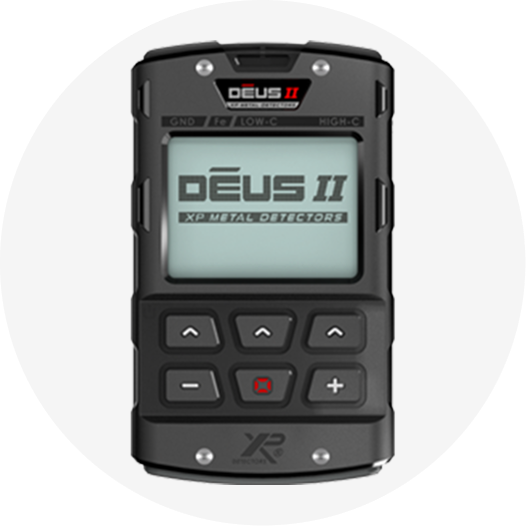
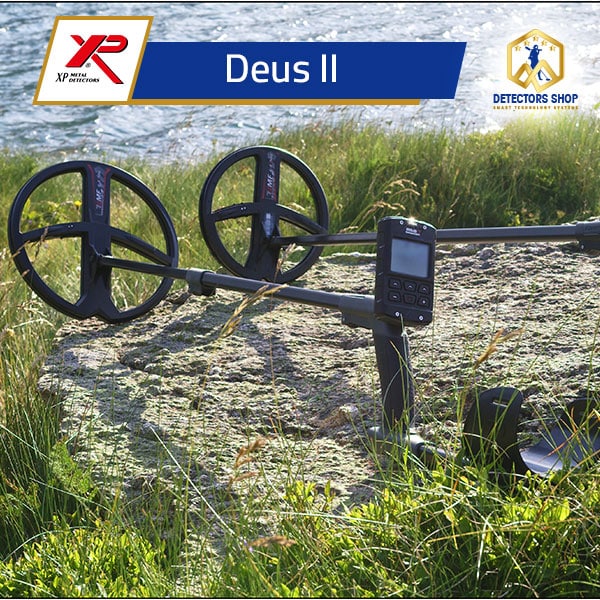
The XP DEUS II is a strong alternative for users who want one detector that can handle several different search environments.
It is especially suitable for:
- Coins
- Relics
- Small gold
- Mineralized ground
- Wet beaches
- Saltwater
- Underwater searching
- General-purpose detecting
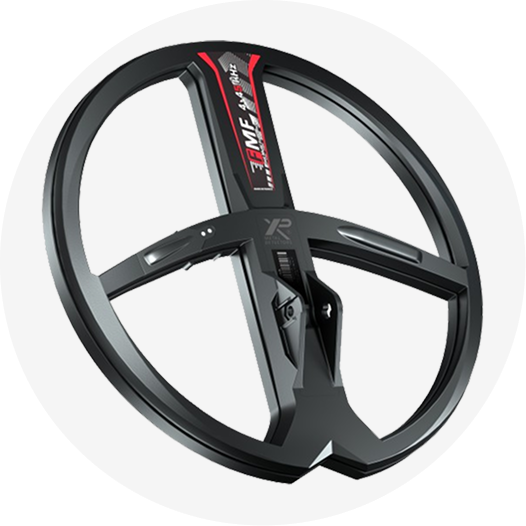
Its FMF Fast Multi Frequency technology, very low weight, wireless design, and waterproofing make it more versatile than a specialist Minelab gold machine when the user does not want to focus only on natural gold.
XP DEUS GOLD: Best for Gold-Focused XP Users
The XP DEUS GOLD is aimed more directly at gold prospecting and users searching for natural gold and small targets.
It can be a strong option for prospectors who want:
- A lightweight detector
- Fast target response
- High-frequency gold sensitivity
- Easier portability
- Strong performance in mineralized terrain
For users who like the XP platform but want a setup focused more heavily on gold, DEUS GOLD is the more specialized choice.
XP XTREM HUNTER: Best for Large Deep Metallic Targets
The XP XTREM HUNTER should not be compared directly with a GPX 6000 or GOLD MONSTER for tiny nuggets.
Its purpose is different.
XTREM HUNTER is designed for:
- Large buried metallic objects
- Deep relics
- Large masses
- Targets that conventional small-coil detectors may miss at depth
This makes it a better alternative when the target is expected to be large and deep, rather than small natural gold.
Minelab vs XP: Which Is Better?
| Search Goal | Better Fit |
|---|---|
| Tiny natural gold nuggets | Minelab GPX 6000 / GOLD MONSTER |
| Deep medium-to-large gold | Minelab GPZ 7000 |
| Compact waterproof gold prospecting | Minelab SDC 2300 |
| Gold + coins + relics + beach | XP DEUS II |
| Lightweight XP gold prospecting | XP DEUS GOLD |
| Large deep buried metallic targets | XP XTREM HUNTER |
| Underwater multi-purpose detecting | XP DEUS II |
The key point is that Minelab and XP are not always direct competitors for the exact same search task.
Minelab’s specialist prospecting machines are excellent choices for natural gold, while XP offers broader versatility for users who also want coins, relics, beach hunting, underwater detection, or large deep-target searching.
Which Detector Should You Choose?
Choose GPX 6000 if your priority is small-to-medium natural gold with strong portability.
Choose GPZ 7000 if you are focused on serious deep gold prospecting and larger nuggets.
Choose SDC 2300 if you want a compact waterproof gold detector for difficult mineralized terrain.
Choose a GOLD MONSTER if you want an easier entry into small-gold prospecting.
Choose XP DEUS II if you want one detector for gold, coins, relics, beaches, and underwater use.
Choose XP DEUS GOLD if your main goal is gold prospecting but you prefer the lightweight XP platform.
Choose XP XTREM HUNTER if your target is a large metallic object expected at significant depth.
How to Choose the Best Minelab Gold Detector
Choosing the best Minelab gold detector depends mainly on what type of gold you are searching for, the ground conditions, and how much portability you need.
For most users, the decision can be simplified like this:
Choose the GPZ 7000 if your priority is maximum performance on medium and larger gold at depth.
Choose the GPX 6000 if you want excellent sensitivity to small and medium nuggets with a lighter and easier-to-use setup.
Choose the SDC 2300 if you frequently search highly mineralized ground, creeks, rivers, or wet environments and want a compact waterproof detector.
Choose the GOLD MONSTER if you are a beginner or mainly interested in small and shallow natural gold.
If your search objectives include more than natural gold, it may be worth considering alternatives such as:
- XP DEUS II for gold, coins, relics, beaches, and underwater detecting.
- XP DEUS GOLD for lightweight gold-focused prospecting.
- XP XTREM HUNTER for large, deeply buried metallic targets.
The best detector is therefore not necessarily the most expensive model. It is the detector that best matches your target size, expected depth, soil mineralization, search environment, and experience level.
Minelab Gold Detectors FAQ
Which Minelab detector is best for gold?
There is no single best Minelab detector for every situation. The GPX 6000 is a strong choice for small and medium gold nuggets, while the GPZ 7000 is better suited to serious prospecting for deeper and larger gold. The SDC 2300 is excellent for difficult mineralized terrain and wet environments, while the GOLD MONSTER range is easier for beginners and users targeting very small gold.
Is GPX 6000 better than GPZ 7000?
It depends on the search goal. The GPX 6000 is lighter, easier to use, and highly sensitive to small gold. The GPZ 7000 is heavier and more specialized, but it is designed for stronger performance on medium-to-large nuggets and deeper targets.
Which Minelab detector is best for beginners?
The GOLD MONSTER range is generally the easiest starting point for beginners because it offers simple controls, automatic ground handling, and strong sensitivity to small gold.
Which Minelab detector is best for small gold nuggets?
The GPX 6000, SDC 2300, and GOLD MONSTER models are all strong choices for small gold. The best option depends on ground conditions, budget, and whether the user prefers Pulse Induction or VLF-style detection.
Which Minelab detector is best for deep gold?
The GPZ 7000 is Minelab’s most specialized option for deep gold prospecting, particularly for medium and larger nuggets.
Is the SDC 2300 waterproof?
Yes. The SDC 2300 is fully waterproof to approximately 3 meters, making it especially useful for creeks, rivers, and shallow underwater prospecting.
Can Minelab gold detectors work in mineralized ground?
Yes. Models such as the GPX 6000, GPZ 7000, and SDC 2300 are specifically designed to maintain stable performance in difficult and highly mineralized ground.
Are Minelab detectors only for gold?
No. Some Minelab models, such as MANTICORE and EQUINOX 900, are multi-purpose detectors suitable for gold, coins, relics, and general detecting.
What is the best alternative to Minelab?
It depends on the target. The XP DEUS II is a strong all-round alternative for gold, coins, relics, beaches, and underwater use. The XP DEUS GOLD is more focused on gold prospecting, while the XP XTREM HUNTER is designed for large and deeply buried metallic targets.
Final Verdict
Minelab remains one of the strongest names in professional gold prospecting, with each model serving a different type of user.
The GPZ 7000 is best suited to users focused on deep and larger gold. The GPX 6000 offers an excellent balance of sensitivity, portability, and ease of use. The SDC 2300 stands out in difficult mineralized ground and wet environments, while the GOLD MONSTER series provides a simpler entry point for small-gold prospecting.
However, the best detector is not always the one with the highest price or the most advanced technology.
If your search includes coins, relics, beaches, underwater targets, or large deep metallic objects, alternatives such as the XP DEUS II, XP DEUS GOLD, and XP XTREM HUNTER may provide a better fit for your specific goals.
The most important decision is therefore to match the detector to the target type, expected depth, soil conditions, and search environment.
Sources & References
This guide was prepared using official and first-party information from:
- Minelab – Official Gold Prospecting Detector Pages
- Minelab – Official Technical Specifications
- Minelab – Official Product Manuals and Brochures
- XP Metal Detectors – Official Product Information
- Detectors Shop – Product Pages and technical support information
Where specifications, operating modes, waterproof ratings, technologies, or performance recommendations are mentioned, priority was given to the manufacturers’ official documentation.
