










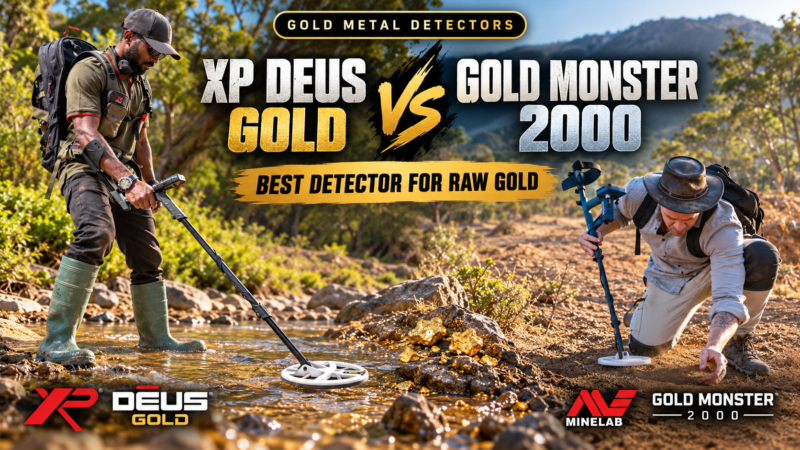
Gold Monster 2000 vs XP DEUS Gold is an important comparison for prospectors choosing a detector for natural gold nuggets, tiny gold fragments and challenging mineralized soils. Both systems use advanced technology, but their operating methods, frequency options and levels of manual control are different.
At Detectors Shop, our team has evaluated the DEUS II with its white HF2 elliptical search coil during practical field demonstrations. Based on our experience, this French detector configuration is our preferred solution for prospectors seeking flexible settings, precise target responses and excellent portability.
In this detailed guide, we examine the technologies, gold-detection features, ground-balance systems and real-world operating characteristics of both devices. We also include original photographs and field videos to help buyers understand the differences before making a decision.
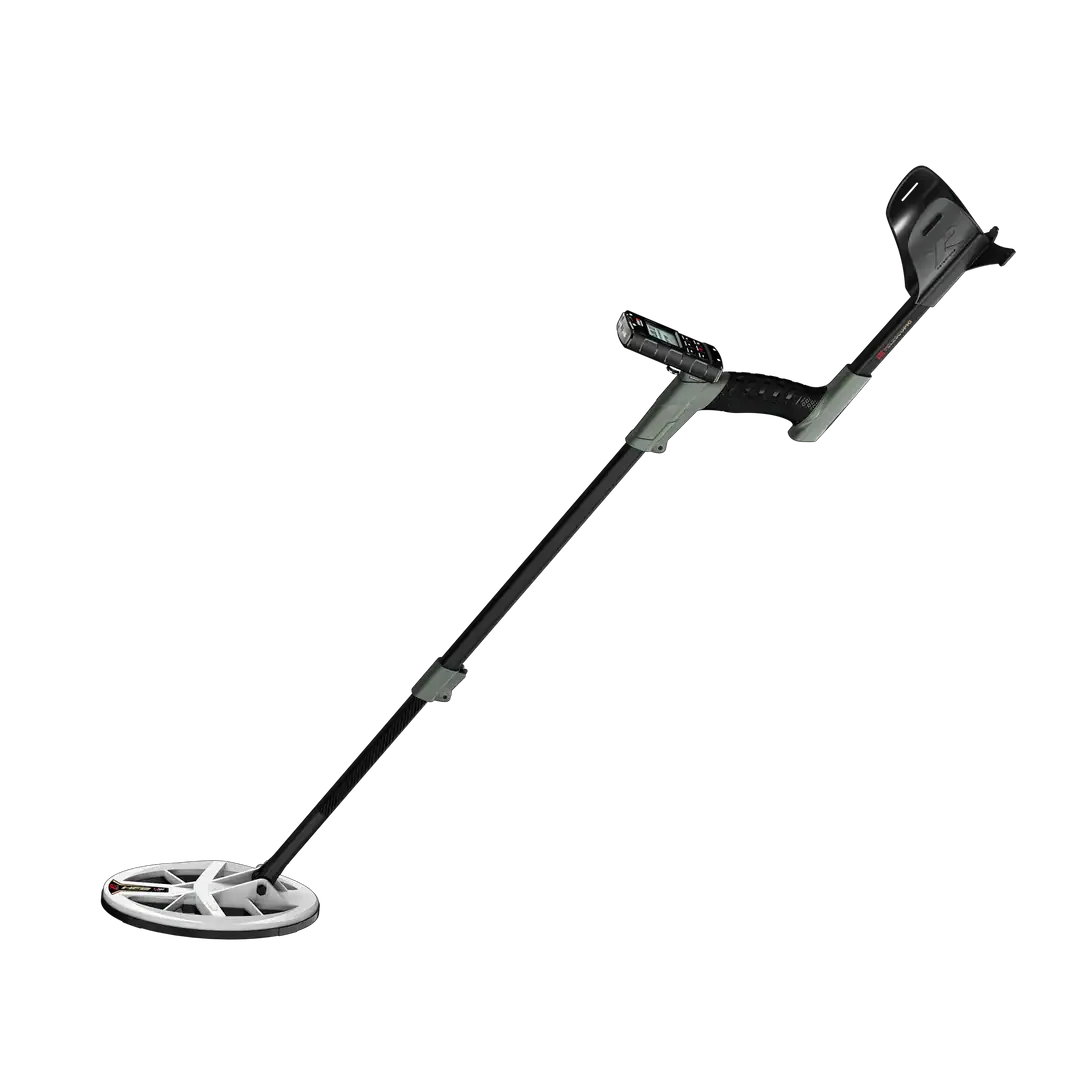
Our preferred choice: The XP DEUS II HF2 configuration stands out for its adjustable operating frequencies, dedicated Gold Field program, ergonomic wireless design and sophisticated detection controls. These advantages make it particularly attractive to experienced natural-gold prospectors.
Gold Monster 2000 vs XP DEUS Gold: A Complete Comparison
Discovering natural gold requires much more than a detector with a high operating frequency. Nugget size, mineralization, coil geometry, ground balancing and signal-processing technology all affect the quality of detection.
The Minelab machine uses Multi-Au simultaneous multi-frequency technology designed specifically for gold prospecting. It combines automatic ground tracking with sensitivity controls and visual information that helps users interpret metal targets.
The XP configuration uses the DEUS II electronic platform together with an advanced high-frequency coil. Its greatest attraction is the ability to modify operating parameters to match different ground conditions and target characteristics.
Both systems are capable of responding to very small natural gold targets. However, the ideal choice depends on whether the operator values automatic processing or greater flexibility in setting up the detector.
XP DEUS Gold: The French High-Frequency Prospecting Configuration
The name XP DEUS Gold refers to the XP DEUS II fitted with the white HF2 elliptical coil and presented by Detectors Shop as a specialized configuration for natural gold prospecting.
It is not a separate factory model manufactured under that name. The equipment is based on the original XP DEUS II platform, while the HF2 accessory provides additional high-frequency capabilities aimed at detecting fine, low-conductivity targets.
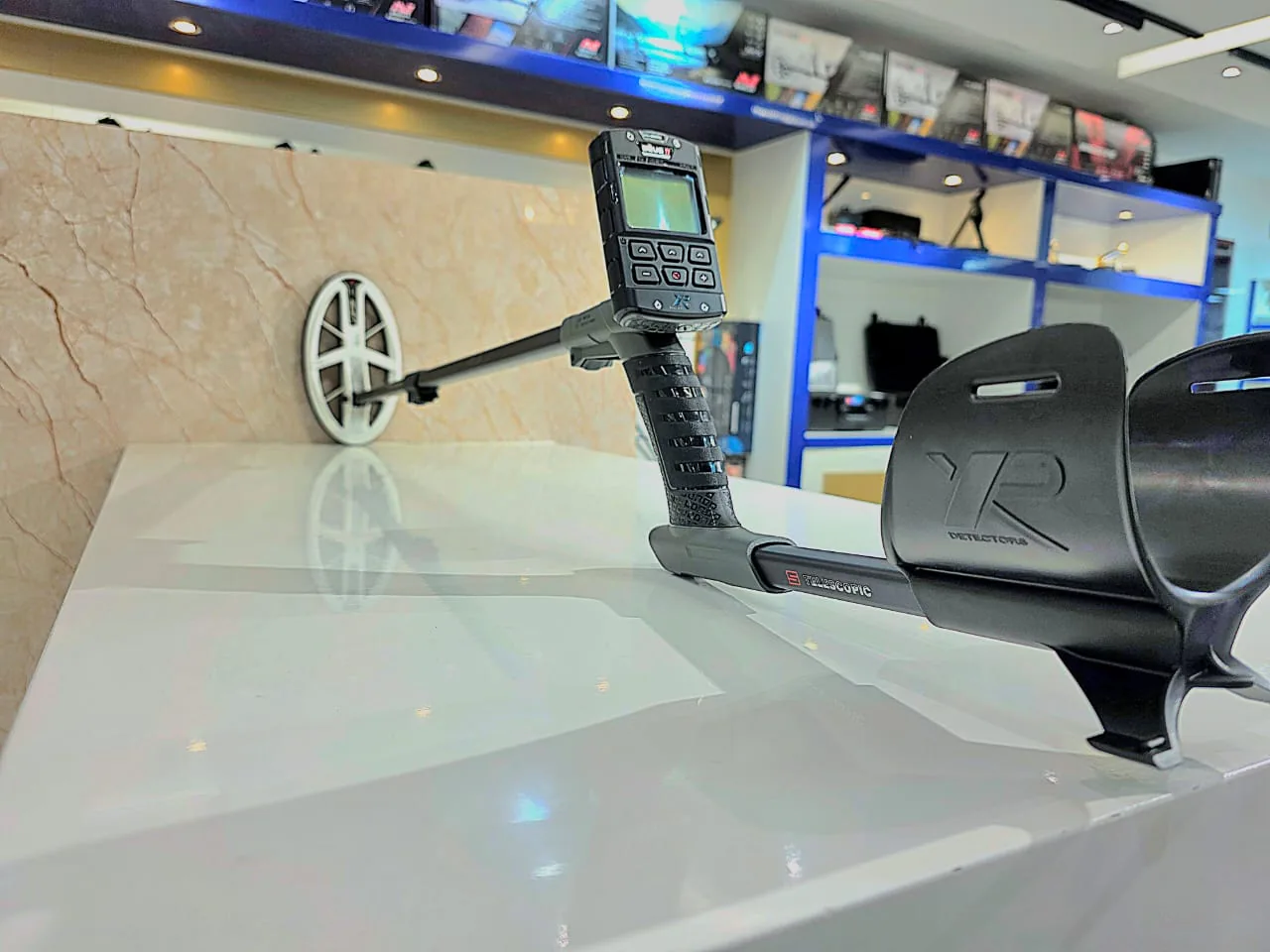
Advanced HF2 Elliptical Coil Technology
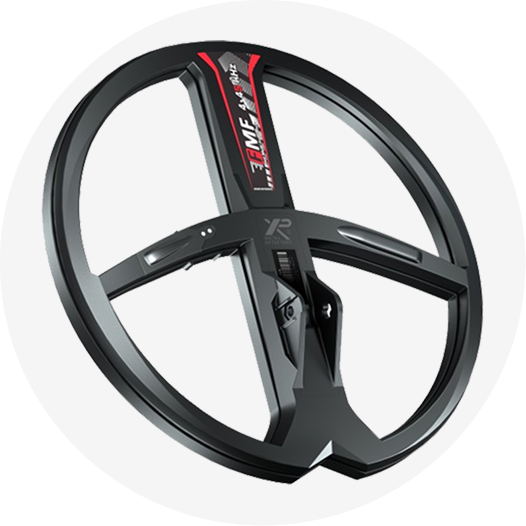
The white elliptical search coil is one of the defining features of this setup. Its operating options include simultaneous Fast Multi Frequency technology and selectable single-frequency settings.
According to XP documentation, the HF2 supports multi-frequency operation reaching approximately 90 kHz and selectable single-frequency operation extending to approximately 120 kHz.
High operating frequencies can improve sensitivity to certain tiny, low-conductivity objects. This makes the system particularly interesting for searching for small gold nuggets and fine natural gold in locations where targets may be difficult to detect.
The detector also provides a dedicated Gold Field program, adjustable sensitivity, target audio controls and ground-management settings.
For a detailed explanation of its functions, visit our DEUS Gold user guide.
You can explore the full configuration on our DEUS II HF2 product page.
Gold Monster 2000: Minelab Multi-Au Gold Detection
The Gold Monster 2000 is a dedicated natural-gold detector developed by Minelab. Its Multi-Au technology operates with simultaneous frequencies between approximately 12 and 75 kHz and uses specialized processing intended for small gold targets.
Unlike more adjustment-intensive systems, the machine is designed to simplify several important detection tasks. Automatic sensitivity and ground tracking allow users to concentrate on sweeping the search coil and investigating promising signals.
Key Features of the Minelab Detector
- Multi-Au simultaneous multi-frequency technology.
- Automatic Easy-Trak ground balancing.
- Quick-Trak ground adjustment option.
- Manual sensitivity and Auto 1 / Auto 2 modes.
- Gold Chance Indicator for target interpretation.
- Echo Wave audio with additional discrimination information.
- Ground settings for different mineralization conditions.
These capabilities make the detector suitable for users who prefer a streamlined operating experience while retaining strong small-target detection technology.
More information is available on our Gold Monster 2000 product page.
Technical Specifications: XP DEUS II HF2 vs Minelab
The following table summarizes the important distinctions between the two systems based on manufacturer documentation and the specific XP configuration discussed in this article.
| Feature | XP DEUS Gold HF2 | Minelab Gold Monster 2000 |
|---|---|---|
| Manufacturer | XP Metal Detectors, France | Minelab |
| Base detector | DEUS II with HF2 coil | Dedicated GOLD MONSTER platform |
| Detection technology | FMF and selectable single frequency | Multi-Au simultaneous multi-frequency |
| Frequency options | Approximately 9–90 kHz FMF; single frequency up to 120 kHz | Multiple frequencies between 12 and 75 kHz |
| Gold search program | Dedicated Gold Field program | Gold-specific operating system |
| Ground balancing | GRAB and tracking options | Easy-Trak and Quick-Trak |
| Sensitivity | Extensive adjustable controls | Manual plus automatic modes |
| Target identification | Visual Target ID and audio options | Target ID and Gold Chance Indicator |
| Audio processing | Selectable audio settings | Echo Wave and detection audio |
| Operator experience | Highly customizable | Automatic-operation emphasis |
| Our preferred system | XP DEUS Gold | Alternative automated choice |
Frequency specifications describe supported operating options, not guaranteed detection depth. Results vary according to search conditions, target size and user settings.
Which Technology Is More Effective for Fine Natural Gold?
Very small natural gold nuggets often generate faint detector responses. The ability to detect them depends on operating frequency, ground noise, coil positioning and signal interpretation.
XP DEUS II HF2: High-Frequency Flexibility
The specialized search coil expands the range of available frequencies and provides additional possibilities for identifying small conductive objects. Its elliptical construction is also useful when working around rocks, uneven terrain and confined search locations.
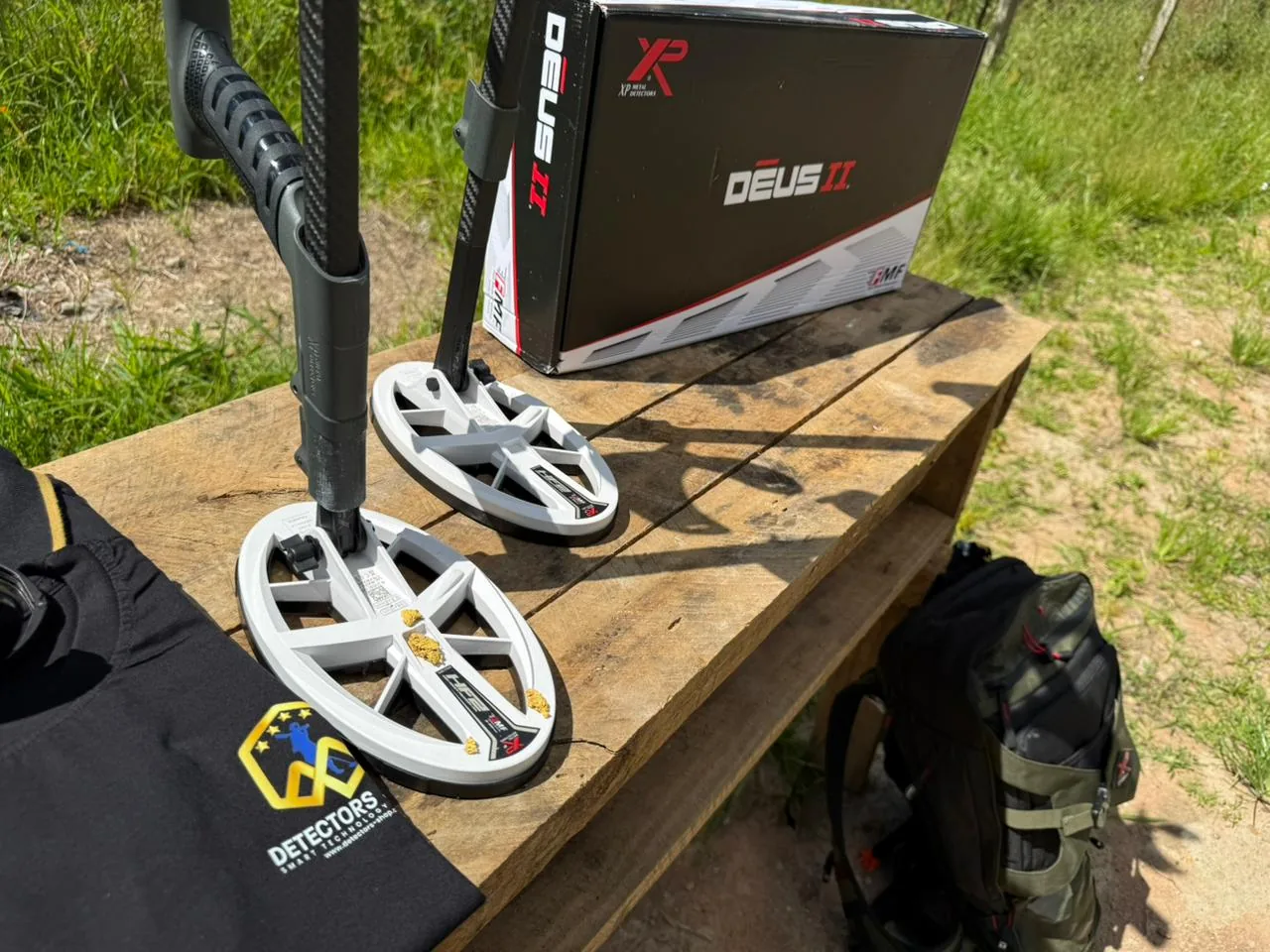
Another important advantage is the operator’s ability to change different parameters rather than depending entirely on automatic processing.
The Gold Field program is intended for mineralized gold-bearing soil. Users can adjust the machine according to the surrounding ground and the strength of the signals being investigated.
Multi-Au: Automatic Processing for Gold Prospectors
The Minelab system uses simultaneous frequencies and automatic ground compensation to maintain a stable search experience across a range of soil types.
Its dedicated audio response can help reveal weak signals while providing information about potentially ferrous and non-ferrous targets.
The important distinction is that the two technologies prioritize different operating experiences. Greater frequency range offers useful flexibility, but it does not independently prove greater depth or superior performance on every gold nugget.
Expert insight: The best settings are those that produce a repeatable, identifiable target response in the actual soil. Maximum sensitivity and maximum frequency are not always the most effective settings.
Real Field Tests: Our DEUS Gold Prospecting Experience
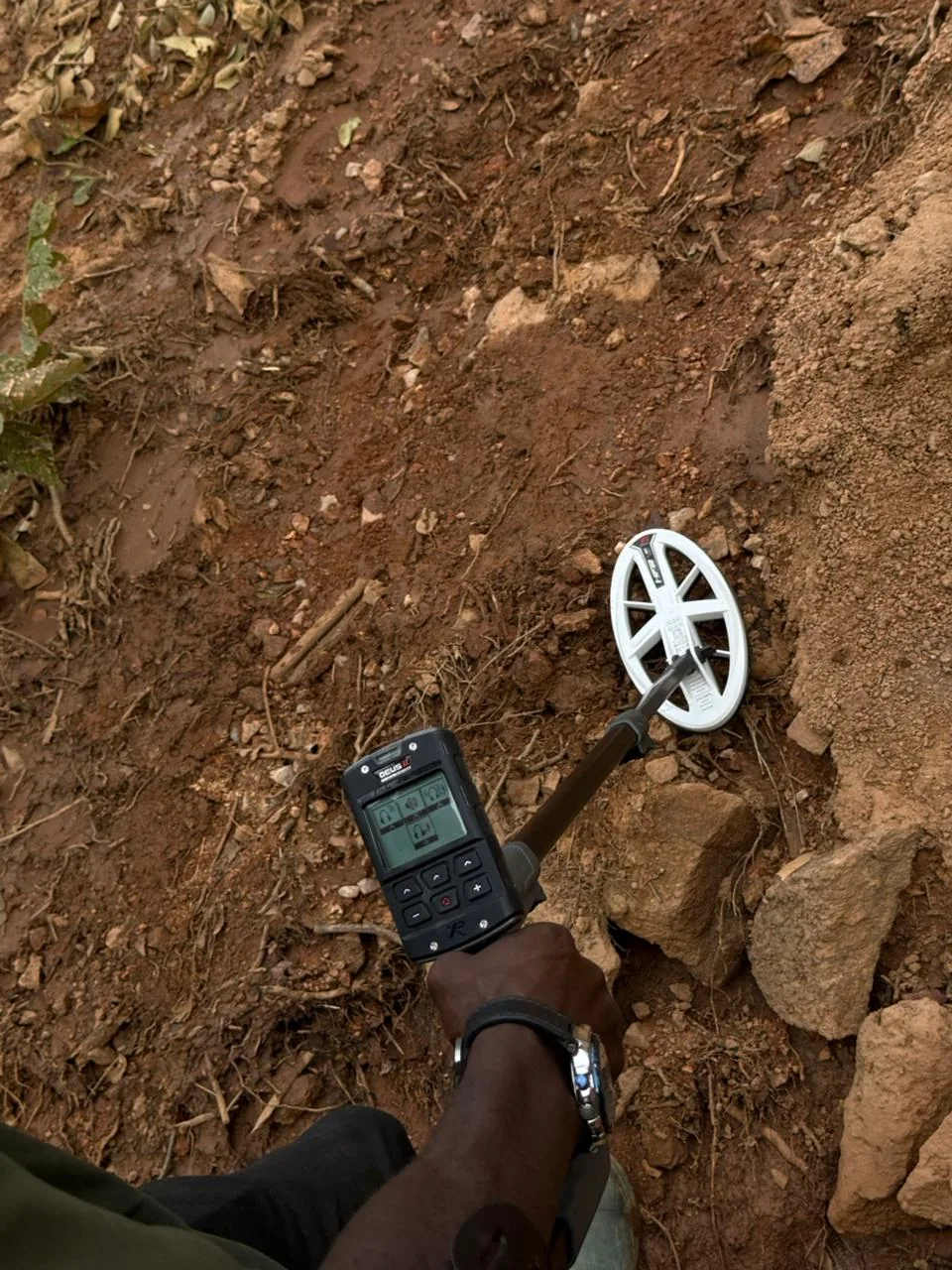
Practical experience is one of the most valuable parts of evaluating a natural-gold detector. Our team has operated the HF2-equipped machine in real prospecting environments and documented demonstrations using photographs and video.
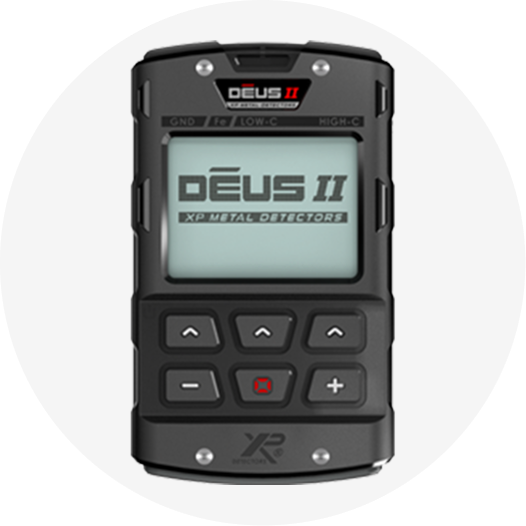
These materials show the detector’s control unit, elliptical search coil, gold samples and operation in rocky terrain. They provide useful evidence of how the equipment is handled outside a showroom.
Based on our team’s field experience, the DEUS configuration has proved highly capable and has become our preferred recommendation for prospectors who appreciate advanced settings and adaptable operating performance.
Video: Gold Monster 2000 vs XP DEUS Gold Comparison
This comparison video shows the two systems in a demonstration recorded for Detectors Shop. It helps viewers examine the equipment and understand the practical differences between the configurations.
Real video comparison between the two gold prospecting detectors.
Video: Practical XP DEUS II HF2 Gold Prospecting Demonstration
This extended presentation demonstrates the French detector during actual operating conditions. It provides an opportunity to examine its handling, screen functions and search technique.
Real field explanation and demonstration of the HF2-equipped DEUS II.
Additional footage is available through our Facebook field demonstration and prospecting video.
Testing note: Our field materials illustrate genuine use and practical experience. A precise numerical advantage in detection depth would require controlled, matched tests with documented target weight, soil conditions, detector settings and target position.
Raw Gold Detector Comparison in Mineralized Ground
Mineralized ground is one of the biggest challenges in natural-gold exploration. Iron-rich soil, magnetic rocks and conductive ground conditions can produce signals that complicate the identification of genuine buried targets.
Fine Gold and Small Target Responses
Tiny gold particles can generate weak signals, especially when they are buried beneath mineralized material. Careful sweep technique, stable sensitivity and appropriate ground correction become extremely important.
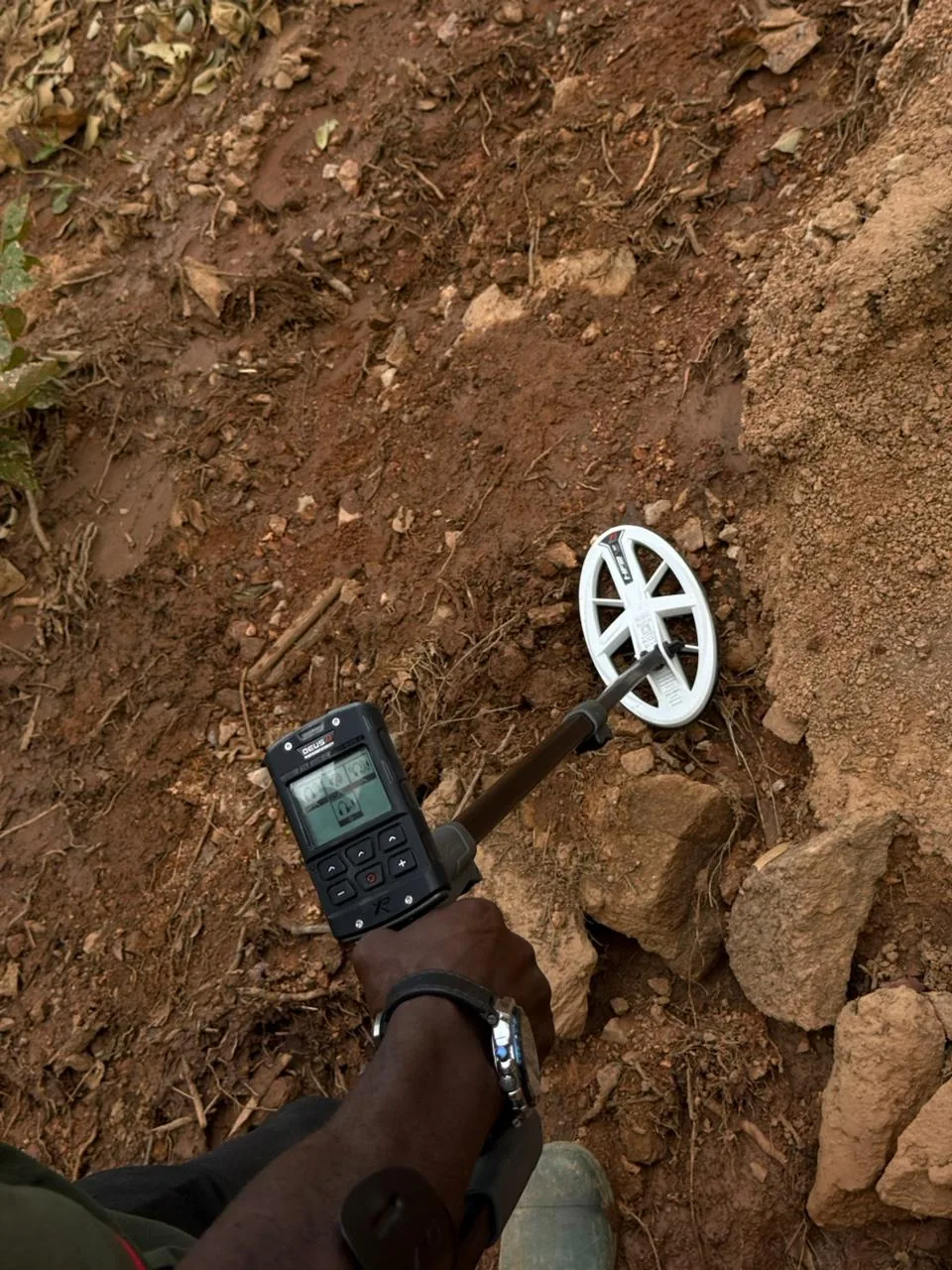
With the XP system, the Gold Field program provides a specialized search approach. The operator can recalibrate the ground using GRAB and adjust sensitivity or reactivity when conditions become unstable.
The Minelab machine follows a more automated approach through Easy-Trak ground tracking and specialized ground-type modes.
Hot Rocks and False Signals
Some mineralized rocks may generate responses similar to metal targets. Experienced users learn to evaluate signal consistency, audio characteristics and ground conditions before deciding whether to investigate further.
The DEUS II provides adjustable ground and audio controls. The competing Minelab system offers additional target information through Gold Chance, Target ID and Echo Wave.
Neither system can identify every gold target with certainty before recovery. Fine or deep targets may produce ambiguous indications, so careful investigation remains essential.
Ground Balance, Sensitivity and Professional Detector Settings
Advanced operating control is a major reason our team favors the French configuration for experienced prospectors.
DEUS II: Adaptable Search Parameters
The detector offers several important adjustments that allow the user to adapt to changing terrain:
- Gold Field program for mineralized gold-bearing ground.
- Adjustable operating-frequency options through the HF2 coil.
- Sensitivity adjustments to manage noise and weak signals.
- Reactivity settings for different ground conditions and target separation.
- GRAB ground calibration and compatible tracking functions.
- Configurable audio responses for target interpretation.
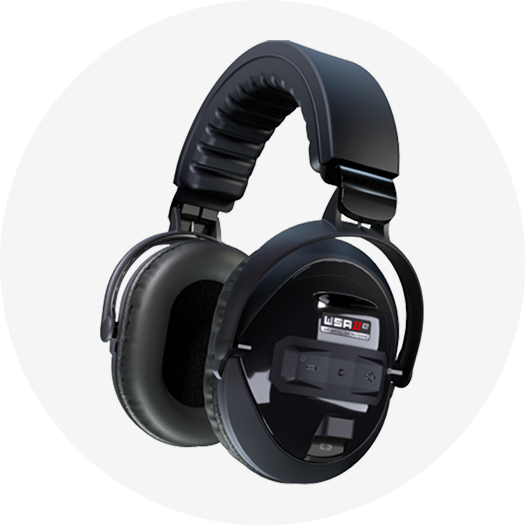
- Wireless design and an ergonomic telescopic stem.
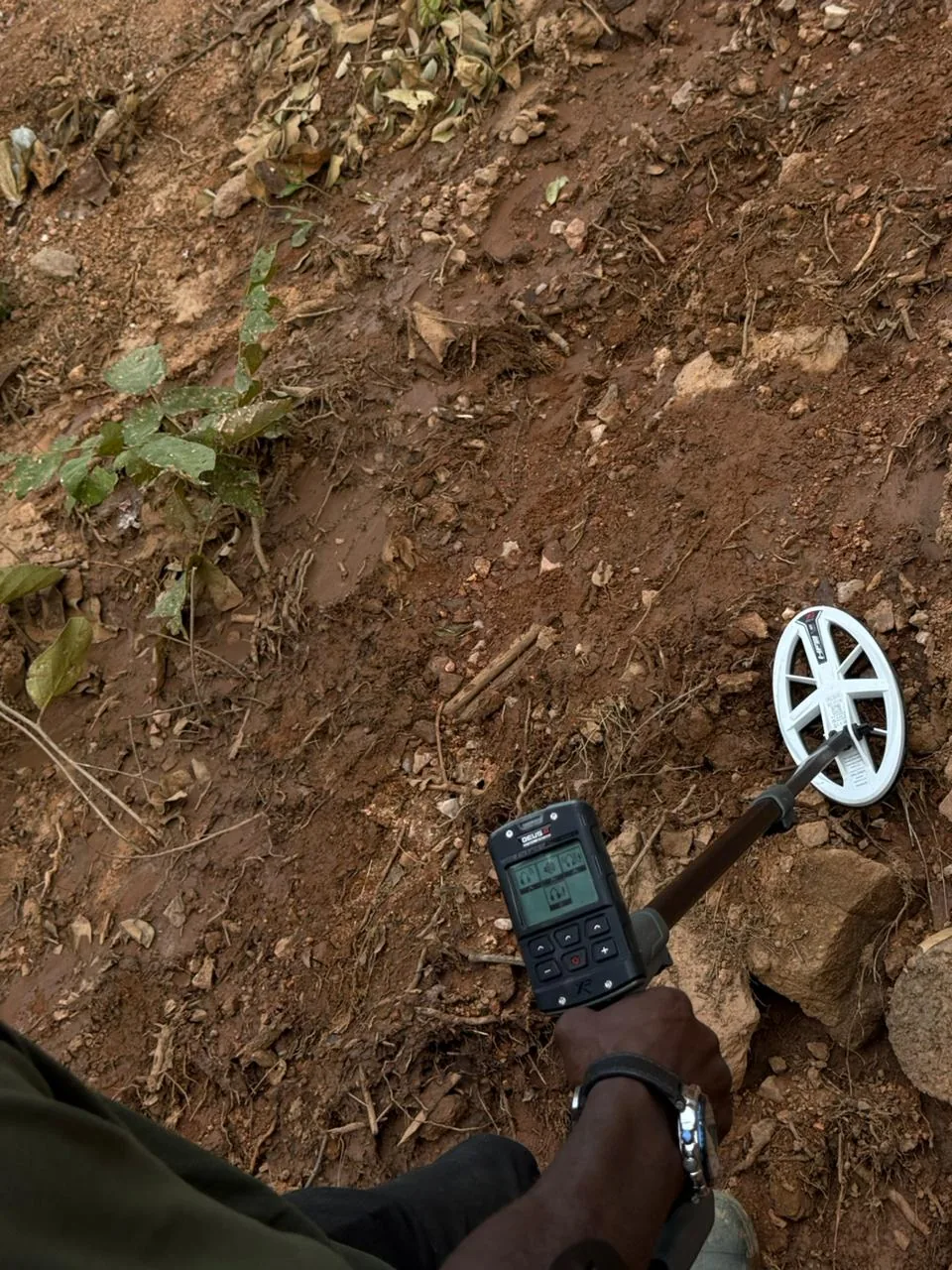
The possibility of adjusting these parameters is especially useful for users who work in different regions or encounter varying soil conditions.
Minelab: Automated Ground and Sensitivity Management
The automatic approach can be convenient for beginners and prospectors who prefer minimal adjustment.
- Automatic Easy-Trak ground tracking.
- Quick-Trak for additional ground adjustment.
- Auto 1 and Auto 2 sensitivity settings.
- Ground-type selection for different soil conditions.
- Integrated audio and target identification information.
This simplicity can be a genuine advantage in some situations. A detector that is easier for its operator to understand may produce a more effective practical searching experience.
Best Detector for Raw Gold: Which Should You Choose?
Choosing the best detector for raw gold depends on your experience, preferred operating style and the conditions in which you plan to search.
Why XP DEUS Gold Is Our Preferred Choice
Our recommendation is based on the combination of flexible HF2 frequency options, dedicated Gold Field operation, adjustable ground response, wireless construction and positive experiences during field demonstrations.
For users who want detailed control over their equipment and are prepared to learn advanced settings, this configuration provides an attractive and versatile prospecting platform.
When the Minelab Alternative Makes Sense
The Australian manufacturer’s detector may appeal to prospectors who prioritize automatic ground tracking, simplified sensitivity adjustment and a dedicated interface for small-gold prospecting.
| Prospecting Priority | Recommended Device |
|---|---|
| Advanced parameter adjustments | XP DEUS Gold HF2 |
| High selectable single-frequency options | XP DEUS II HF2 |
| Gold Field search program | XP DEUS Gold |
| Wireless and versatile detector design | XP DEUS II |
| Automatic ground tracking | Gold Monster 2000 |
| Simple automatic sensitivity adjustment | Gold Monster 2000 |
| Detectors Shop field-based recommendation | XP DEUS Gold |
Our preferred configuration is therefore best suited to prospectors looking for strong customization potential, rather than users who want every major adjustment handled automatically.
Choose XP DEUS Gold for Your Next Gold Prospecting Adventure
Discover the advanced XP DEUS II HF2 configuration available through Detectors Shop. Our team can help you understand its operating features, accessories and suitability for natural-gold prospecting.
Explore XP DEUS Gold Contact Our ExpertsFrequently Asked Questions About Raw Gold Detectors
Is XP DEUS Gold a separate official XP detector?
No. It is the commercial name used by Detectors Shop for an XP DEUS II equipped with the white HF2 elliptical coil and configured for gold prospecting.
Can the HF2 coil detect very small gold nuggets?
Yes. Its high-frequency operating options are especially suitable for searching for certain small, low-conductivity metal targets, including fine natural gold. Actual sensitivity depends on the operating conditions.
What is the difference between FMF and Multi-Au?
FMF is XP’s simultaneous multi-frequency technology, while Multi-Au is Minelab’s specialized multi-frequency technology developed for gold prospecting. Both use frequency processing, but their implementation and user controls differ.
Which metal detector is easier for beginners?
The Minelab model may be more convenient for beginners who prefer automatic ground tracking and sensitivity adjustment. DEUS II offers more extensive customization.
Is a higher frequency always better for natural gold?
No. Higher frequencies can improve sensitivity to some small targets, but mineralization, coil design, settings and target properties are also important.
Can these detectors work in mineralized soil?
Both include technology and ground-management features intended for difficult soil conditions. The best settings depend on local mineralization and the stability of the detector’s response.
Which detector does Detectors Shop recommend?
Our team recommends the DEUS II with the HF2 coil for prospectors who want advanced settings, a flexible operating platform and a dedicated Gold Field search program.
Final Verdict: Our 2026 Gold Detector Recommendation
The comparison highlights two sophisticated approaches to detecting natural gold.
Minelab provides a dedicated prospecting system with simultaneous multi-frequency processing, automatic ground tracking and useful audio and visual target information.
The French XP platform combines advanced detection controls, a specialized elliptical search coil, wireless construction and a dedicated program for difficult gold-bearing terrain.
Our recommendation is XP DEUS Gold. Based on our team’s field experience, operating preferences and assessment of its adjustable features, it is the configuration we particularly recommend to customers seeking greater control over natural gold exploration.
Visit our selection of gold detectors and explore the raw gold detectors category to compare available options.
For detailed instructions on settings and detector operation, read our complete DEUS Gold user guide.
Official Technical References
The technical information in this article is informed by the official XP DEUS II and Minelab GOLD MONSTER 2000 manuals, together with the official XP HF2 elliptical coil information .
Editorial disclosure: Detectors Shop sells the products discussed. DEUS Gold is the company’s commercial name for its XP DEUS II with HF2 coil configuration. Our recommendation reflects our team’s field experience and product assessment, not independently certified laboratory superiority.
