










Introduction
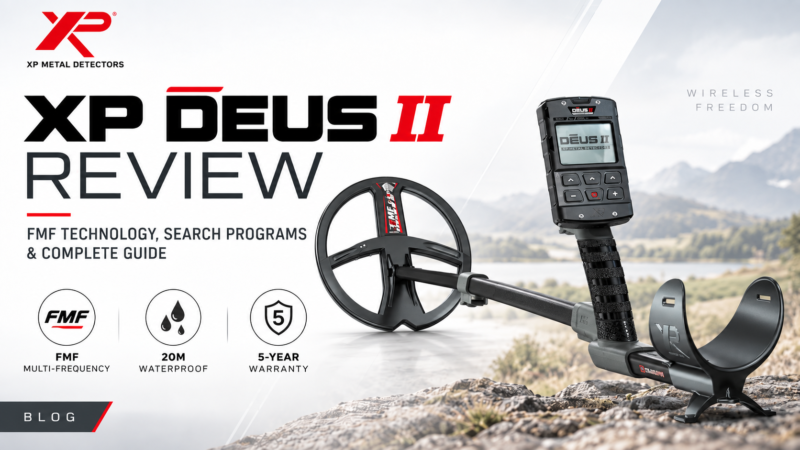
The XP DEUS II is a high-performance wireless metal detector developed and manufactured in France by XP Metal Detectors. It is built around XP’s FMF® Fast Multi Frequency technology, which processes multiple frequencies simultaneously to deliver fast target response, improved target identification, and strong performance across a wide variety of ground conditions.
FMF System, Sound Systems, VLF System
Unlike conventional detectors that rely on a single fixed frequency, the DEUS II uses different combinations of low, medium, and high frequencies depending on the selected search program. This allows the detector to adapt to a broad range of targets, from small coins and fine jewelry to gold nuggets, relics, and larger deeply buried metallic objects.
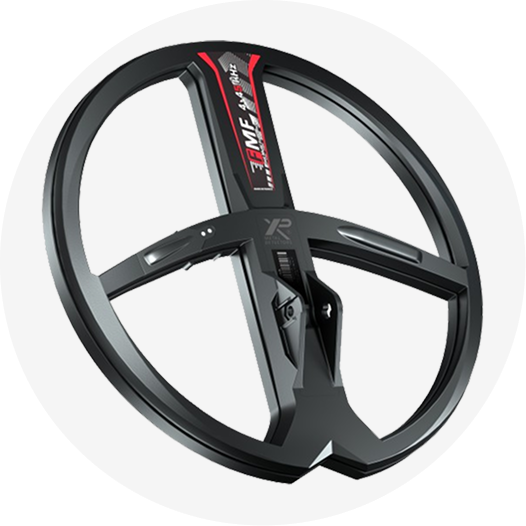
One of the DEUS II’s strongest advantages is its versatility. It is designed for both land and underwater detection, with the search coil and remote control rated IP68 for depths of up to 20 meters. The system is also completely wireless and extremely lightweight, with certain configurations starting from approximately 750 grams.
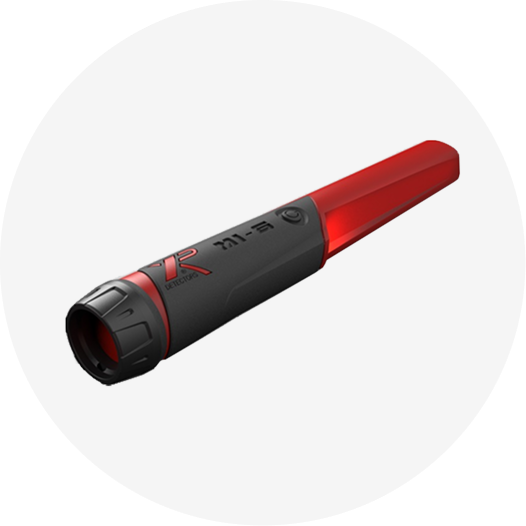
The detector also offers advanced control over discrimination, sensitivity, reactivity, ground balance, audio response, frequency selection, target identification, pinpointing, and custom search settings. In addition, it supports multiple audio systems, wireless headphones, the XP MI-6 pinpointer, software updates, and the XP GO TERRAIN mobile application.
In this complete XP DEUS II review, we will examine its FMF technology, search programs, frequencies, gold and relic performance, beach and diving capabilities, ground settings, discrimination, audio options, wireless accessories, correct setup, and practical field use.
Customers purchasing the XP DEUS II from Detectors Shop receive a 5-year warranty and professional support from our team in Dubai.
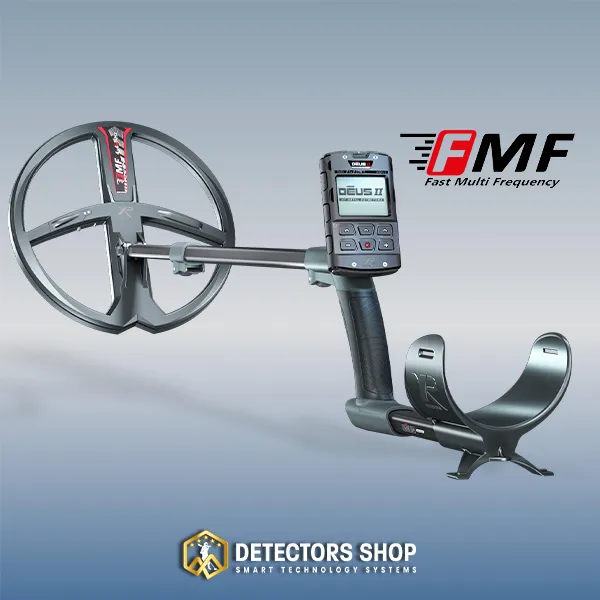
Table of Contents
XP DEUS II at a Glance
Before going deeper into the search programs and advanced settings, here is a quick overview of the most important XP DEUS II specifications and capabilities.
| Feature | XP DEUS II |
|---|---|
| Manufacturer | XP Metal Detectors |
| Country of Manufacture | France |
| Detection Technology | FMF® Fast Multi Frequency |
| Wireless System | Fully wireless |
| Main Search Configuration | Factory programs + user-customizable programs |
| Single-Frequency Mode | DEUS MONO |
| Mono Frequency Range | 4 to 45.4 kHz with standard FMF coils |
| HF2 Frequency Range | Up to 120 kHz in mono mode |
| Waterproof Rating | IP68 |
| Maximum Diving Depth | Up to 20 meters |
| Target ID Scale | 0 to 99 digital conductivity scale |
| Ground Balance | Grab, Tracking, and Manual in DEUS MONO |
| Pinpoint Mode | Yes |
| Gold Prospecting Program | Gold Field |
| Relic Program | Relic |
| Beach Programs | Diving, Beach, Beach Sens |
| Sensitivity Adjustment | 0 to 99 |
| Reactivity Control | Yes |
| Iron Volume | Adjustable |
| Discrimination | Advanced visual and audio discrimination |
| Audio Options | PWM, Square, High Square, Low Square |
| Wireless Headphones | WS6ST, WSAST, WSAXL ST |
| Pinpointer Compatibility | XP MI-6 |
| Mobile App Support | XP GO TERRAIN |
| Software Updates | Yes |
| Weight | From about 750 g depending on configuration |
| Warranty | 5 years from Detectors Shop |
The DEUS II is not built around one fixed frequency profile. Its FMF programs use different combinations of simultaneous frequencies depending on the selected program, while DEUS MONO allows the user to work in a single-frequency configuration. The official manual states that standard mono operation covers seven main frequencies from about 4 to 45.4 kHz, while the HF2 coil extends the upper range much further.
The detector is also designed for both land and sea use. XP states that the remote control and search coil are IP68 waterproof to 20 meters, while the system can also be configured in very lightweight wireless setups starting at approximately 750 g.
How XP DEUS II FMF Technology Works
At the heart of the XP DEUS II is XP’s FMF® Fast Multi Frequency technology. Instead of operating on only one frequency at a time, the detector can process several frequencies simultaneously, allowing it to respond quickly to a wide range of metallic targets while maintaining strong target identification across different soil conditions.
The DEUS II does not use the same frequency combination in every program. Each factory program uses a specific combination of low, medium, and high frequencies together with its own signal processing and ground behavior. This allows the detector to be adapted to different search objectives rather than relying on one universal multi-frequency profile.
Why Multiple Frequencies Matter
Different frequencies react differently to different targets.
In general:
- Lower frequencies are well suited to larger and higher-conductivity targets.
- Higher frequencies provide increased sensitivity to smaller and lower-conductivity targets.
- Simultaneous multi-frequency operation allows the detector to cover a wider target range without forcing the operator to choose only one frequency.
The DEUS II manual explains that higher frequencies are particularly useful for small targets, especially in mineralized ground, while lower frequencies can be more effective on large masses or grouped coins.
FMF Frequency Limits
Within the FMF programs, the user can choose different maximum frequency limits.
With standard FMF coils, the selectable maximum frequency limits include:
- 14 kHz
- 24 kHz
- 40 kHz
The purpose of changing the maximum frequency is not simply to increase or reduce depth. It changes the detector’s sensitivity profile toward different target types and ground conditions.
For example:
14 kHz maximum
Can help focus more on high-conductivity targets and reduce response to very small conductors.
24 kHz maximum
Provides a middle ground between target sensitivity and stability.
40 kHz maximum
Offers the widest standard FMF frequency range and greater sensitivity to a broad variety of targets, including smaller non-ferrous objects.
The official manual describes 40 kHz as the most versatile of these standard FMF limits because it covers the widest frequency range.
DEUS MONO: Single-Frequency Operation
The XP DEUS II also includes DEUS MONO, a dedicated single-frequency program.
With standard FMF coils, the DEUS MONO program provides seven main frequencies from approximately 4.0 to 45.4 kHz, with frequency shifts available around each main frequency.
This creates a total of 49 selectable frequency positions in standard mono operation.
DEUS MONO can be useful when:
- Strong electromagnetic interference affects FMF operation
- The operator wants to focus on a specific target category
- A particular single frequency performs better in a specific location
- The user prefers traditional single-frequency behavior
Frequency and Target Type
The DEUS II manual provides a useful general relationship between frequency and target response.
| Frequency Range | Typical Strength |
|---|---|
| Low frequencies | Larger masses, grouped coins, high-conductivity targets |
| Mid frequencies | General-purpose detecting, coins and medium-sized targets |
| High frequencies | Small coins, fine jewelry, small low-conductivity targets |
| Very high frequencies | Small gold nuggets and tiny targets, especially in mineralized ground |
This is one reason why FMF is so important to the DEUS II.
Instead of choosing between “deep large targets” and “small sensitive targets” using only one frequency, the detector can combine several frequencies and apply program-specific processing.
FMF and Mineralized Ground
Mineralized ground is one of the environments where multi-frequency processing becomes especially useful.
The DEUS II uses its frequency combinations not only for target detection, but also for managing ground response. Depending on the selected program, frequencies can be processed differently to reduce electrically conductive ground effects or improve sensitivity to certain target categories.
This is especially important in programs such as:
- Sensitive
- Gold Field
- Relic
- Diving
- Beach
- Beach Sens
Each program uses a different frequency strategy and different internal parameters according to its intended environment.
FMF Is Not Just “More Frequencies”
The key advantage of XP’s FMF system is not simply the number of frequencies being transmitted.
The DEUS II combines:
Frequency selection + signal processing + ground handling + discrimination + reactivity + audio behavior
into a complete search platform.
This is why two DEUS II programs using similar frequency ranges can still behave differently in the field.
The program itself determines how the detector processes the signals, manages the ground, and presents target information to the operator.
XP DEUS II Search Programs Explained
The XP DEUS II is designed around a series of factory search programs, each optimized for a specific type of target, ground condition, or search environment. Rather than using one universal setup for every situation, the detector changes its frequency combination, signal processing, reactivity, discrimination behavior, and ground response according to the selected program.
Below are the factory programs documented in the current official DEUS II manual.
1. General
The General program is designed as a versatile starting point for both beginners and experienced users.
It uses a combination of low and high frequencies and is intended to provide a strong balance between target detection and false-signal control.
One of its main advantages is that it reduces the influence of damp or wet soil, which can sometimes produce false responses or “halo” effects around holes and disturbed ground.
This makes General a practical choice for:
- Everyday detecting
- Mixed targets
- General-purpose land searching
- Beginners learning the DEUS II
- Sites where wet soil creates unwanted responses
The official manual specifically describes General as suitable for both beginners and experienced users.
2. Sensitive
The Sensitive program uses low and high frequencies with a maximum frequency of approximately 40 kHz with standard FMF coils.
It is especially effective for:
- Small targets
- Low-conductivity targets
- Mineralized ground
- Polluted ground
- Areas containing many closely spaced objects
The manual notes that Sensitive is highly effective on small targets and performs particularly well in mineralized and contaminated ground.
3. Sensitive Full Tones
Sensitive Full Tones is based on the same core platform as the Sensitive program, but it uses Full Tones audio and a higher default Reactivity setting.
Instead of grouping targets into only a few tone categories, Full Tones produces a different audio response according to the conductivity of the detected target.
This gives experienced users more information through sound and can be very useful in heavily polluted or mineralized areas.
The trade-off is that the audio environment becomes more complex, so this mode generally requires more experience to interpret confidently.
4. Fast
The Fast program is built for speed and target separation.
It uses the same general platform as Sensitive but combines:
- Higher Reactivity
- Pitch audio
- Square audio processing
This combination makes the detector respond quickly when several targets are close together.
Fast is especially useful in:
- Iron-contaminated ground
- Old sites
- Areas with many closely spaced metallic objects
- Mineralized ground
- Locations where target separation is more important than maximum raw depth
The manual describes this program as particularly effective in ferrous-polluted and mineralized ground.
5. Park
The Park program is optimized for recreational areas and locations that are normally heavily polluted with modern metal trash.
Typical applications include:
- Parks
- Dry-sand beaches
- Picnic areas
- Public recreational zones
- Urban detecting sites
The factory configuration includes a notch range intended to reject common aluminum foil and also uses the B.Caps setting to help reject rusty bottle caps.
6. Deep High Conductor
The Deep High Conductor program is designed for deeper, higher-conductivity targets.
It combines lower and medium frequencies, with the standard program using frequencies up to approximately 14 kHz.
This program is particularly suitable for:
- High-conductivity coins
- Groups of coins
- Larger conductive targets
- Deep target searching in relatively clean ground
The official manual specifically states that it is designed to better locate good-conductivity targets while maintaining strong sensitivity to isolated coins.
7. DEUS MONO
DEUS MONO operates differently from the FMF programs because it uses a single frequency rather than simultaneous multi-frequency processing.
With standard FMF coils, the operator can work across seven main frequencies from approximately 4 to 45.4 kHz, with additional frequency shifts around each one.
DEUS MONO can be useful when:
- Electromagnetic interference affects FMF operation
- The user wants to concentrate on a particular target type
- A specific single frequency performs better at a given site
- The operator prefers traditional mono-frequency behavior
The manual also notes that DEUS MONO benefits from the DEUS II platform, including improved performance, audio quality, and EMI rejection.
8. Gold Field
The Gold Field program is one of the most important DEUS II modes for natural gold prospecting.
It is specifically intended for highly mineralized gold-bearing ground, where gold nuggets can sometimes produce responses similar to the surrounding soil or ferrous objects.
Gold Field operates in an all-metal configuration and mainly rejects the local ground after proper ground balancing.
This makes it especially suitable for:
- Native gold
- Gold nuggets
- Highly mineralized soil
- Gold-bearing ground
- Areas where small natural gold may be difficult to separate from the ground response
The manual recommends regularly adjusting the ground using the Grab function and reducing sensitivity if the detector becomes unstable in highly mineralized terrain.
9. Relic
The Relic program uses a similar processing approach to Gold Field but operates with lower frequencies and is designed for larger, deeper targets.
It is particularly suited to:
- Relics
- Large metallic masses
- Deep targets
- Historical sites
- Large buried objects
The detector is configured in an all-metal style with low Reactivity.
For deep large targets, XP recommends sweeping the coil higher above the ground, around 15 to 20 cm, to reduce interference from shallow iron and ground effects.
The manual also explains that reducing Reactivity toward 0 can provide an important advantage when searching for very deep large targets.
10. Diving
The Diving program is designed specifically for submerged saltwater detecting.
It uses lower and medium frequencies combined with conductive-soil subtraction to maintain better stability underwater and in wet salt conditions.
It is particularly suitable for:
- Saltwater diving
- Underwater coin hunting
- Rings and jewelry
- Wet salt environments
- Difficult submerged conditions
Compared with the Beach and Beach Sens programs, Diving is designed to provide greater stability and reduced response to very small low-conductivity targets such as aluminum foil.
11. Beach
The Beach program uses higher frequencies than Diving, reaching up to approximately 24 kHz with standard FMF coils.
Because of this, it provides greater sensitivity to smaller targets.
It is intended for:
- Wet beach sand
- Surf zones
- Small jewelry
- Coins
- Saltwater environments
If the detector becomes unstable, the user can reduce Salt Sens or increase Reactivity to improve stability.
12. Beach Sens
Beach Sens is the most sensitive of the three dedicated saltwater programs.
It uses frequencies up to approximately 40 kHz with standard FMF coils and is designed to provide excellent response to very small targets while still retaining strong performance on larger objects.
XP describes Beach Sens as the deepest beach program for wet conditions, while also noting that it is the most reactive and may require careful adjustment in unstable conditions.
Which XP DEUS II Program Should You Use?
| Search Situation | Recommended Program |
|---|---|
| General land detecting | General |
| Small targets | Sensitive |
| Experienced audio-based target analysis | Sensitive Full Tones |
| Iron-contaminated ground | Fast |
| Parks and trashy recreational areas | Park |
| Deep high-conductivity targets | Deep High Conductor |
| Single-frequency searching | DEUS MONO |
| Natural gold and nuggets | Gold Field |
| Deep relics and large targets | Relic |
| Saltwater diving | Diving |
| Wet beach and surf | Beach |
| Maximum small-target sensitivity on wet beach | Beach Sens |
The best DEUS II program depends on the target, ground conditions, contamination level, and whether the search is taking place on land, at the beach, or underwater.
XP DEUS II Gold Detection: Gold Field, Frequencies & Small Gold Performance
The XP DEUS II includes a dedicated Gold Field program specifically designed for natural gold prospecting in highly mineralized gold-bearing ground.
Gold Field is important because small gold nuggets can be difficult to detect in mineralized soil. Their signal can sometimes resemble the response of the surrounding ground or even ferrous material. To address this, XP configures Gold Field in an all-metal style, rejecting mainly the local ground after proper ground adjustment rather than relying on conventional discrimination.
Why Gold Field Is Different
Unlike general coin-hunting programs, Gold Field is designed to prioritize sensitivity to native gold and small low-conductivity targets in difficult soil.
The manual specifically recommends:
- Regularly adjusting the ground using Grab
- Lowering sensitivity if the detector becomes unstable
- Increasing Reactivity in strongly mineralized ground
- Using IAR discrimination carefully to control shallow iron without masking desirable targets
This makes Gold Field particularly suitable for:
- Gold nuggets
- Native gold
- Small low-conductivity targets
- Highly mineralized gold-bearing soil
- Prospecting areas with difficult ground response
Frequency and Gold Sensitivity
Frequency has a major influence on small-target sensitivity.
The DEUS II manual explains that higher frequencies are generally more sensitive to small targets than lower frequencies, especially in mineralized ground. With the standard FMF coils, the detector can operate with frequency limits up to approximately 40 kHz, while the HF2 coil extends the working range much higher.
For small gold, this matters because very small nuggets and fine low-conductivity targets often respond better to higher-frequency operation.
The manual also specifically associates the upper frequency ranges with small coins, fine jewelry, and gold nuggets in highly mineralized ground.
Standard FMF Coil vs HF2 Coil for Gold
With the standard FMF coils, the DEUS II already provides a strong frequency range for gold prospecting.
However, the HF2 coil extends the detector’s frequency capability significantly and is particularly well suited to very small targets in mineralized ground.
According to the official manual, the HF2 coil can reach:
- Up to approximately 89 kHz in FMF programs
- Up to approximately 120 kHz in DEUS MONO
The manual specifically notes that HF2 is particularly suitable for searching for small targets in mineralized environments because of these higher operating frequencies.
Ground Balance Is Critical for Gold Prospecting
Ground balancing is one of the most important settings when using Gold Field.
Highly mineralized gold-bearing soil can dramatically affect detector performance if the ground response is not correctly handled.
XP recommends using the Grab ground-setting method to capture the local ground value accurately.
The detector provides:
- Grab
- Tracking
- Manual Ground Balance in DEUS MONO
Grab is recommended by XP as the fastest and most accurate general method.
In Gold Field, ground compensation becomes especially important because very deep or very small gold targets may produce signals close to the surrounding ground response.
IAR Discrimination in Gold Field
Gold Field uses a special discrimination system called IAR — Iron Amplitude Rejection.
Unlike normal conductivity-based discrimination, IAR helps reject ferrous targets according to the strength and distance of their signal.
This is important because deeply buried gold or relic targets in mineralized soil can sometimes behave similarly to iron.
For that reason, excessive IAR rejection may reduce the chance of detecting difficult deep targets.
The official manual specifically advises reducing IAR if gold nuggets or deep relics begin producing iron-like responses.
Best Starting Strategy for Gold Field
A practical starting approach for natural gold prospecting is:
- Select Gold Field.
- Perform a proper Grab ground balance.
- Begin with stable sensitivity rather than maximum sensitivity.
- Increase Reactivity if the ground is strongly mineralized.
- Keep IAR discrimination conservative.
- Sweep slowly and consistently.
- Re-ground balance when soil conditions change.
- Investigate repeatable weak signals carefully.
Can XP DEUS II Detect Small Gold Nuggets?
Yes. The DEUS II is specifically designed to detect small low-conductivity targets, and the Gold Field program is intended for native gold prospecting in mineralized ground.
Performance improves further when using higher frequencies, particularly with the HF2 coil for very small targets.
However, gold-detection performance still depends on:
- Nugget size
- Ground mineralization
- Coil type
- Operating frequency
- Ground balance
- Sensitivity
- Reactivity
- Search technique
For this reason, no fixed depth should be assumed for all gold nuggets.
XP DEUS II Gold Detection: Gold Field, Frequencies & Small Gold Performance
The XP DEUS II includes a dedicated Gold Field program specifically designed for natural gold prospecting in highly mineralized gold-bearing ground.
Gold Field is important because small gold nuggets can be difficult to detect in mineralized soil. Their signal can sometimes resemble the response of the surrounding ground or even ferrous material. To address this, XP configures Gold Field in an all-metal style, rejecting mainly the local ground after proper ground adjustment rather than relying on conventional discrimination.
Why Gold Field Is Different
Unlike general coin-hunting programs, Gold Field is designed to prioritize sensitivity to native gold and small low-conductivity targets in difficult soil.
The manual specifically recommends:
- Regularly adjusting the ground using Grab
- Lowering sensitivity if the detector becomes unstable
- Increasing Reactivity in strongly mineralized ground
- Using IAR discrimination carefully to control shallow iron without masking desirable targets
This makes Gold Field particularly suitable for:
- Gold nuggets
- Native gold
- Small low-conductivity targets
- Highly mineralized gold-bearing soil
- Prospecting areas with difficult ground response
Frequency and Gold Sensitivity
Frequency has a major influence on small-target sensitivity.
The DEUS II manual explains that higher frequencies are generally more sensitive to small targets than lower frequencies, especially in mineralized ground. With the standard FMF coils, the detector can operate with frequency limits up to approximately 40 kHz, while the HF2 coil extends the working range much higher.
For small gold, this matters because very small nuggets and fine low-conductivity targets often respond better to higher-frequency operation.
The manual also specifically associates the upper frequency ranges with small coins, fine jewelry, and gold nuggets in highly mineralized ground.
Standard FMF Coil vs HF2 Coil for Gold
With the standard FMF coils, the DEUS II already provides a strong frequency range for gold prospecting.
However, the HF2 coil extends the detector’s frequency capability significantly and is particularly well suited to very small targets in mineralized ground.
According to the official manual, the HF2 coil can reach:
- Up to approximately 89 kHz in FMF programs
- Up to approximately 120 kHz in DEUS MONO
The manual specifically notes that HF2 is particularly suitable for searching for small targets in mineralized environments because of these higher operating frequencies.
Ground Balance Is Critical for Gold Prospecting
Ground balancing is one of the most important settings when using Gold Field.
Highly mineralized gold-bearing soil can dramatically affect detector performance if the ground response is not correctly handled.
XP recommends using the Grab ground-setting method to capture the local ground value accurately.
The detector provides:
- Grab
- Tracking
- Manual Ground Balance in DEUS MONO
Grab is recommended by XP as the fastest and most accurate general method.
In Gold Field, ground compensation becomes especially important because very deep or very small gold targets may produce signals close to the surrounding ground response.
IAR Discrimination in Gold Field
Gold Field uses a special discrimination system called IAR — Iron Amplitude Rejection.
Unlike normal conductivity-based discrimination, IAR helps reject ferrous targets according to the strength and distance of their signal.
This is important because deeply buried gold or relic targets in mineralized soil can sometimes behave similarly to iron.
For that reason, excessive IAR rejection may reduce the chance of detecting difficult deep targets.
The official manual specifically advises reducing IAR if gold nuggets or deep relics begin producing iron-like responses.
Best Starting Strategy for Gold Field
A practical starting approach for natural gold prospecting is:
- Select Gold Field.
- Perform a proper Grab ground balance.
- Begin with stable sensitivity rather than maximum sensitivity.
- Increase Reactivity if the ground is strongly mineralized.
- Keep IAR discrimination conservative.
- Sweep slowly and consistently.
- Re-ground balance when soil conditions change.
- Investigate repeatable weak signals carefully.
Can XP DEUS II Detect Small Gold Nuggets?
Yes. The DEUS II is specifically designed to detect small low-conductivity targets, and the Gold Field program is intended for native gold prospecting in mineralized ground.
Performance improves further when using higher frequencies, particularly with the HF2 coil for very small targets.
However, gold-detection performance still depends on:
- Nugget size
- Ground mineralization
- Coil type
- Operating frequency
- Ground balance
- Sensitivity
- Reactivity
- Search technique
For this reason, no fixed depth should be assumed for all gold nuggets.
XP DEUS II Depth & Deep Target Performance
When discussing XP DEUS II depth, it is important to avoid reducing the detector to one fixed maximum-depth number. XP does not publish a single universal depth figure for every target because real detection depth depends on the target, ground conditions, selected program, coil, reactivity, frequency range, and search technique.
Instead, the DEUS II is designed to let the operator optimize the detector for different types of deep targets.
What Affects XP DEUS II Detection Depth?
The main factors include:
- Target size
- Target conductivity
- Target orientation
- Ground mineralization
- Selected search program
- Reactivity setting
- Frequency range
- Coil type
- Ground balance
- Search speed
- Nearby ferrous contamination
A large, high-conductivity target in clean ground can behave very differently from a tiny low-conductivity target in mineralized soil.
Reactivity and Depth
Reactivity is one of the most important DEUS II settings affecting deep-target performance.
A lower Reactivity setting allows the detector to analyze the target signal for a longer period. In cleaner ground, this can improve response to deeper targets.
XP specifically explains that in clean ground, lowering Reactivity can make the detector more sensitive to deep targets.
As a general guide:
| Reactivity | Typical Use |
|---|---|
| 0–1 | Deep targets, large masses, clean ground |
| 2–2.5 | General detecting |
| 3–5 | Iron-contaminated or highly mineralized ground |
However, lower Reactivity is not always better.
In heavily mineralized or iron-contaminated soil, increasing Reactivity can improve target separation and stability, allowing the detector to identify desirable targets that might otherwise be masked by iron or ground noise.
Deep High Conductor Program
The Deep High Conductor program is one of the primary DEUS II programs for deep, high-conductivity targets.
It uses lower and medium frequencies and is designed for targets such as:
- Deep coins
- High-conductivity coins
- Coin clusters
- Larger conductive targets
The factory configuration uses frequencies up to approximately 14 kHz, which favors higher-conductivity targets compared with programs focused on extremely small low-conductivity objects.
For cleaner ground, XP also suggests that lower Reactivity settings can improve deep-target performance.
Relic Program for Large Deep Targets
For large targets at depth, the Relic program is especially important.
Relic is configured with:
- Lower frequencies
- Low Reactivity
- All-metal style operation
- Conductive soil subtraction
- Ground adjustment using Grab
XP specifically recommends this program for large masses at depth.
For this type of search, the manual recommends raising the search coil approximately 15–20 cm above the ground.
This may sound unusual, but the purpose is to reduce interference from:
- Shallow iron
- Small surface targets
- Ground effects
This allows the operator to concentrate more clearly on the longer, broader signal responses produced by larger deep targets.
Gold Field and Deep Targets in Mineralized Ground
Deep targets can become especially difficult to detect in mineralized soil because their signals may begin to resemble the surrounding ground response.
XP explains that Gold Field and Relic are designed to help in these situations because they mainly reject the local ground after precise adjustment instead of aggressively rejecting surrounding signals.
This can help when searching for:
- Deep native gold
- Larger buried masses
- Difficult targets in mineralized ground
The manual specifically notes that deeply buried targets may take on values close to the surrounding soil, making accurate ground compensation particularly important.
Frequency and Deep Targets
Lower frequencies are generally more suitable for larger targets and high-conductivity objects, while higher frequencies improve sensitivity to smaller targets.
This is why the DEUS II allows the operator to change the maximum frequency used by FMF programs.
For deep high-conductivity searching, reducing the maximum frequency to around 14 kHz can help concentrate the detector more toward larger and higher-conductivity targets.
By contrast, higher-frequency operation is more useful when searching for small targets and low-conductivity objects.
Search Speed Also Matters
XP recommends slower searching when investigating deeper targets.
A fast sweep can provide a quick overview of an area, but it may leave portions of ground insufficiently examined.
For more thorough searching, each coil sweep should slightly overlap the previous sweep.
Slowing down also gives the operator more time to recognize weak, deep responses.
Coil Position for Normal Deep Searching
For normal land detecting, XP recommends keeping the search coil:
- Parallel to the ground
- As close to the surface as practical
- Without repeatedly striking the ground
Keeping the coil close to the ground improves the chance of detecting deeper targets and also improves sensitivity to smaller objects.
The exception is specialized large-target searching with the Relic program, where XP recommends lifting the coil approximately 15–20 cm above the ground.
Does XP DEUS II Have a Fixed Maximum Depth?
No single fixed maximum depth is specified by XP for all targets.
This is the most accurate way to understand DEUS II depth:
XP DEUS II detection depth varies according to target size, conductivity, ground conditions, search program, frequency, coil, Reactivity, and operator technique.
A small coin, a gold nugget, and a large buried metallic object should not be expected to produce the same detection depth.
For deep-search performance, the operator should select the appropriate program and settings rather than relying on one advertised depth number.
XP DEUS II Beach & Underwater Detection
The XP DEUS II is designed for both land and underwater use, making it especially versatile for beach hunters and divers. XP rates the remote control and compatible search coils IP68 waterproof to 20 meters, while the detector also includes dedicated programs for saltwater conditions.
Dedicated Saltwater Programs
The DEUS II includes three factory programs specifically intended for beach and underwater detecting:
- Diving
- Beach
- Beach Sens
Each one uses a different combination of frequencies and signal processing to handle saltwater, wet sand, and changing mineralization.
Diving Program
The Diving program is designed for submerged saltwater searching and difficult underwater conditions.
It uses lower and medium frequencies with conductive-soil subtraction to improve stability in saltwater.
XP positions Diving as the most stable of the three saltwater programs, making it especially suitable for:
- Saltwater diving
- Underwater coin hunting
- Rings and jewelry
- Wet salt environments
- Challenging submerged conditions
The program is also naturally less responsive to very low-conductivity targets such as small aluminum foil compared with the more sensitive Beach and Beach Sens programs.
Beach Program
The Beach program uses higher frequencies, reaching up to approximately 24 kHz with standard FMF coils.
This gives it greater sensitivity to smaller targets than the Diving program.
Beach is especially suitable for:
- Wet beach sand
- Surf zones
- Coins
- Jewelry
- Small non-ferrous targets
If instability appears, XP recommends reducing Salt Sens or increasing Reactivity.
Beach Sens Program
The Beach Sens program is the most sensitive of the dedicated saltwater modes.
With standard FMF coils, it uses frequencies up to approximately 40 kHz and is designed to improve sensitivity to very small targets while maintaining strong performance on larger ones.
XP describes Beach Sens as the deepest beach program for wet conditions, but also the most reactive.
Because of this increased sensitivity, Beach Sens may require more careful adjustment in difficult saltwater conditions.
Salt Sensitivity
The DEUS II includes a dedicated Salt Sens setting for the Diving, Beach, and Beach Sens programs.
Salt Sens is designed specifically to reduce false signals caused by seawater and wet salt environments.
The setting can be adjusted from 1 to 9.
XP recommends using Salt Sens as the primary adjustment when instability is caused by saltwater, while general Sensitivity should be reduced mainly when the problem comes from electromagnetic interference.
Magnetic Black Sand
Some beaches contain strongly magnetic black sand, which can mask weak or deep targets.
The DEUS II includes a Magnetic Ground setting for the beach programs.
Two options are available:
Reject
Rejects black sand, ferrite, and meteorites for greater stability.
Accept
Allows these ground responses to be heard and may also allow deeper targets that would otherwise be masked by similar ground values.
XP notes that Accept can help reveal distant targets hidden by magnetic ground, but it also makes the detector less stable.
Waterproofing and Diving Depth
The DEUS II remote control and search coil are rated:
- IP68
- Waterproof to 20 meters
For deeper dives, XP also provides a dedicated Diving Mode that locks the remote-control keypad once water pressure becomes significant.
According to the manual, this mode is intended to prevent pressure at approximately 8 to 10 meters from accidentally activating remote-control buttons.
Underwater Antenna
Because radio waves do not travel effectively through water, the DEUS II uses a dedicated aerial antenna for underwater communication between the coil and remote control.
The standard box contents listed in the manual include the underwater aerial antenna and clip.
This component should be correctly installed before underwater use.
BH-01 Bone Conduction Headphones
For underwater detection, XP offers the BH-01 bone conduction headphones.
Instead of sitting over the ears, BH-01 rests against the cheekbones and transmits sound through vibration.
The headphones are:
- Designed specifically for metal detecting
- Made in France by XP
- IP68 waterproof to 20 meters
- Suitable for both underwater and land use
This design allows the ears to remain open while target audio is transmitted through bone conduction.
Which Beach Program Should You Choose?
| Search Environment | Recommended Program |
|---|---|
| Saltwater diving | Diving |
| Wet sand and surf | Beach |
| Small targets in wet sand | Beach Sens |
| Strong black sand | Beach program + Magnetic Ground adjustment |
| Unstable saltwater conditions | Reduce Salt Sens |
| Freshwater diving | XP recommends an inland program rather than Diving |
The three saltwater programs give the XP DEUS II a significant advantage for users who regularly move between dry land, wet beaches, surf zones, and underwater search locations.
XP DEUS II Target ID, Discrimination & Audio Identification
The XP DEUS II combines visual target identification with advanced audio discrimination, giving the operator several ways to evaluate a target before digging.
Instead of relying only on a single Target ID number, the DEUS II allows the user to combine:
- Digital Target ID
- Ferrous / Non-Ferrous visual display
- Discrimination
- Notch and Multi-Notch
- B.Caps
- Iron Volume
- Multiple tone modes
- Full Tones
- Pitch audio
This combination is one of the detector’s strongest features for experienced users who want more information from each target response.
Target ID Scale
The DEUS II uses a digital conductivity scale from 0 to 99 for most target identification, with the negative range down to -6.4 representing the ground zone and very small ferrous responses.
The conductivity scale helps the user estimate the electrical characteristics of the detected target. In general, lower numbers represent lower-conductivity targets, while higher numbers represent higher-conductivity targets.
The official manual also shows examples ranging from foil and poor alloys through bronze coins and larger silver or copper coins.
Discrimination
The Discrimination setting allows the operator to reject targets below a selected conductivity threshold.
For example:
- A setting of 10 rejects targets with a Target ID below 10.
- A higher setting can reject more low-conductivity targets.
- XP gives 40 as an example of a level that can reject much small aluminum foil.
However, higher discrimination can also cause desirable targets to be lost.
For that reason, XP recommends using visual and audio target information rather than relying only on aggressive discrimination.
Ferrous / Non-Ferrous Display
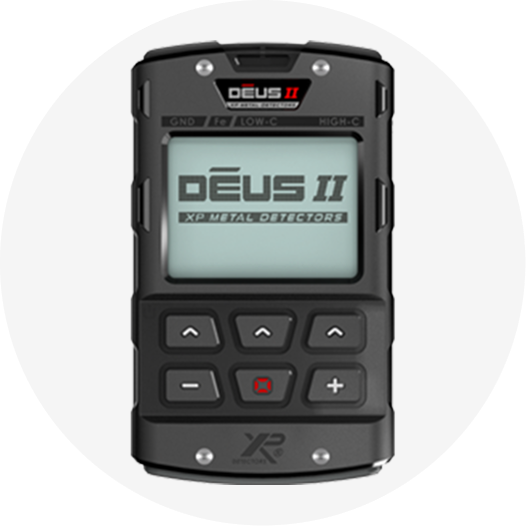
The standard DEUS II search screen includes a visual F/NF display for ferrous and non-ferrous target responses.
The screen also shows target strength, which can help the user assess the response of a target and estimate whether it is likely shallow, deep, weak, or strong.
The DEUS II also offers a full-screen Target ID display and an advanced X-Y target signature screen for additional visual analysis.
Notch
The Notch function allows the user to reject a specific conductivity value or target window without rejecting everything below that value.
For example, if an unwanted target repeatedly identifies around TID 37, the user can create a notch around that value while continuing to accept targets with conductivity above and below it.
This is especially useful in areas where one specific type of trash appears repeatedly.
Multi-Notch
The DEUS II also provides Multi-Notch, allowing several separate conductivity ranges to be rejected.
This gives the operator significantly more control than a simple discrimination threshold.
XP explains that the rejected zones appear grayed out on the target conductivity bar.
B.Caps – Bottle Cap Rejection
The B.Caps function is specifically designed to improve rejection of rusty bottle caps and certain difficult ferrous targets.
It can be adjusted from 0 to 5.
XP recommends using it particularly in:
- Parks
- Beaches
- Polluted sites
- Areas containing large numbers of rusty bottle caps
The system can also assist with some difficult ferrous objects such as ferrous cartridges, rings, and irregular iron targets.
Iron Volume
Iron Volume controls the loudness of the low tone associated with ferrous targets below the discrimination setting.
The range is:
- 0 = iron tone muted
- 10 = maximum iron volume
Some experienced detectorists prefer keeping iron audible at a low volume rather than completely silent because hearing the surrounding iron can provide useful information about a difficult site.
2, 3, 4 and 5 Tone Modes
The DEUS II allows the conductivity scale to be divided into different audio regions.
The operator can choose:
- 2 Tones
- 3 Tones
- 4 Tones
- 5 Tones
Each conductivity range can be assigned a different tone frequency and volume.
This allows targets to be classified audibly without constantly looking at the remote control display.
Full Tones
Full Tones provides a more detailed audio representation of target conductivity.
Instead of dividing targets into only a few fixed tone groups, each Target ID produces an audio pitch proportional to its conductivity.
Higher-conductivity targets therefore generate higher-pitched responses.
XP gives an example where aluminum foil with a TID around 30 produces a much lower tone than a large silver coin with a TID around 95.
Full Tones can provide a very rich amount of information, but it generally requires more experience because the user must learn to interpret a wide range of subtle sounds.
Pitch and Pitch 2
In Pitch mode, the target conductivity does not directly determine the sound.
Instead, the signal strength influences the audio pitch and volume.
A smaller or more distant target tends to produce a weaker, lower-pitched response, while a closer or stronger target produces a stronger, higher-pitched sound.
XP also provides Pitch 2, which is designed to make deep and small targets more noticeable while reducing ground noise.
Silencer
The Silencer helps reduce residual false spikes from large iron objects and irregular ferrous targets.
Increasing Silencer can improve iron rejection, but excessive filtering may also mask good non-ferrous targets located close to iron.
This setting should therefore be adjusted carefully in heavily contaminated sites.
Best Way to Identify a Target
For the most reliable target analysis, it is better to combine several types of information rather than relying on one value.
A practical DEUS II workflow is:
- Listen to the audio response.
- Observe the Target ID.
- Check the ferrous / non-ferrous display.
- Sweep the target from another direction.
- Compare the signal consistency.
- Use audio tone behavior to evaluate conductivity.
- Use Pinpoint if necessary before digging.
A stable Target ID combined with a repeatable non-ferrous audio response is generally much more informative than a single isolated reading.
XP DEUS II Ground Balance, Mineralization & Ground Settings
Ground balance is one of the most important parts of getting stable and accurate performance from the XP DEUS II, especially in mineralized soil, black sand, old sites, and areas with changing ground conditions.
The DEUS II continuously displays information about the ground, including the measured ground phase and the level of mineralization, helping the operator understand how difficult the soil is before making adjustments.
Why Ground Balance Matters
Natural soil can contain iron oxides, ferrite, mineral salts, and other conductive or magnetic materials.
These ground conditions can:
- Reduce detection depth
- Create false signals
- Mask weak targets
- Make Target ID less stable
- Interfere with small gold or deep target detection
The DEUS II provides several ground-adjustment methods to help compensate for these effects.
Ground Balance Modes
The official manual lists three main ground-setting methods:
- Grab
- Tracking
- Manual
However, Manual ground adjustment is only available in the DEUS MONO program.
Grab Ground Balance
Grab is the method XP recommends most often because it is quick and accurate.
To perform Grab:
- Enter the Ground menu.
- Pump the search coil up and down over clean ground.
- Hold the ground-balance control.
- Continue until the ground sound is reduced and the displayed value stabilizes.
The manual recommends moving the coil vertically over the soil while capturing the local ground value.
Grab is especially useful when:
- Entering a new search area
- Moving into noticeably different soil
- Searching for gold in mineralized ground
- Using Gold Field or Relic
- The detector begins producing ground-related instability
Tracking Ground Balance
Tracking automatically monitors the ground and continuously adjusts the ground correction value.
This can be useful when mineralization changes gradually and consistently across a search area.
However, XP warns that Tracking is less suitable in locations where ground conditions change rapidly, such as old human settlements where mineralization may vary significantly within a short distance.
In those environments, XP recommends using Grab instead.
Manual Ground Balance
Manual ground balance is available in the DEUS MONO program.
The user first observes the ground mineralization value while pumping the coil over the soil, then manually adjusts the ground setting to match the measured value.
XP explains that manual adjustment is not offered in the multi-frequency programs because each frequency would otherwise need to be adjusted separately. Grab can capture the ground response of the frequencies simultaneously.
Ground Stabilizer
The DEUS II also provides a Ground Stabilizer setting for inland programs.
It controls how much ground feedback the operator is willing to hear.
The range is:
- Level 1 – Least stable / maximum ground acceptance
- Level 2 – Balanced
- Level 3 – Most stable
XP describes Level 1 as an expert setting because it allows more ground response to remain audible, which can help reveal very deep signals that might otherwise be masked by mineralization.
Level 3 provides more stability but rejects more ground response.
Which Ground Stabilizer Level Should You Use?
| Ground Condition | Suggested Starting Point |
|---|---|
| Clean, mild soil | Level 2 |
| Difficult mineralized soil | Level 2 or 3 |
| Maximum stability required | Level 3 |
| Expert deep searching | Level 1 |
The best value depends on the search environment and the operator’s experience.
Ground Mineralization Indicator
The DEUS II displays both:
- Ground phase
- Mineralization strength
The stronger the mineralization level, the more the soil can affect detector performance.
Pumping the coil several times over clean ground helps produce a more accurate mineralization reading.
Magnetic Ground and Black Sand
In the Diving, Beach, and Beach Sens programs, the DEUS II includes a dedicated Magnetic Ground setting.
This is especially useful on beaches containing magnetic black sand.
Two options are available:
Reject
Provides greater stability by rejecting black sand, ferrite, and meteorite-like responses.
Accept
Allows these ground responses to sound and can help reveal deeper targets that might otherwise be masked by similar ground values.
Ground Balance for Gold Field and Relic
Ground balance becomes especially important in Gold Field and Relic.
XP explains that deeply buried targets can sometimes produce values very close to the surrounding ground.
These programs are designed to reject mainly the local ground after precise adjustment, helping retain responses from difficult deep targets in mineralized soil.
For this reason, users searching for native gold or large deep relics should regularly update the ground balance as soil conditions change.
Practical Ground Balance Routine
A good field routine is:
- Find a clean patch of ground.
- Check the mineralization reading.
- Perform Grab.
- Select the correct search program.
- Begin searching.
- Recheck the ground balance whenever the soil changes.
- If instability remains, adjust Reactivity or Sensitivity.
- On beaches, use Salt Sens and Magnetic Ground settings where necessary.
Correct ground balance does not simply make the detector quieter. It helps the DEUS II separate actual target responses from the natural response of the soil.
XP DEUS II Reactivity, Sensitivity & Advanced Search Settings
The XP DEUS II gives the operator extensive control over how the detector responds to targets, ground conditions, and nearby interference. Among the most important settings are Reactivity, Sensitivity, Audio Response, Iron Volume, Threshold, and Frequency control.
Understanding how these settings interact is essential for getting the best performance from the detector.
Reactivity
Reactivity controls how quickly the DEUS II analyzes and separates nearby target signals. It is essentially the detector’s recovery speed.
A higher Reactivity setting allows the detector to respond more quickly when several targets are close together, which is especially useful in:
- Iron-contaminated ground
- Mineralized soil
- Trashy sites
- Areas with closely spaced targets
A lower Reactivity setting allows the detector to spend more time analyzing each signal and can improve deep-target response in cleaner ground.
Recommended Reactivity Ranges
The official manual provides the following general guidance:
| Reactivity | Recommended Use |
|---|---|
| 0–1 | Large masses and coins in relatively clean ground |
| 2–2.5 | General-purpose detecting |
| 3–5 | Iron-contaminated and/or mineralized ground |
XP also explains that the greatest raw detection range is usually obtained with low Reactivity, but medium or high Reactivity can actually help locate more targets in mineralized soil because it improves target separation and signal clarity.
Sensitivity
The DEUS II Sensitivity setting ranges from 0 to 99.
XP states that the most commonly used values are generally between 70 and 90.
Sensitivity should be reduced when searching near:
- Power lines
- Electric fences
- Radio transmitters
- Strong electromagnetic interference
- Highly contaminated areas
The manual also warns against testing the detector indoors because buildings often contain significant electromagnetic and metallic interference.
Higher Sensitivity Is Not Always Better
Increasing sensitivity can improve response to weak or small targets, but excessive sensitivity may make the detector unstable.
A practical approach is:
- Start with a high but stable value.
- Sweep the detector over the ground.
- If excessive false signals appear, lower Sensitivity gradually.
- Stop once the detector becomes stable while still maintaining good target response.
The ideal Sensitivity setting is therefore the highest stable level for the current environment, not simply 99.
Frequency Scan
The DEUS II includes an automatic Frequency Scan function.
This scans the available operating frequencies and selects a channel with lower electromagnetic interference.
It can be especially useful:
- Near power lines
- Around other detectors
- In urban environments
- When unexplained instability appears
XP recommends using Frequency Scan before reducing other performance settings if electromagnetic interference is suspected.
Audio Response
Audio Response changes how loudly weak and deep targets are heard.
The range is:
- 0 = weak audio response
- 7 = maximum audio response
Increasing Audio Response can make weak targets sound louder, but it does not add actual detection depth.
XP specifically explains that this setting changes the audio dynamic range rather than increasing the detector’s physical detection capability.
Why Too Much Audio Response Can Be a Problem
If Audio Response is set too high:
- Small false signals are amplified
- Weak ground noise can become more noticeable
- Strong and weak targets may sound more similar
- Estimating target depth by sound becomes more difficult
For users who want to judge how deep a target may be from the strength of its sound, a moderate Audio Response is usually easier to interpret.
Iron Volume
Iron Volume controls how loudly ferrous targets are heard.
The range is:
- 0 = iron audio muted
- 10 = maximum iron volume
Rather than completely silencing iron, many experienced users prefer keeping it audible at a low level. This helps them understand how much ferrous contamination exists around a desirable target.
Threshold
Threshold is available when using Pitch mode.
It controls the level of the continuous background sound.
The setting ranges from 0 to 20.
The pitch of the threshold and very weak target responses can also be adjusted between approximately 150 and 603 Hz through the Expert menu.
Threshold can be useful when searching for very weak responses because subtle changes in the background tone may help reveal small or deep targets.
Salt Sens
In the three saltwater programs — Diving, Beach, and Beach Sens — the detector provides a separate Salt Sens adjustment.
Salt Sens ranges from 1 to 9 and is specifically intended to manage false signals caused by seawater and wet salt conditions.
XP recommends adjusting Salt Sens before reducing general Sensitivity when the instability comes from saltwater rather than electromagnetic interference.
Multi-Process
On compatible ST headphones, the DEUS II also offers Multi-Process, which combines two separate audio-processing channels.
This allows the detector to mix different reactivity levels, audio types, and target responses at the same time.
XP describes two key uses:
- Combining low Reactivity for deeper searching with high Reactivity for better separation near iron
- Creating audio morphing effects to provide more information about target character and distance
The system can therefore provide two different perspectives on the same target response simultaneously.
Practical Setting Strategy
A useful way to approach the advanced settings is:
Clean Ground
- Lower Reactivity
- Higher stable Sensitivity
- Moderate Audio Response
Iron-Contaminated Ground
- Higher Reactivity
- Moderate Sensitivity
- Use Iron Volume and B.Caps carefully
Highly Mineralized Ground
- Increase Reactivity
- Reduce Sensitivity if unstable
- Perform proper Ground Balance
Deep Target Searching
- Lower Reactivity where ground allows
- Use Deep High Conductor or Relic depending on target type
- Keep Audio Response moderate enough to preserve depth perception
Saltwater
- Use Diving, Beach, or Beach Sens
- Adjust Salt Sens first
- Increase Reactivity if necessary for stability
The DEUS II is most effective when these settings are adjusted together rather than changing one parameter in isolation.
XP DEUS II Audio System & Wireless Headphones
The XP DEUS II has one of the most advanced audio systems in the XP range. The user can choose between different audio types, tone configurations, equalizer settings, and wireless headphone options.
Available audio styles include:
- PWM
- Square
- High Square
- Low Square
- Pitch
- Full Tones
The detector also includes a four-band equalizer, allowing the user to adjust low, mid-low, mid-high, and high frequencies according to personal hearing preferences.
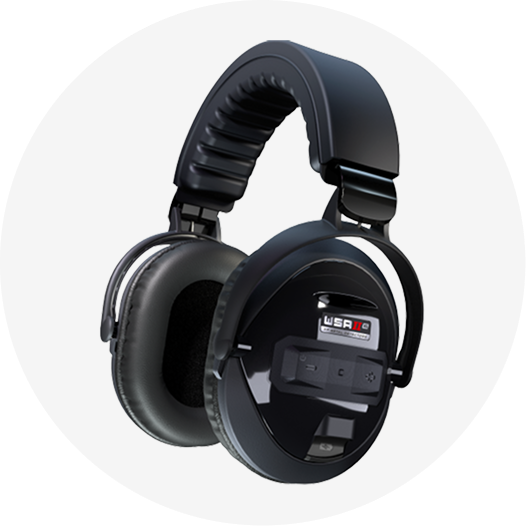
The DEUS II supports several XP wireless headphone options, including:
- WS6ST
- WSAST
- WSAXL ST
- BH-01 bone conduction headphones
The WS6ST module can even operate as the main controller without the remote control, creating an extremely lightweight setup while still providing access to detector settings and target information.
XP DEUS II Battery Life, Weight & Portability
One of the strongest practical advantages of the DEUS II is its lightweight wireless design.
Depending on the configuration, the detector can weigh from approximately 750 g, making it comfortable for long search sessions.
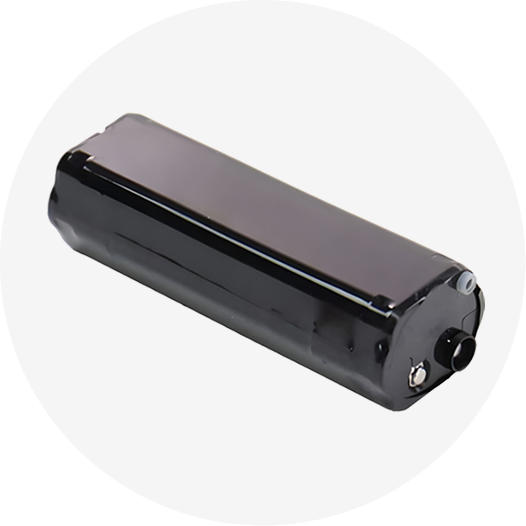
The system uses rechargeable lithium-polymer batteries in the coil, remote control, and wireless headphones.
Battery life varies by component and operating mode, and can also be affected by the audio output used. The manual notes, for example, that the remote control can provide significantly longer runtime when using wireless headphones compared with the built-in speaker or BH-01 output.
XP DEUS II Accessories & Compatibility
The DEUS II ecosystem supports a wide range of XP accessories and configurations.
Key compatible accessories include:
- Multiple FMF search coils
- HF2 coil
- WS6ST headphones
- WSAST headphones
- WSAXL ST headphones
- BH-01 bone conduction headphones
- XP MI-6 wireless pinpointer
- Underwater antenna
- S-Telescopic stem
- Charging accessories
The standard box contents depend on the version purchased, but the official manual lists items such as the remote control, wireless headphones, search coil, coil fitting kit, underwater antenna, waterproof caps, telescopic stem, charging cable, and coil connection clamp.
XP MI-6 Pinpointer Integration
The XP MI-6 pinpointer can connect wirelessly to the DEUS II.
Once paired, its audio can be transmitted directly through the DEUS II system, and additional MI-6 settings become available from the detector interface.
The remote control can also adjust MI-6 sensitivity, volume, tone, and other functions.
XP GO TERRAIN App
The DEUS II can communicate with the XP GO TERRAIN smartphone application.
The app can receive target information from the detector and use the smartphone GPS to map the search area, record detected targets, and track search routes.
This gives users an additional way to document and review their field activity.
XP DEUS II Main Advantages
The strongest advantages of the XP DEUS II include:
- FMF® simultaneous multi-frequency technology
- Excellent target separation
- Dedicated Gold Field program
- Dedicated Relic program
- Three saltwater programs
- IP68 waterproofing to 20 meters
- Fully wireless design
- Very low weight
- Advanced Target ID and discrimination
- Adjustable Reactivity
- Advanced ground balance
- Multiple audio systems
- Wireless headphones
- MI-6 integration
- Software updates
- GO TERRAIN support
- Extensive user customization
Things to Consider Before Buying
The DEUS II is a highly advanced detector, but its large number of settings means that beginners may need time to understand features such as:
- Reactivity
- Ground balance
- Frequency Max
- Salt Sens
- IAR
- Notch
- Audio Response
- Tone modes
The good news is that the factory programs allow beginners to start detecting without immediately adjusting every advanced setting.
Another important point is that XP does not specify one fixed detection depth for all targets. Depth varies according to target size, conductivity, ground conditions, coil, program, and settings.
Who Is the XP DEUS II Best For?
The XP DEUS II is a strong option for:
- Coin hunters
- Relic hunters
- Gold prospectors
- Beach detectorists
- Underwater detectorists
- Users searching mineralized ground
- Professional detectorists
- Advanced users who want extensive customization
- Beginners who want a detector they can grow into over time
Its wide range of programs makes it suitable for users who search in several different environments rather than specializing in only one type of detecting.
XP DEUS II 5-Year Warranty in Dubai
Customers purchasing the XP DEUS II from Detectors Shop in Dubai receive a 5-year warranty.
Detectors Shop also provides product guidance and after-sales support for customers using the DEUS II and other XP metal detectors.
Is the XP DEUS II multi-frequency?
Yes. The DEUS II uses FMF® Fast Multi Frequency technology, allowing simultaneous multi-frequency operation across its FMF programs.
Can XP DEUS II detect gold?
Yes. It includes the dedicated Gold Field program for native gold and gold nuggets, especially in mineralized ground.
Is XP DEUS II waterproof?
Yes. The compatible remote control and search coil are rated IP68 waterproof to 20 meters.
Can XP DEUS II be used on the beach?
Yes. It includes three dedicated saltwater programs: Diving, Beach, and Beach Sens.
Does XP DEUS II work underwater?
Yes. It is designed for underwater detecting to depths of up to 20 meters when correctly configured.
What frequencies does XP DEUS II use?
The FMF programs use different combinations of simultaneous frequencies. In DEUS MONO with standard FMF coils, the detector provides main frequencies from approximately 4 to 45.4 kHz.
Can DEUS II detect small gold nuggets?
Yes. Higher-frequency operation and the Gold Field program make the detector suitable for small gold targets, particularly in mineralized ground.
Does XP DEUS II have ground balance?
Yes. It includes Grab, Tracking, and Manual ground adjustment, with Manual available in DEUS MONO.
Does XP DEUS II have a pinpoint mode?
Yes. The detector includes a dedicated non-motion Pinpoint mode for precise target location.
Can the XP MI-6 connect to DEUS II?
Yes. The MI-6 can connect wirelessly and integrate directly with the DEUS II interface and audio system.
Is XP DEUS II suitable for beginners?
Yes. Beginners can start with the factory programs, while advanced settings remain available as their experience increases.
What warranty does Detectors Shop provide?
Detectors Shop provides a 5-year warranty on the XP DEUS II.
XP DEUS II Review: Final Verdict
The XP DEUS II is one of the most versatile metal detectors in the XP range because it combines FMF simultaneous multi-frequency technology, wireless operation, advanced discrimination, lightweight construction, gold prospecting capability, beach detection, and underwater use in one system.
Its greatest strength is flexibility. The same detector can be configured for coins, relics, gold nuggets, mineralized soil, wet beaches, saltwater diving, and deep high-conductivity targets.
The DEUS II is also highly customizable, offering extensive control over Reactivity, frequency, discrimination, ground balance, audio response, tones, Target ID, and many other parameters.
For beginners, the factory programs provide a simple starting point. For experienced detectorists, the advanced settings provide enough control to fine-tune the detector for demanding search conditions.
For users looking for a lightweight, wireless, waterproof, and highly configurable detector, the XP DEUS II remains one of the strongest all-around options available from XP Metal Detectors.
Customers purchasing through Detectors Shop in Dubai receive a 5-year warranty and professional support.
Sources & References
This XP DEUS II review was prepared using official and first-party technical sources to ensure accuracy and reliability.
The main references used for this guide include:
- XP Metal Detectors – Official DEUS II Product Page
- XP DEUS II review II Official User Manual
- Detectors Shop – XP DEUS II Product Page
- Detectors Shop technical experience and customer support information
- Detectors Shop 5-year warranty policy for XP DEUS II
Where specifications or operating recommendations are mentioned, priority was given to the official XP Metal Detectors documentation and the current XP DEUS II review. Product availability, warranty, and local support information are based on Detectors Shop’s current offering in Dubai.
